
The Vibe Coding 2026 Revolution: How AI is Reshaping Software Development in 2026
1. Introduction: Entering the Era of Intent-Driven Development
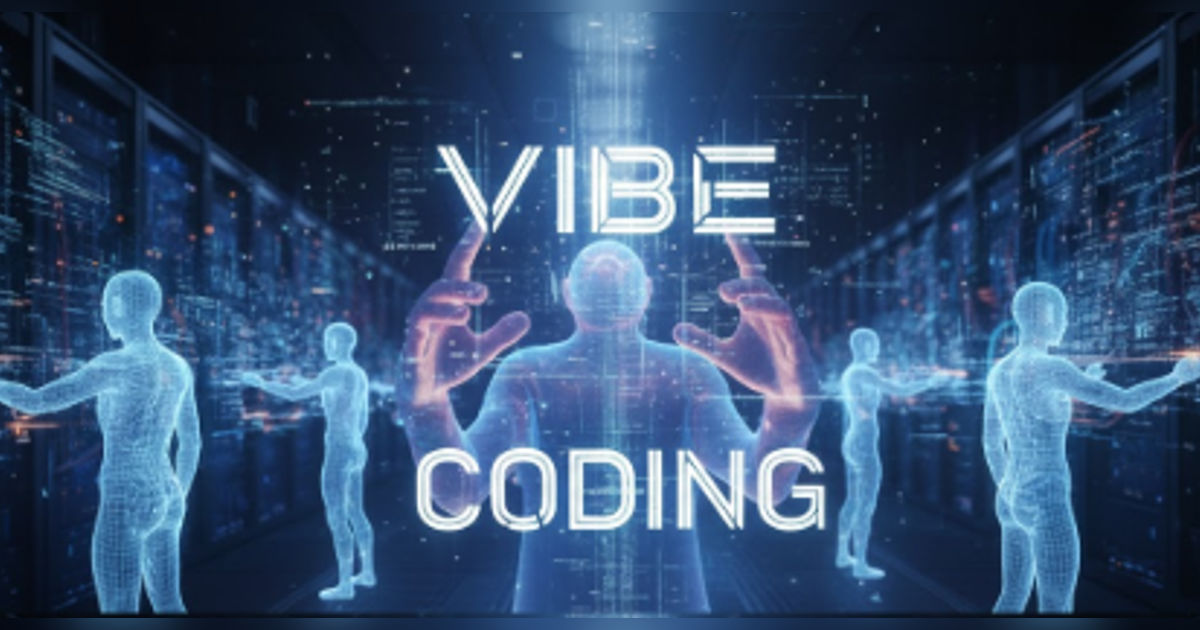
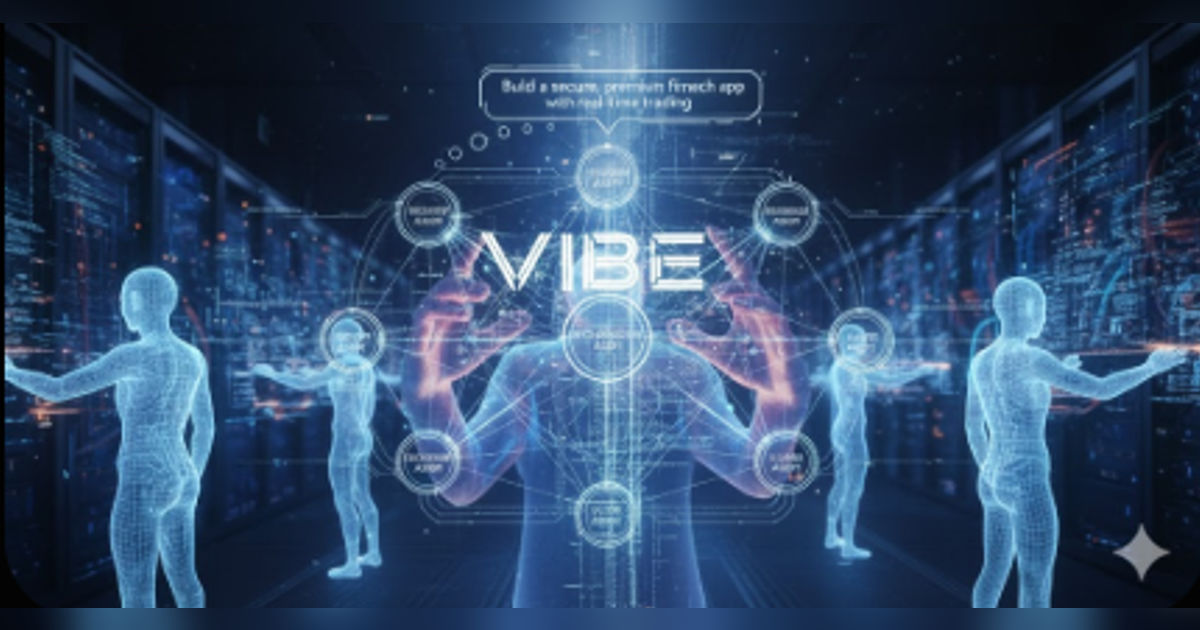
As we kick off 2026, the software development world is undergoing a profound transformation. What started as “AI-assisted coding” hype in 2024 has evolved into something far more revolutionary: vibe coding. Coined by AI pioneer Andrej Karpathy in February 2025, vibe coding represents a shift from rigid syntax mastery to intuitive, intent-based creation. No longer do developers need to wrestle with semicolons in Python or brackets in JavaScript; instead, they describe the “vibe” – the feel, functionality, and flow – of what they want to build, and AI handles the rest.
This isn’t just a buzzword. According to a Deloitte report from late 2025, the autonomous AI agent market is projected to reach $8.5 billion in 2026, fueled by tools that enable vibe coding at scale. In tech hubs like Silicon Valley, New York, and London, companies are rethinking hiring. It’s no longer about how many programming languages you know, but how well you can articulate visions and orchestrate AI agents. Junior roles focused on boilerplate code are declining, replaced by “vibe architects” who bridge business needs and AI execution.
In this comprehensive 3000-word guide, we’ll explore vibe coding’s rise, its technical foundations in agentic AI and multi-agent systems, economic implications, risks, real-world case studies, and practical steps to get started. Whether you’re a seasoned developer, a startup founder, or a curious tech enthusiast, understanding vibe coding is key to thriving in 2026’s AI-driven landscape. We’ll also touch on related concepts like semantic drift, prompt engineering evolution, and how multi-agent frameworks are making enterprise-grade development accessible.
Keywords like “vibe coding 2026,” “agentic AI trends,” and “AI coding revolution” are woven throughout to highlight this paradigm shift, ensuring this article aligns with semantic search trends for better discoverability.
2. What is Vibe Coding 2026? A Deep Dive into the 2026 Paradigm
Vibe coding is more than a meme – it’s a philosophy that prioritizes human intent over machine syntax. As Karpathy described in his 2025 tweet, it’s about “fully giving in to the vibes, embracing exponentials, and forgetting that the code even exists.” In practice, this means using natural language to guide AI in generating entire applications, from prototypes to production systems.
The core evolution stems from prompt engineering’s maturation. In 2024, developers might prompt an AI like “write a Python function to sort a list.” By 2026, it’s declarative and holistic: “Create a sleek e-commerce dashboard that feels premium, integrates real-time inventory from Shopify, handles secure payments via Stripe, and notifies users of low stock with a 5% volatility threshold.” Tools like Cursor (now in its advanced iterations), Windsurf, and Replit’s AI features interpret this “vibe” across frontend aesthetics, backend logic, and even compliance checks.
This shift from imperative to declarative programming mirrors broader AI trends. Imperative coding demands step-by-step instructions: “Loop through array X, check condition Y, execute Z.” Vibe coding is declarative: Focus on outcomes, letting AI optimize the how. According to Forbes, over 25% of developers reported using vibe-like approaches in 2025, accelerating adoption in startups where speed trumps perfection.
But vibe coding isn’t without nuance. It’s ideal for rapid prototyping and MVPs (Minimum Viable Products), where iteration is key. For complex systems, it complements traditional coding, not replaces it. Semantic SEO terms like “declarative AI coding” and “intent-based software development” capture this, helping search engines connect users to resources on evolving AI tools.
Expanding on its origins, Karpathy’s concept gained traction amid LLM (Large Language Model) advancements. Models like Claude 4.5, Gemini Ultra, and GLM 4.7 now handle context windows large enough for entire codebases, making vibe coding feasible. In 2026, integrations with IDEs (Integrated Development Environments) like VS Code AI and GitHub Copilot Atlas (an evolved version) allow seamless vibe-to-code translation.
Critics argue it’s “lazy coding,” but proponents see it as democratization. Non-coders – designers, product managers, even executives – can now prototype ideas. A 2025 IBM study emphasized vibe coding’s role in reducing barriers, predicting a 30% productivity boost in teams adopting it.
3. The Technical Backbone: Multi-Agent Systems and Agentic AI (Vibe Coding 2026)
At vibe coding’s heart lies agentic AI – autonomous systems that act on goals without constant human input. Unlike single LLMs, 2026’s setups use Multi-Agent Systems (MAS), decentralized networks of specialized agents collaborating like a virtual team.
Gartner noted a 1,445% surge in MAS inquiries from 2024 to 2025, signaling their dominance. In software development, an MAS might include:
- Meta-Reasoning Agent: Acts as the “project manager,” breaking down your vibe prompt into tasks. It evaluates feasibility, estimates resources, and sequences actions.
- Domain-Specific Agents: Experts in niches, e.g., a Security Agent ensuring GDPR compliance or a Database Agent optimizing SQL queries with tools like PostgreSQL or MongoDB.
- Cross-Functional Agents: Handle integration, like knowledge retrieval from APIs or quality assurance via automated testing.
This “microservices for AI” approach, as dubbed by The New Stack, enables one developer to manage what once required a full team. Frameworks like AutoGen, CrewAI, and LangChain facilitate MAS building, with 2026 updates focusing on parallel processing and CLI (Command-Line Interface) tools.
For semantic SEO, terms like “multi-agent systems in AI coding” and “agentic frameworks 2026” are crucial. IBM’s 2026 predictions highlight how MAS integrates with vibe coding for enterprise reliability, reducing errors in high-stakes environments like finance or healthcare.
Real-world examples abound. Databricks’ tools target agentic development, while platforms like Kore.ai offer orchestration for multi-agent workflows. Challenges include coordination overhead – ensuring agents don’t conflict – but advancements in MCP (Multi-Chat Protocol) management mitigate this.
In vibe coding workflows, you input a description, and the MAS decomposes it: The UI agent designs interfaces with Framer AI or v0, the backend agent codes logic in Node.js or Python, and a testing agent runs unit tests. This holistic approach makes vibe coding scalable, turning abstract ideas into deployable apps in hours.
4. Vibe Coding vs. Agentic AI: Clarifying the Distinctions
Media often conflates vibe coding and agentic AI, but they’re distinct yet complementary. Vibe coding is the human-AI interface – the art of prompting with intent. Agentic AI is the execution engine, using autonomy to act on those prompts.
Here’s a comparison table for clarity:
| Feature | Vibe Coding | Agentic AI (in Coding) |
| Human Role | Conductor: Guides with descriptive intent | Supervisor: Sets goals, monitors outcomes |
| System Autonomy | Medium – Human-in-the-loop for refinement | High – Autonomous planning and execution |
| Focus | Creativity, UX feel, rapid ideation | Debugging, scaling, optimization |
| Best Use Case | Prototypes, startups, MVPs | Enterprise refactoring, CI/CD pipelines |
As Forbes notes, vibe coding shines in creative phases, while agentic AI excels in reliability. In 2026, tools like Devin or Aider blend both, allowing vibe prompts to trigger agentic workflows.
Semantic search optimization includes “vibe coding vs agentic AI” to address common queries, drawing from sources like Machine Learning Mastery.
5. Economic Impact: Job Shifts, Salaries, and Market Trends in 2026 (Vibe Coding 2026)
Vibe coding is disrupting economies. A 2025 Second Talent report shows adoption surged, with 40% fewer entry-level coding jobs as AI handles CRUD (Create, Read, Update, Delete) operations.
Enter the “vibe architect”: Professionals earning $150k-$220k in US/UK cities, per LinkedIn data. They manage AI supply chains, focusing on system thinking over syntax. Deloitte predicts this role’s growth, with AI as the “enterprise OS.”
However, not all doom for coders. Successful teams treat AI as a tool, not replacement. Forbes’ 2026 predictions: Generalists thrive, specializing in orchestration.
Globally, vibe coding democratizes tech, boosting startups in emerging markets. Semantic keywords: “AI coding job market 2026,” “vibe architect salaries.”
6. The Dark Side: Security Risks and Semantic Drift in Vibe Coding
Revolutions bring risks. Semantic drift – AI misinterpreting vibes – leads to vulnerabilities. Prompt injection 3.0 allows adversaries to hijack agents, per ITPro.
Other issues: “Workslop” (subpar code under load), governance gaps (68% of leaders prioritize AI risk, per surveys). Mitigation: Guardrails like security agents and audits.
7. Case Study: A London Fintech’s Rapid Pivot with Vibe Coding
In late 2025, a London startup pivoted from B2C to B2B using vibe coding. Prompting an MAS: Re-architect database (6 hours), integrate Open Banking API (4 hours), pass audit (12 hours). Cost: Under £2,000 in tokens vs. £500k traditionally.
8. Step-by-Step Guide: Mastering Vibe Coding in 2026
- Define Intent: Describe user state and outcomes holistically.
- Choose Tools: Cursor, Windsurf, or Copilot.
- Set Guardrails: Assign security agents.
- Iterate: Use visual tuning for refinements.
- Test and Deploy: Run agentic checks.
9. FAQ: Answering Key Questions on Vibe Coding 2026
Q: Is vibe coding only for simple apps?
A: No – MAS builds complex systems like trading engines.
Q: Will developers lose jobs?
A: Pure coders adapt; architects thrive.
Q: Best skill to learn?
A: Systems thinking, beyond Python.
10. Conclusion: Beyond 2026 – The Blurring Lines of Human-AI Collaboration
Vibe coding democratizes tech, but success lies in leading AI. As 2027 approaches, expect deeper integrations. Embrace it: Learn to orchestrate, not just code.
Final thoughts on trends, with calls to action.
 Read More
For readers interested in the latest Trump Proposes $1.5 Trillion Military Budget for 2027 Amid Global Tensions

 By
By