
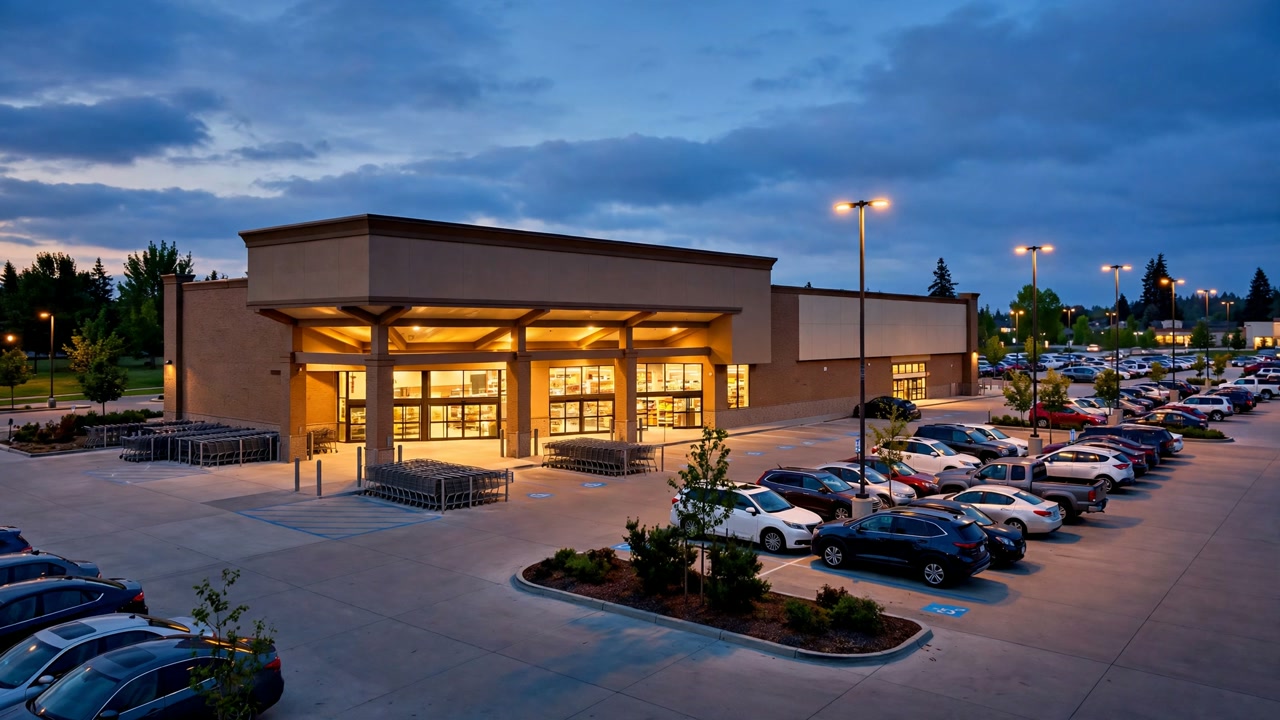
Walmart raises forecast for the third time this year after reporting third-quarter results that beat Wall Street’s estimates on Thursday, November 19, 2026. Walmart raises forecast for fiscal 2027 net sales to growth of 4.9 percent to 5.2 percent, up from 4 percent to 5 percent, and lifted its adjusted earnings outlook to $2.84 to $2.89 per share, betting that demand for lower-priced groceries and a growing delivery business will carry it through the crucial holiday shopping season.
The results from the world’s largest retailer set the tone for the industry’s most important quarter. Total revenue rose 5.2 percent to $188.84 billion, beating the $187.27 billion analysts expected, and adjusted earnings of 65 cents a share edged past the 64-cent consensus. US comparable sales excluding fuel rose 2.9 percent, in line with estimates, while US e-commerce sales jumped 23 percent. It was a solid quarter — but the market’s reaction was cooler than the headline suggests, because the raised forecast still fell short of what analysts had hoped for.
Walmart’s guidance now sits below the 5.5 percent sales growth analysts expected for the year, and the top of its new earnings range, $2.89, is only a cent above the $2.88 consensus. The company that has spent the year cutting prices on thousands of grocery and general merchandise items is telling investors it can keep growing — just not quite as fast as the market wanted.
What did Walmart report in the third quarter?
Walmart reported third-quarter revenue of $188.84 billion, up 5.2 percent from a year earlier and ahead of the $187.27 billion Wall Street had forecast. Adjusted earnings per share were $0.65, against a consensus estimate of $0.64 and up 5 percent year on year. US comparable sales excluding fuel grew 2.9 percent, improving on the previous quarter’s 2.6 percent growth, and US e-commerce sales rose 23 percent, compared with 28 percent growth a year earlier.
The growth came from the parts of the business that have carried Walmart all year: groceries and value. Grocery, which accounts for about 60 percent of Walmart’s US sales, kept drawing shoppers who are prioritizing essentials over discretionary purchases, and the company’s low-price positioning continued to win market share across income groups — including higher-income households trading down. The delivery business, a growing part of the e-commerce operation, also contributed to the quarter’s strength.
There were softer notes beneath the headline. E-commerce growth of 23 percent, while strong, was slower than the 28 percent a year earlier, and the company’s price investments — cutting prices on thousands of items to hold its everyday-low-price promise — are squeezing margins. Operating income growth, the number investors watch most closely after revenue, will be the test of whether Walmart can keep cutting prices without giving up profit.
Why Walmart raises forecast — and why the market hesitated
Walmart raises forecast when it has confidence in the consumer, and the third quarter gave it reasons for confidence: comparable sales growing, e-commerce compounding, and market share gains across grocery and general merchandise. This is the third time this year the company has lifted its full-year outlook, and the new ranges — sales growth of 4.9 to 5.2 percent, adjusted earnings of $2.84 to $2.89 a share — are above the previous ranges of 4 to 5 percent and $2.80 to $2.87.
But the market hesitated because the raise was smaller than expected. Analysts had penciled in 5.5 percent sales growth for the year, and the top of Walmart’s new range stops at 5.2 percent. Earnings tell the same story: the $2.84 to $2.89 range brackets the $2.88 consensus rather than beating it. For a stock trading at about 43 times forward earnings — well above its five-year average of 30 times — a forecast that merely meets expectations is not enough to excite buyers.
The caution is deliberate. Chief financial officer John David Rainey has said it is “prudent to remain cautious by only raising the guide modestly,” and the company is putting much of its roughly $2.9 billion in tariff refunds back into lower prices rather than into profit. That choice — lower prices now, margin later — is the core of Walmart’s strategy, but it means the earnings growth investors want will arrive more slowly than the sales growth they are already seeing.
How are grocery prices shaping Walmart’s quarter?
Grocery prices are the thread running through Walmart’s quarter, because groceries are both its biggest business and the place where American shoppers feel inflation most directly. Walmart has cut prices on thousands of grocery and general merchandise items this year as consumers seek cheaper options amid steep inflation and record-high gas prices, and the strategy is working: shoppers are consolidating trips at Walmart, buying essentials there, and spending less on discretionary goods elsewhere.
The pressure is not going away. Bank of America, which raised its Walmart price target to $139 from $126 before the report and kept a Buy rating, warned that oil prices have climbed and suppliers are already raising wholesale prices, pushing grocery inflation expectations up by about 0.5 to 1 percent more than previously forecast. Those higher costs are expected to reach store shelves over the next six to 12 months, testing Walmart’s promise to keep prices low. Wells Fargo made a similar call days before the report, raising its target to $135 from $120 and keeping an Overweight rating, while noting the risk of more than $2 billion in extra fuel costs this fiscal year on top of the price cuts.
Walmart’s answer is scale and absorption: use its buying power to hold prices down, absorb some costs, pass on others, and source from other regions where possible. The company said its product prices in the US rose about 1 percent in the recent quarter, a sign it has largely contained the inflationary impact of tariffs so far — but Rainey has also warned that the next few months will still bring more cost pressure. The holiday quarter will show whether the balance holds.
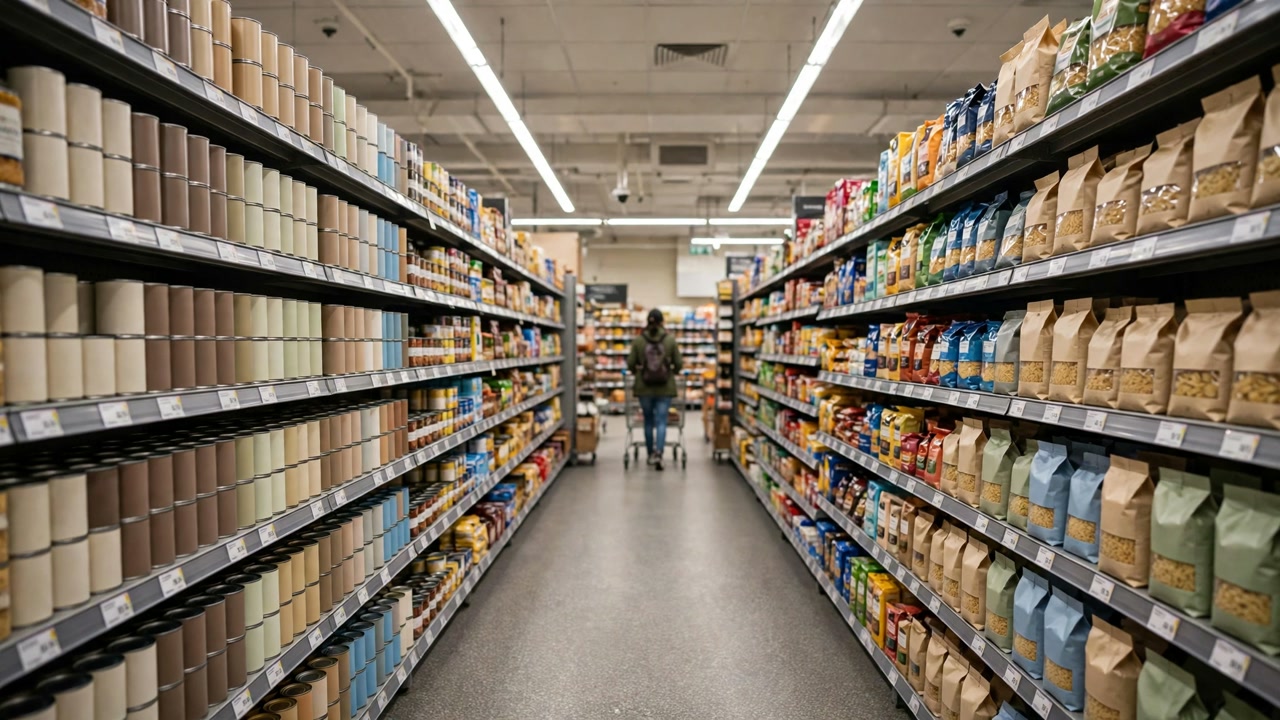
Walmart raises forecast: what the holiday season will test
The holiday season is the biggest test of Walmart’s raised forecast, because the fourth quarter is when the company’s full-year numbers are made. With consumers remaining cautious about discretionary spending, Walmart’s low-price positioning could help it gain market share across groceries, electronics, apparel and household goods — the categories that dominate holiday shopping. The question is whether shoppers buy more than the essentials, or whether they spend carefully and leave the discretionary aisles quiet.
The early signs favor Walmart. The company has spent the year winning shoppers from higher-priced competitors, and the holiday season is when that trade-down behavior peaks. Its delivery business, which has grown into a meaningful part of the operation, gives it an edge with shoppers who want groceries and gifts brought to the door. And its e-commerce growth, even at a slower 23 percent, is compounding from a much larger base than a year ago.
The risk is the one the guidance already reflects: that price cuts and cost pressures limit profit growth even as sales rise. Analysts expect Walmart to earn $2.88 a share this year — a touch above the top of management’s new guidance — and the company’s first outlook for the year ending January 2028, expected in February, will need to come in near the $3.23 consensus to keep the stock’s premium valuation intact. The holiday quarter is where that case gets made or lost.
What the Walmart raises forecast means for shoppers and investors
For shoppers, the thing to watch is prices. Walmart has committed to keeping its everyday-low-price promise through the holidays, and the company’s own numbers show it is absorbing cost increases rather than passing them all on. If grocery prices stay contained through December, the strategy is working; if they climb, the trade-down shoppers Walmart has won may start trading down further — or spending less altogether.
For investors, the numbers to watch are operating income and the February outlook. The third quarter beat on revenue and earnings, but the raised forecast landed below expectations, and the stock’s premium valuation — 43 times forward earnings — leaves little room for disappointment. The next two reports need to show that the price cuts are bringing in sales without costing too much profit, and the first outlook for fiscal 2028 will be the real test of whether Walmart can keep growing into its valuation.
For the wider economy, Walmart’s quarter is a snapshot of the American consumer in late 2026: still spending, still hunting for value, still prioritizing groceries over everything else, and still cautious about the months ahead. The world’s largest retailer raised its forecast because it believes that consumer will keep showing up. The holidays will prove it right or wrong.
Key Facts
- Walmart raises forecast for fiscal 2027: net sales growth of 4.9 percent to 5.2 percent, up from 4 percent to 5 percent; adjusted earnings of $2.84 to $2.89 per share, up from $2.80 to $2.87.
- Third-quarter revenue was $188.84 billion, up 5.2 percent year on year, beating the $187.27 billion consensus; adjusted earnings were $0.65 per share versus $0.64 expected.
- US comparable sales excluding fuel rose 2.9 percent, in line with estimates; US e-commerce sales increased 23 percent, compared with 28 percent a year earlier.
- The raised forecast is below analysts’ expectations for 5.5 percent sales growth, though the earnings range brackets the $2.88 consensus.
- Walmart has raised its full-year outlook three times this year; it cut prices on thousands of grocery and general merchandise items in 2026.
- Bank of America raised its Walmart price target to $139 from $126 with a Buy rating; Wells Fargo raised its target to $135 from $120 with an Overweight rating.
- Grocery accounts for about 60 percent of Walmart’s US sales; BofA expects grocery prices to climb about 0.5 to 1 percent more than previously forecast as oil and supplier costs rise.
- CFO John David Rainey said it was “prudent to remain cautious by only raising the guide modestly”; the company is putting much of about $2.9 billion in tariff refunds into lower prices.
Frequently Asked Questions
What is Walmart’s new forecast for 2026?
Walmart now expects fiscal 2027 net sales to grow 4.9 percent to 5.2 percent, up from 4 percent to 5 percent, and adjusted earnings per share of $2.84 to $2.89, up from $2.80 to $2.87. It is the third time this year the company has raised its outlook.
How did Walmart do in the third quarter?
Revenue rose 5.2 percent to $188.84 billion, beating the $187.27 billion estimate, and adjusted earnings were $0.65 per share versus $0.64 expected. US comparable sales excluding fuel rose 2.9 percent and US e-commerce sales grew 23 percent.
Why did Walmart’s stock not rally on the beat?
Because the raised forecast fell short of analysts’ expectations for 5.5 percent sales growth for the year, and the stock trades at about 43 times forward earnings — well above its five-year average of 30 times — leaving little room for a merely in-line outlook.
How are grocery prices affecting Walmart?
Walmart has cut prices on thousands of grocery and general merchandise items as shoppers seek cheaper options amid steep inflation and record-high gas prices. Suppliers are raising wholesale prices and oil costs are climbing, which Bank of America expects to push grocery prices up further over the next six to 12 months.
When does Walmart report next?
Walmart reports its fourth-quarter results and its first outlook for the year ending January 2028 in February 2027. Analysts expect fiscal 2028 earnings near $3.23 per share.
