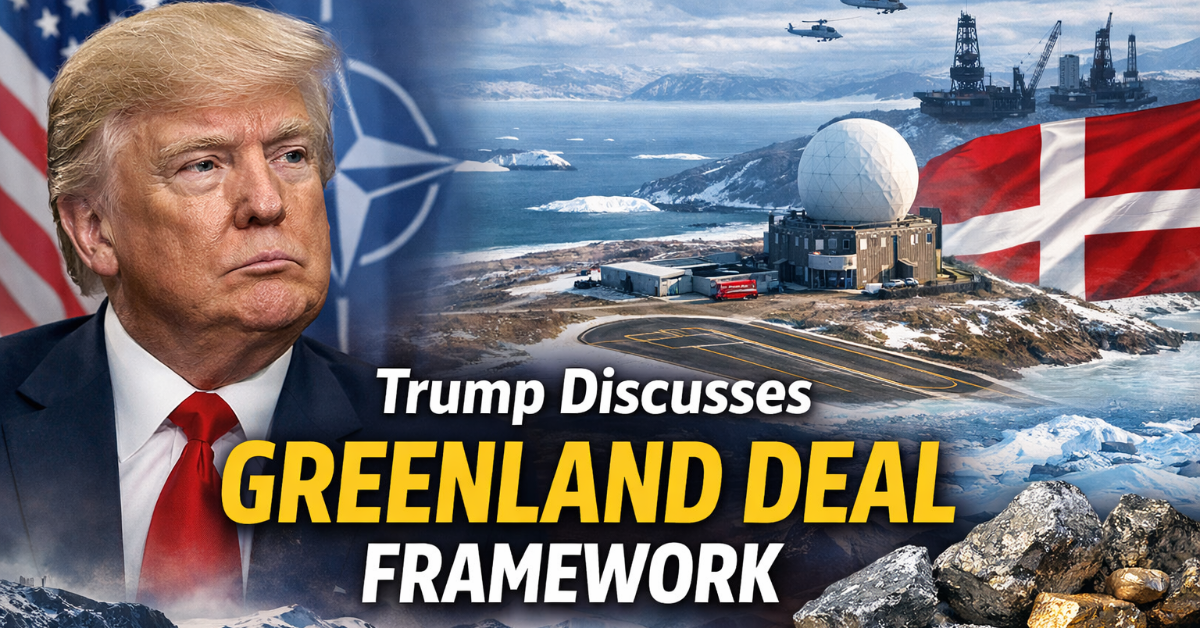

A New Chapter in Arctic Diplomacy: Why Greenland Suddenly Matters More Than Ever
For much of the world, Greenland often exists on the edge of global awarenessa vast, icy landmass on the map, known more for its glaciers and polar bears than for high-stakes international politics. But in recent years, and especially following Donald Trump’s renewed comments about a “framework of a future deal,” Greenland has moved from the margins to the center of geopolitical conversation.
This shift did not happen overnight. The Arctic is warming faster than any other region on Earth, opening new shipping lanes, exposing untapped natural resources, and drawing the attention of powerful nations that see both opportunity and risk in the changing landscape. Greenland, positioned between North America and Europe, has become one of the most strategically important pieces on this evolving global chessboard.
When Trump spoke about a potential deal involving Greenland and the wider Arctic region, he wasn’t just talking about one island. He was signaling a broader vision of how the United States might shape the future of Arctic security, trade, and resource development for decades to come.
Understanding Greenland’s Unique Political Status (U.S. Explores Greenland Deal)
To understand why Trump’s comments stirred such strong reactions, it’s important to first understand what Greenland actually is in political terms. Greenland is an autonomous territory within the Kingdom of Denmark. It has its own government and parliament, which handle most domestic matters, while Denmark retains control over foreign policy, defense, and monetary affairs.
This arrangement gives Greenland a significant degree of self-rule, and in recent years, there has been a growing movement within the island to seek even greater independence. Many Greenlanders see their natural resourcesespecially minerals and energy potentialas a possible path toward full economic and political self-sufficiency.
Against this backdrop, any suggestion of foreign influence, ownership, or control is deeply sensitive. For Greenland’s leaders and citizens, the island is not just a strategic assetit is their home, their culture, and their future.
That is why statements implying that NATO or the United States might shape Greenland’s economic or territorial destiny without direct involvement from Greenlandic representatives sparked concern and criticism.
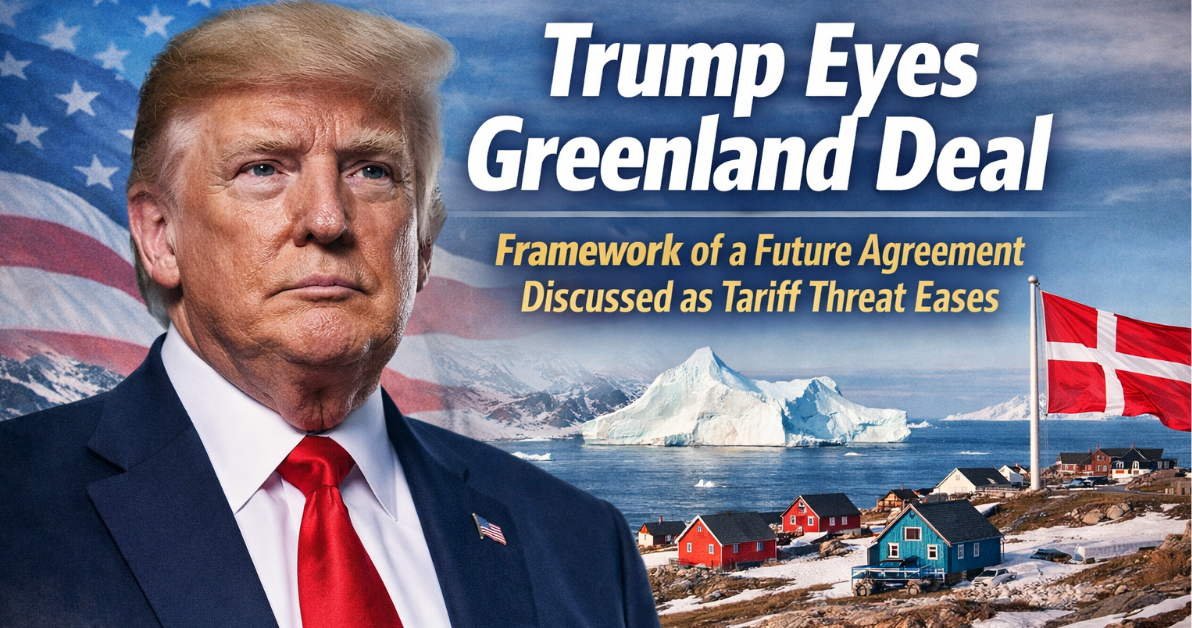
The Meeting That Changed the Tone
Trump’s announcement followed a meeting with NATO Secretary General Mark Rutte at a Swiss Alpine resort, a location often associated with quiet diplomacy and high-level global discussions. According to both sides, the talks were “very productive,” though specifics remained limited.
What stood out most was the shift in tone. Just weeks earlier, Trump had been threatening to impose significant tariffs on European allies, including Denmark, if progress was not made toward a deal that would allow the United States to acquire Greenland. The rhetoric had rattled transatlantic relations, raising fears of a new trade conflict between longtime partners.
After the meeting, however, Trump publicly backed away from the tariff threats, signaling that diplomatic engagement had opened a new path forward. Instead of framing the issue as a standoff, he began to describe it as a collaborative effort that could benefit all NATO members.
This change was welcomed by European leaders, who had been urging dialogue over economic pressure. It also suggested that the focus was shifting from outright ownership to cooperation, access, and long-term strategic alignment.
Rare Earth Minerals: The Hidden Treasure Beneath the Ice
One of the most compelling reasons behind global interest in Greenland is what lies beneath its frozen surface. The island is believed to hold vast reserves of rare earth elements and other critical minerals. These materials are essential to modern life, even if most people never think about them.
Rare earth minerals are used in:
- Smartphones and laptops
- Electric vehicle batteries
- Wind turbines and renewable energy systems
- Advanced military equipment and communication systems
Currently, a significant portion of the world’s supply chain for these materials is concentrated in a small number of countries, particularly China. This has raised concerns in the United States and Europe about dependency, supply security, and the potential for geopolitical leverage.
From this perspective, Greenland represents an opportunity to diversify sources of critical minerals and strengthen economic resilience. For policymakers in Washington, access to Greenland’s resources is not just an economic issueit is a matter of national security.
Trump’s comments about mineral rights being a central part of any future deal reflect this strategic thinking. By framing the potential agreement as a “forever deal,” he emphasized the long-term importance of securing stable access to resources that will shape the global economy for generations.
Security in the High North: Why the Arctic Is a Military Priority
Beyond minerals, Greenland’s geographic location makes it a key piece in Arctic and transatlantic security. Situated between North America and Europe, the island lies along critical air and sea routes that could be vital in both civilian and military contexts.
The United States already maintains a presence at Pituffik Space Base (formerly Thule Air Base) in northwestern Greenland. This facility plays a crucial role in missile warning systems, space surveillance, and Arctic operations. It has been a cornerstone of U.S. defense strategy in the region for decades.
As global competition intensifies, particularly with Russia and China increasing their activities in the Arctic, the strategic value of Greenland has only grown. Both nations have invested in polar research, shipping routes, and infrastructure projects that signal long-term interest in the region.
NATO officials have made it clear that one of their primary goals is to prevent any rival power from gaining a military or economic foothold in Greenland. This concern was reflected in NATO spokeswoman Allison Hart’s statement that ongoing negotiations aim to ensure that Russia and China do not establish influence on the island.
From a defense perspective, cooperation with Greenland and Denmark allows the United States and its allies to monitor Arctic airspace, secure shipping lanes, and respond quickly to emerging threats.
A Model for Cooperation: Lessons from Cyprus
According to reports from U.S. media, one potential model for a future arrangement could resemble the status of British military bases in Cyprus. In that case, the United Kingdom maintains sovereign base areas on the island, which are part of British Overseas Territories, even though Cyprus itself is an independent nation.
A similar framework in Greenland could allow the United States to expand its military infrastructure without claiming formal ownership of the territory. This would provide strategic benefits while respecting Denmark’s sovereignty and Greenland’s autonomy.
However, such arrangements are complex and often controversial. They require careful negotiation to balance security interests with local concerns about land use, environmental impact, and political control.
For Greenlanders, the idea of increased foreign military presence raises questions about how it might affect their communities, environment, and long-term aspirations for independence.
Local Voices: “Nothing About Us Without Us”
Perhaps the most human and powerful response to the unfolding discussions came from Greenlandic lawmaker Aaja Chemnitz, who expressed frustration at the idea of decisions being made without Greenland’s direct involvement.
Her statement“Nothing about us without us”captured a broader sentiment among many Greenlanders. While they recognize the importance of international cooperation, they also want to ensure that their voices are central in any negotiations that affect their land and resources.
This perspective highlights a key challenge in Arctic diplomacy: balancing the interests of major powers with the rights and aspirations of local populations. For policymakers, success will depend not only on strategic and economic calculations but also on building trust and meaningful partnerships with the people who live in the region.
Trade, Tariffs, and Transatlantic Relations
Trump’s earlier threat to impose tariffs on European allies added another layer of complexity to the Greenland discussions. The proposed measures would have affected imports from countries such as Denmark, Germany, France, and the United Kingdomnations that form the backbone of NATO.
The idea of linking trade policy to territorial negotiations alarmed many European leaders, who warned that it could undermine the unity of the alliance. French President Emmanuel Macron was among the most vocal critics, calling the “endless accumulation of new tariffs” fundamentally unacceptable.
The decision to suspend the planned tariffs after the meeting with Rutte was seen as a positive step toward restoring diplomatic stability. It suggested that dialogue, rather than economic pressure, might be the preferred path forward.
This episode also underscored how deeply interconnected trade, security, and diplomacy have become in modern international relations. Decisions in one area can quickly ripple across others, shaping alliances and global markets.
The Davos Factor: Global Eyes on Greenland
The World Economic Forum in Davos provided a global stage for Trump to reiterate his interest in Greenland. Speaking to world leaders and business executives, he emphasized that he was seeking negotiations rather than force.
His remarks drew mixed reactions. Some saw them as a pragmatic acknowledgment of the importance of cooperation, while others viewed them as an attempt to apply public pressure on Denmark and its allies.
At the same forum, leaders like Macron and Canadian Prime Minister Mark Carney used their speeches to advocate for stronger collaboration among middle and major powers in the face of shifting global dynamics. The exchange of sharp words highlighted the broader tensions shaping international politics in an era of competition and uncertainty.
In this context, Greenland became more than just an islandit became a symbol of how nations navigate power, partnership, and principle on the world stage.
Climate Change: The Silent Force Reshaping the Arctic
While much of the discussion has focused on security and resources, climate change remains a powerful underlying factor in the Arctic’s rising importance. Melting ice is opening new shipping routes that could dramatically shorten travel times between Asia, Europe, and North America.
These routes offer economic opportunities but also raise concerns about environmental protection, search and rescue capabilities, and the potential for increased military presence.
For Greenland, climate change presents both challenges and possibilities. Thawing permafrost and retreating glaciers threaten traditional ways of life, infrastructure, and ecosystems. At the same time, increased accessibility could boost tourism, trade, and resource development.
Any long-term framework involving Greenland will need to account for these environmental realities, ensuring that economic and strategic goals do not come at the expense of the fragile Arctic ecosystem.
What a “Framework” Really Means
The term “framework” can sound impressive, but in diplomatic terms, it often represents the very beginning of a long and complex process. A framework typically outlines shared goals, guiding principles, and areas for further negotiation rather than a binding agreement.
In the case of Greenland, this likely means that the United States, Denmark, and Greenland are exploring:
- Security cooperation and defense arrangements
- Access to and development of mineral resources
- Economic partnerships and investment opportunities
- Environmental and community protections
Each of these areas involves multiple stakeholders, legal considerations, and political sensitivities. Reaching a comprehensive agreement could take years of discussion, consultation, and compromise.
The Human Dimension: Life on the World’s Largest Island
Amid all the geopolitical analysis, it’s easy to forget that Greenland is home to around 56,000 people. Most live in small coastal communities, where daily life is shaped by fishing, hunting, and close ties to the natural environment.
For many Greenlanders, the idea of their homeland becoming a focal point of global power politics is both unsettling and hopeful. On one hand, international attention could bring investment, jobs, and infrastructure. On the other, it raises fears about cultural erosion, environmental damage, and loss of control over their future.
Local leaders have repeatedly emphasized the importance of sustainable developmentensuring that any economic growth benefits Greenlandic communities and respects their traditions and values.
A Delicate Balance for Denmark
Denmark finds itself in a challenging position. As the sovereign authority responsible for foreign and defense policy, it must manage relations with powerful allies like the United States while also honoring Greenland’s autonomy and aspirations.
The Danish government has expressed willingness to address American security concerns in the Arctic, but it has also drawn clear “red lines” regarding sovereignty and territorial integrity.
Navigating this balance requires careful diplomacy, clear communication, and a commitment to involving Greenlandic representatives in all major decisions.
Looking Ahead: Scenarios for the Future
Several possible paths could emerge from the current discussions:
1. Enhanced Security Partnership
The most likely outcome is a deeper defense and surveillance partnership between the U.S., Denmark, and Greenland, focusing on Arctic monitoring, missile defense, and joint military exercises.
2. Resource Development Agreements
The parties could establish frameworks for responsible mineral extraction, including investment from American and European companies, with safeguards to protect local communities and the environment.
3. Economic and Infrastructure Investment
Increased funding for ports, airports, and communication systems could help Greenland integrate more fully into global trade networks.
4. Continued Diplomatic Negotiations
It is also possible that talks move slowly, with progress made in some areas but not others, reflecting the complexity of the issues involved.
Why This Story Matters to the World
At its core, the discussion about Greenland is a story about how the world is changing. It reflects the growing importance of the Arctic, the competition for critical resources, and the evolving nature of alliances in the 21st century.
For the United States, it is about securing long-term strategic and economic interests. For Europe, it is about maintaining unity and sovereignty. For Greenland, it is about shaping a future that balances opportunity with independence and cultural identity.
The “framework” Trump described may still be vague, but it has already sparked a global conversation about who will shape the Arctic’s futureand how.
Final Thoughts: A Region at the Crossroads
Greenland stands at a crossroads between tradition and transformation, isolation and integration, local identity and global influence. The decisions made in the coming years will not only affect the island’s future but also set precedents for how nations engage with strategically important regions around the world.
As negotiations continue, one thing is clear: the Arctic is no longer a distant frontier. It is a central stage in the unfolding story of global power, cooperation, and competition.
Whether Trump’s proposed framework becomes a lasting agreement or simply a stepping stone toward broader dialogue, it has already ensured that Greenland’s voiceand the Arctic’s significancewill remain part of the international conversation for years to come.


 By
By