
The Iran drone attack on US base facilities in Bahrain ended without injuries or damage early Sunday, November 15, 2026, when Bahraini air defenses intercepted six Iranian drones aimed at a US air defense radar system at the Al-Riffa helicopter base. The strike, which Tehran framed as retaliation for recent American military actions, came on the same weekend a third US aircraft carrier reached the Middle East — the largest American naval buildup in the region in years.
Bahrain’s Defense Ministry said it intercepted several aerial attacks before they landed, with no injuries or damage reported. Iran’s Islamic Revolutionary Guard Corps said it launched the drones at US assets in Bahrain, and separately claimed that six vessels have caught fire and sunk in the Strait of Hormuz since Sunday — a claim that comes only from Iranian outlets and could not be independently verified.
The attack is the sharpest escalation yet in a Gulf crisis that has been building for weeks, and it lands at an awkward moment for Washington: President Trump leaves for Asia on Monday for a summit week that includes the first-ever meeting of the leaders of the United States, China and Russia, while the Gulf situation threatens to demand his attention from the other side of the world.
What happened in the Iran drone attack on US base facilities in Bahrain?
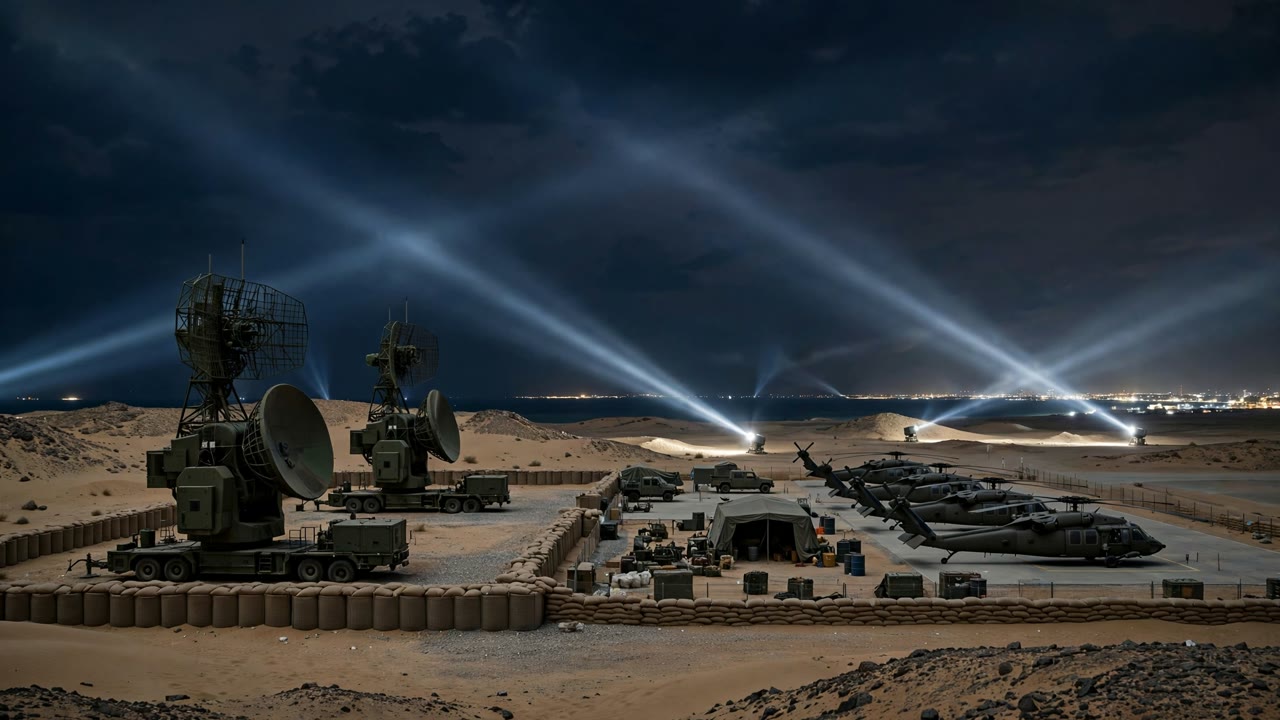
Six Iranian drones flew at a US air defense radar system at the Al-Riffa helicopter base in Bahrain early Sunday, according to Iran’s Revolutionary Guard. Bahrain’s Defense Ministry said its forces intercepted several aerial attacks before they landed, and reported no injuries or damage. The base is one of the key US military installations in the Gulf, and the radar system targeted is part of the air defense network that protects American and allied forces in the region.
The Revolutionary Guard framed the strike as retaliation for recent American military actions, though it did not specify which actions. The timing matters: the drones arrived as the United States was massing naval power in the region, and the attack reads as Tehran’s answer to that buildup — a demonstration that it can reach American bases, even if this particular attempt was stopped.
What the attack did not do is also significant. No American service members were hurt, no equipment was reported damaged, and Bahrain’s defenses worked as designed. That gives Washington room to respond with words rather than strikes, at least for now. But it also sets a precedent: an Iranian drone attack on a US base in a Gulf ally’s territory is a line that, once crossed, is hard to uncross.
Why has a third US aircraft carrier reached the Middle East?
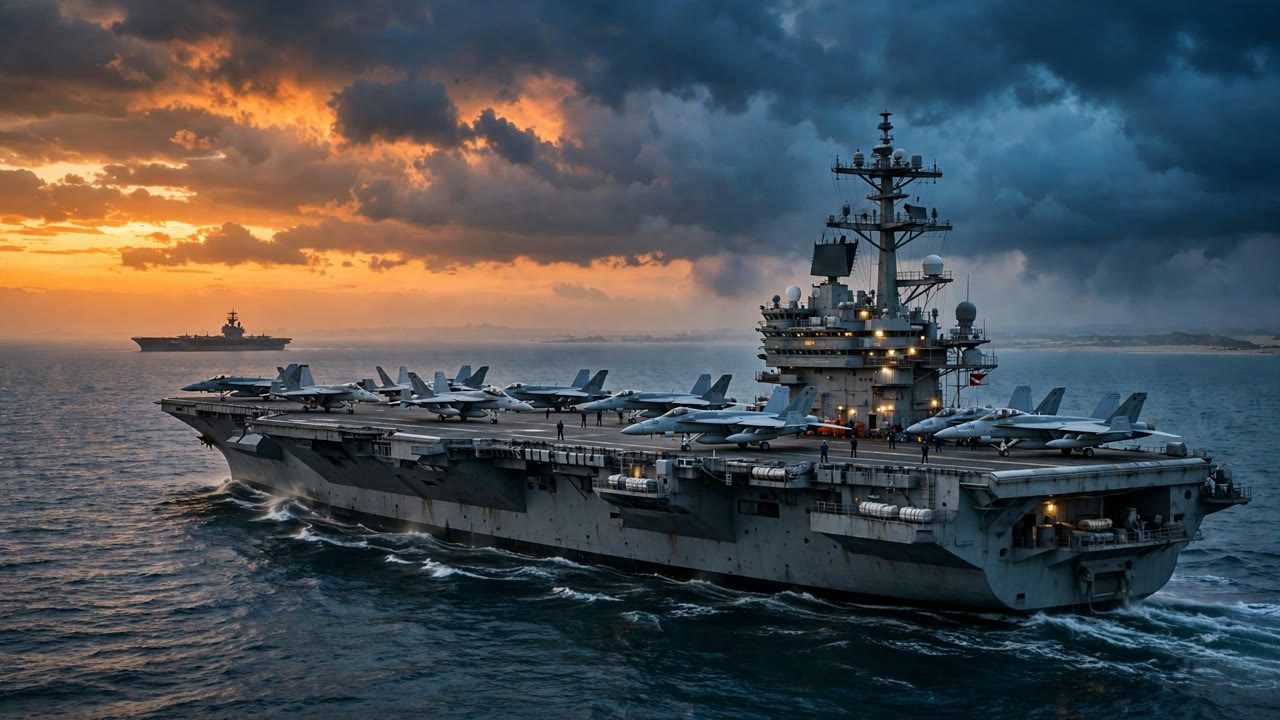
The USS Theodore Roosevelt entered the US Central Command area on Sunday, joining the USS George H.W. Bush and the USS George Washington, according to US officials cited by Al Jazeera and The National. The Pentagon and Central Command have not formally announced the arrival, but the three-carrier presence is now the core fact of the Gulf military picture.
Three carriers in one region is a major commitment. Each carrier strike group brings dozens of fighter jets, escort destroyers and cruisers, and thousands of sailors. Together, they give the United States the ability to strike targets across the region, defend allies, keep the Strait of Hormuz open, and absorb an attack — all at the same time. The buildup is both a deterrent and a signal: Washington is preparing for the possibility that the crisis escalates, while hoping the visible force prevents it from doing so.
The carriers also matter for the Strait of Hormuz, the narrow waterway through which a large share of the world’s seaborne oil passes. Iran’s claim that six vessels have caught fire and sunk there since Sunday, if true, would be a major disruption to global shipping. But the claim comes only from Iranian outlets, and no independent source has confirmed it. Shipping data and commercial insurers have not reported a wave of sinkings, which is why the claim is being treated as unverified rather than as fact.
How does the Iran drone attack on US base facilities fit the wider Gulf crisis?
The Bahrain attack is one piece of a larger pattern. Iran has been raising the stakes for weeks, and the tempo has quickened: the drone strike, the Hormuz sinking claims, and the steady drumbeat of threats from the Revolutionary Guard all point in the same direction. Tehran is testing how far it can go without triggering a direct American military response.
Washington’s position is complicated by diplomacy. President Trump said last week that “we don’t need a deal” and pulled Vice President JD Vance off the negotiations with Iran, according to CBS News — a sign that the administration’s patience with talks is wearing thin. At the same time, the president is leaving for Asia, where his schedule is dominated by the APEC summit and the first-ever trilateral meeting with China’s Xi Jinping and Russia’s Vladimir Putin. A Gulf crisis that demands decisions while the president is in Manila and Shenzhen is the worst kind of scheduling collision.
The 60 Minutes broadcast on Sunday added another pressure point: an Army whistleblower said warnings were ignored before the deadliest Iranian strike on US troops. The report refocused attention on how the military protects its people in the region — and on whether the systems that stopped Sunday’s drones are enough if the next attack is bigger.
What happens next in the Gulf?
Three things will decide how this plays out. First, whether Iran tries again. A second drone attack, especially one that gets through, would force a harder American response than an intercepted one. Second, whether the Hormuz claims are real. If vessels are actually sinking, oil prices and shipping insurance will move fast, and the economic pressure on every government involved will rise. Third, what the president does from Asia — whether he treats the Gulf as a crisis to manage from afar or as a reason to cut the trip short.
For now, the facts on the ground are these: six drones were launched, several were intercepted, no one was hurt, and three American carriers are in the region. That is a dangerous equilibrium — stable enough to hold for a day, fragile enough to break with a single miscalculation. The Gulf crisis is, as one briefing put it, the story most likely to move fastest and with the least warning. Sunday proved the point.
Key Facts
- Six Iranian drones were launched at a US air defense radar system at the Al-Riffa helicopter base in Bahrain early Sunday, November 15, 2026; Bahrain’s Defense Ministry said several were intercepted, with no injuries or damage.
- Iran’s Revolutionary Guard framed the strike as retaliation for recent American military actions.
- The USS Theodore Roosevelt entered the US Central Command area on Sunday, joining the USS George H.W. Bush and USS George Washington — three US carriers in the Middle East.
- Iran claims six vessels have caught fire and sunk in the Strait of Hormuz since Sunday; the claim comes only from Iranian outlets and is unverified.
- President Trump said last week that “we don’t need a deal” and pulled Vice President JD Vance off Iran negotiations, according to CBS News.
- President Trump leaves for Asia on Monday, November 16, for the US-ASEAN summit, APEC and a first-ever trilateral meeting with Xi Jinping and Vladimir Putin.
FAQ
What happened in the Iran drone attack on the US base in Bahrain?
Six Iranian drones flew at a US air defense radar system at the Al-Riffa helicopter base in Bahrain early Sunday, November 15, 2026. Bahrain’s Defense Ministry said several were intercepted before landing, with no injuries or damage reported.
Why did Iran attack the US base in Bahrain?
Iran’s Revolutionary Guard framed the strike as retaliation for recent American military actions. The attack came as the United States massed three aircraft carriers in the Middle East.
How many US aircraft carriers are in the Middle East now?
Three: the USS Theodore Roosevelt, which arrived Sunday, joined the USS George H.W. Bush and the USS George Washington, according to US officials cited by Al Jazeera and The National. The Pentagon has not formally announced the Roosevelt’s arrival.
Did Iranian forces sink ships in the Strait of Hormuz?
Iran claims six vessels have caught fire and sunk in the strait since Sunday, but the claim comes only from Iranian outlets and could not be independently verified. No independent confirmation has been reported.
What does the Bahrain attack mean for Americans?
The attack was intercepted and caused no casualties, but it marks a sharp escalation in Gulf tensions. With three US carriers in the region and the president traveling in Asia, the crisis is the story most likely to move fastest in the coming days.
