
2026 Winter Olympics Women’s Snowboarding Halfpipe: Liu Jiayu Injury Scare, Full Event Analysis & What It Means for Medal Contenders
The 2026 Winter Olympics Women’s Snowboarding Halfpipe event delivered everything the Winter Games promise — elite athleticism, breathtaking amplitude, and for a tense moment, global concern.
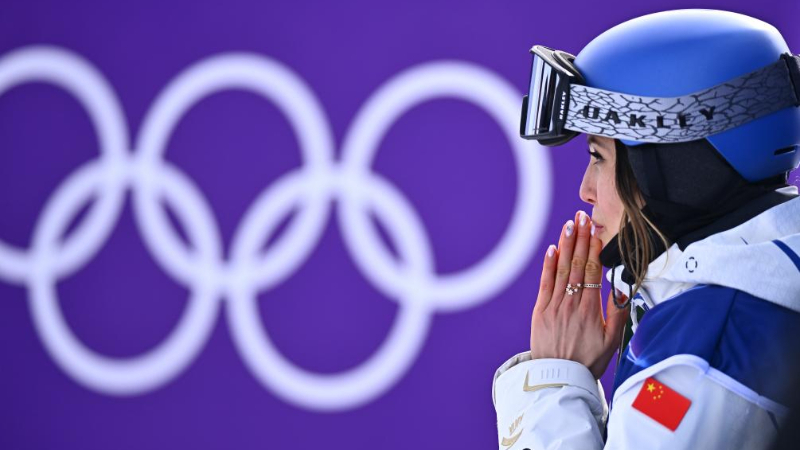
When Chinese snowboarder Liu Jiayu crashed hard during competition, the halfpipe fell silent. For several minutes, the spotlight shifted from medals to medical teams. She was taken off on a stretcher, triggering immediate concern across international media.
But within hours, confirmation arrived: Liu Jiayu was free of spinal injury.
The incident, while frightening, has now become part of a larger story — one that highlights resilience, athlete safety, competitive evolution, and the rising technical ceiling of women’s halfpipe snowboarding.
This in-depth feature breaks down:
-
The verified injury update
-
What happened in the halfpipe
-
Medal favorites and technical comparisons
-
Scoring system explained
-
Evolution of difficulty in 2026
-
Why this event matters for the future of women’s snowboarding
Let’s examine the full picture.
The Moment That Stopped the Halfpipe
Halfpipe snowboarding is built on flow. Riders drop in, generate speed, and launch into a series of aerial tricks that push physics and fear to their limits.
During one of her competition runs, Liu Jiayu, a veteran Olympic medalist, attempted a high-amplitude rotation sequence. On landing, she lost stability and crashed heavily onto the pipe wall.
Immediately, officials halted the competition.
Medical staff responded within seconds — a reminder that while halfpipe appears graceful on television, it remains one of the most physically demanding and dangerous disciplines in winter sports.
For nearly 20 minutes, spectators and athletes waited in tense silence.
Official Injury Update: What We Know (2026 Winter Olympics Women’s Snowboarding Halfpipe)
Within hours, confirmation came from Chinese team representatives and Olympic medical officials:
| Medical Concern | Initial Fear | Confirmed Outcome |
|---|---|---|
| Spinal injury | Suspected | Cleared |
| Head trauma | Evaluated | No severe concussion reported |
| Mobility | Assisted off | Stable condition |
| Long-term impact | Unknown | Under observation |
The most important detail:
No spinal injury was detected.
This was a crucial update because spinal trauma is among the most feared outcomes in halfpipe crashes.
Liu Jiayu remained under medical supervision but avoided catastrophic injury — an outcome many feared in the immediate aftermath.
Why the 2026 Winter Olympics Women’s Snowboarding Halfpipe Is More Intense Than Ever
To understand why crashes like this occur, we need to examine how the sport has evolved.
Women’s halfpipe snowboarding in 2026 is not the same discipline we saw a decade ago.
Key Changes Since 2018:
| Year | Average Winning Score | Rotation Complexity | Amplitude Level |
|---|---|---|---|
| 2018 | 94+ | 900s, 1080s | High |
| 2022 | 95+ | 1080s, 1260s | Higher |
| 2026 | 96+ projected | 1260s, 1440 attempts | Extreme |
Athletes are:
-
Spinning faster
-
Going higher
-
Linking more technical grabs
-
Executing switch tricks with precision
The margin for error has narrowed dramatically.
Liu Jiayu: Experience Under Pressure
Liu Jiayu is not a newcomer. She is:
-
Olympic medalist
-
X Games champion
-
One of China’s most decorated snowboarders
Her riding style is known for:
-
Clean amplitude
-
Technical consistency
-
Strategic run construction
What makes her crash so shocking is her reputation for stability under pressure.
But even veterans are not immune to halfpipe’s unforgiving physics.
How Olympic Halfpipe Scoring Works (2026 Format)
Understanding the scoring system helps explain why athletes push so hard.
Judges evaluate based on:
-
Amplitude (height above lip)
-
Difficulty
-
Execution
-
Variety
-
Progression
-
Overall impression
Each rider gets multiple runs. The highest score counts.
Example Score Breakdown Table
| Criteria | Weight Impact | What Judges Look For |
|---|---|---|
| Amplitude | High | Height + Control |
| Difficulty | Very High | Rotation count + grab combo |
| Execution | Critical | Clean landings |
| Variety | Medium | Mix of tricks |
| Progression | Increasingly Important | New or rare tricks |
In 2026, progression carries more weight than ever before.
This incentivizes riders to attempt riskier maneuvers.
Medal Contenders in the 2026 Women’s Halfpipe
Here’s a comparison of leading athletes:
| Athlete | Country | Strength | Risk Level | Medal Probability |
|---|---|---|---|---|
| Chloe Kim | USA | Technical mastery | Moderate | Very High |
| Cai Xuetong | China | Amplitude | High | High |
| Sena Tomita | Japan | Precision | Moderate | Strong |
| Liu Jiayu | China | Consistency | Moderate | Dependent on recovery |
Chloe Kim Factor
Chloe Kim continues to dominate discussions. Her ability to link 1080s and 1260s with unmatched control sets a benchmark.
However, competition depth in 2026 is stronger than ever.
Safety Protocols at the 2026 Winter Olympics
One overlooked aspect of this event is the efficiency of medical response.
Within seconds:
-
Ski patrol entered the pipe
-
Stabilization procedures initiated
-
Medical sled deployed
-
On-site imaging coordinated
This demonstrates how Olympic organizers have improved emergency readiness.
Athlete safety is no longer reactive — it is proactive.
Technical Evolution: Why Women’s Halfpipe Is Breaking Barriers
The women’s field is no longer seen as a scaled version of the men’s discipline.
In 2026:
-
Rotation counts rival previous men’s standards
-
Training infrastructure has improved globally
-
Younger athletes are entering with triple cork ambitions
The sport is experiencing what experts call a progression surge cycle.
Psychological Impact of High-Profile Crashes
When a respected athlete crashes:
-
Fellow competitors feel pressure
-
Crowd atmosphere shifts
-
Judges recalibrate risk tolerance perception
Yet the competition resumed.
And that resilience defines Olympic culture.
What Liu Jiayu’s Clearance Means for Team China
China entered the 2026 Winter Olympics with strong medal expectations in snowboarding.
Liu Jiayu’s health update provides:
-
Stability to team morale
-
Continuity in medal strategy
-
Confidence in training standards
Even if she does not return immediately to full form, her presence matters.
Comparison: 2022 vs 2026 Women’s Halfpipe Landscape
| Factor | 2022 | 2026 |
|---|---|---|
| Dominant Rider | Chloe Kim | Wider field |
| Trick Ceiling | 1260 | 1440 attempts emerging |
| Injury Rate | Moderate | Increased due to progression |
| Global Depth | Growing | Deep & competitive |


 By
By