
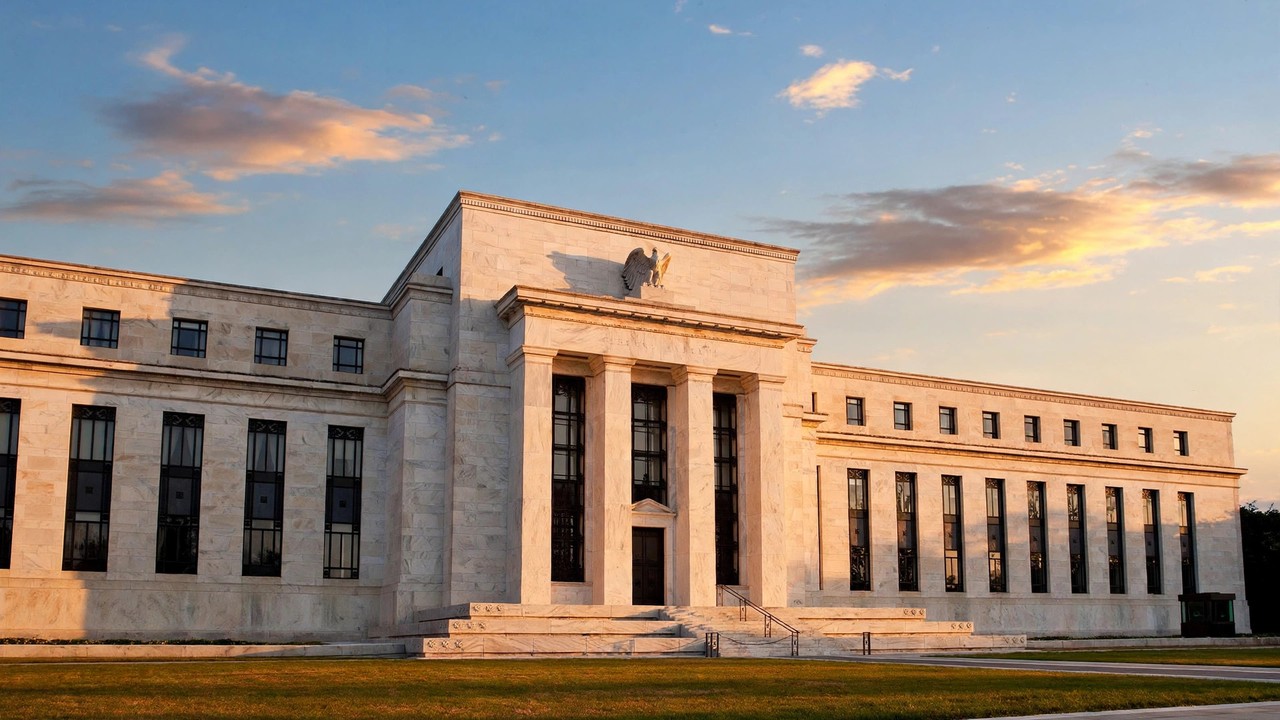
The Federal Reserve held interest rates steady on 28 October 2026, keeping its federal funds target range at 3.75%–4.00%. The decision, announced at 2:00 PM ET, confirmed that the central bank would leave borrowing costs unchanged for now, even as it kept the door open to a further move later in the year.
The vote was 10–2. Governor Lisa Cook and Cleveland Fed President Beth Hammack dissented, preferring a quarter-point increase instead of a hold. Their dissent made clear that the decision was not unanimous: two officials on the Federal Open Market Committee wanted to tighten policy further at this meeting.
The statement that accompanied the decision upgraded the description of economic activity to “expanding at a strong pace”, while keeping the assessment that “inflation remains elevated”. It also said that the accumulation of more information will help determine the appropriate policy stance — language that leaves the next move dependent on the data that arrives before the committee meets again.
What the statement said
In short, the Fed described an economy that is still expanding strongly and inflation that is still too high. Holding rates at 3.75%–4.00% keeps policy restrictive enough to bear down on inflation, without adding further tightening at a meeting where the committee preferred to gather more information first. The statement did not commit the committee to a particular move at its next meeting.
Two administered rates were also set alongside the decision. Interest on reserve balances was set at 3.90%, and the primary credit rate was set at 4.00%, both effective 29 October 2026. Those rates help implement the target range and guide short-term market rates.
Why two officials wanted a hike
Cook and Hammack dissented because they preferred a quarter-point increase. In practical terms, that means they judged that holding rates was not enough, at this meeting, to deal with inflation that the statement itself still describes as elevated. A dissent does not change the outcome, but it does signal where the internal debate sits: part of the committee is more worried about inflation staying high than about the cost of tightening further.
The 10–2 split therefore matters for how the next meeting is read. Markets and borrowers will now watch the data between now and December for signs of whether the hawkish case — the case for another increase — gains support, or whether the majority view, that waiting for more information is the right course, holds.
What the hold means for borrowers and savers
For borrowers, a hold means no immediate change in the Fed’s policy rate, so there is no new upward pressure on borrowing costs from this decision itself. Loans whose rates track the Fed’s stance, including many variable-rate products, are not pushed higher by a hold, although lenders’ own pricing still matters and existing rates remain at the higher levels set by earlier tightening.
For savers, the picture is similarly one of continuity rather than change. With the policy rate unchanged, there is no fresh reason for deposit rates to rise, but neither is there a cut that would pull them down. The more important question for both borrowers and savers is now December: after the decision, market pricing put a December quarter-point rise at roughly 85%, so the cost of borrowing could still move higher before the year is out.
Key Facts
- The FOMC held the federal funds target range at 3.75%–4.00% on 28 October 2026, announced at 2:00 PM ET.
- The vote was 10–2. Governor Lisa Cook and Cleveland Fed President Beth Hammack dissented, preferring a quarter-point increase.
- The statement upgraded activity to “expanding at a strong pace” and kept “inflation remains elevated”.
- The statement said the accumulation of more information will help determine the appropriate policy stance.
- Interest on reserve balances was set at 3.90% and the primary credit rate at 4.00%, both effective 29 October 2026.
- The next meeting is 8–9 December 2026, with a Summary of Economic Projections; minutes of the October meeting are due 18 November 2026.
- After the decision, market pricing put a December quarter-point rise at roughly 85%.
FAQ
What did the Fed decide on 28 October 2026?
It held the federal funds target range at 3.75%–4.00%, as announced at 2:00 PM ET.
How did the committee vote?
The vote was 10–2. Governor Lisa Cook and Cleveland Fed President Beth Hammack dissented, preferring a quarter-point increase.
What did the statement say about the economy and inflation?
It described activity as “expanding at a strong pace”, said “inflation remains elevated”, and said the accumulation of more information will help determine the appropriate policy stance.
When does the Fed meet next?
On 8–9 December 2026, with a Summary of Economic Projections. Minutes of the October meeting are due on 18 November 2026.
Does the hold mean rates will stay unchanged in December?
No. After the October decision, market pricing put a December quarter-point rise at roughly 85%, so a further increase remains the market’s central expectation, not a certainty.

2 comments