
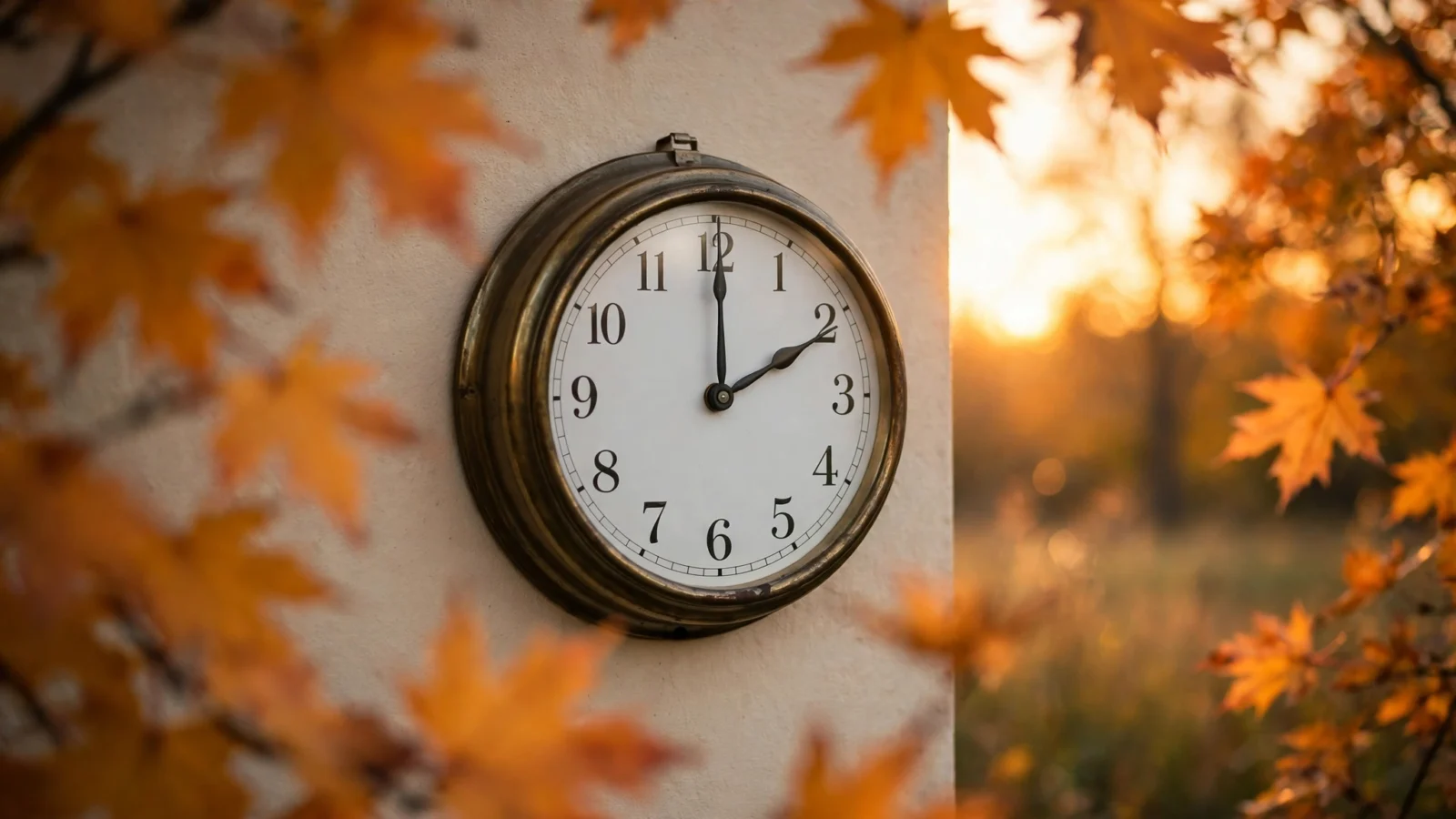
Most Americans will get an extra hour of sleep on the first weekend of November. Daylight saving time 2026 ends at 2:00 a.m. local time on Sunday, November 1, when clocks are turned back one hour to 1:00 a.m. and standard time returns for the winter months.
Daylight saving time 2026: when do clocks fall back?
In 2026, daylight saving time began on Sunday, March 8, and it ends on Sunday, November 1. Under federal law, the United States starts daylight saving time on the second Sunday in March and ends it on the first Sunday in November. Smartphones, computers and most connected devices will update automatically overnight. Wall clocks, watches, car dashboards and kitchen appliances usually need to be changed by hand, so the simplest habit is to set them back before going to bed on Saturday night, October 31.
Which states do not change their clocks?
Not every part of the country takes part. Hawaii and most of Arizona stay on standard time all year; the Navajo Nation in northeastern Arizona is the exception and does observe daylight saving time. The U.S. territories of American Samoa, Guam, the Northern Mariana Islands, Puerto Rico and the U.S. Virgin Islands also do not change their clocks.
What changes after November 1?
After the fall change, sunsets arrive about an hour earlier in the evening and sunrises come earlier in the morning. Standard time then stays in place for a little over four months. Daylight saving time returns on Sunday, March 14, 2027, when clocks spring forward again, and it will end on November 7, 2027.
Will the U.S. stop changing the clocks?
The twice-a-year change is debated regularly in Congress, and polls have repeatedly found that most Americans would prefer to stop switching. Proposals differ, some favor permanent daylight saving time and others permanent standard time, and so far no federal change has taken effect. Unless Congress acts, the schedule stays as it is, and the November 1 fall-back will happen as planned.
Daylight saving time is governed nationally by the Uniform Time Act of 1966, which is why the dates are the same across the country. States may choose to stay on standard time all year, as Hawaii and most of Arizona have done, but they cannot move to permanent daylight saving time on their own; that step requires an act of Congress, which is why several state laws on the subject are still waiting on Washington.
A quick checklist for the weekend
Set manual clocks back one hour on Saturday night. Fire departments also recommend using the clock change as a reminder to test smoke and carbon monoxide alarms and replace their batteries. If the darker evenings affect your sleep, shifting your bedtime by 15 to 30 minutes over a few nights can make Monday morning easier.
World Nation Wire will continue to track any congressional move on permanent time legislation. Read more in our latest news coverage.
Reference: 2026 clock-change schedule for the United States.
