


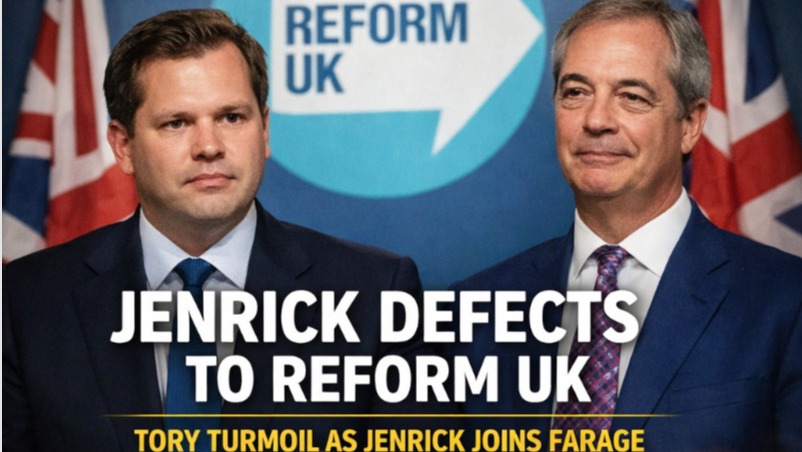
Robert Jenrick Defection: Inside the 24-Hour Conservative Party Crisis
In a whirlwind 24 hours of high-stakes political drama, former Conservative heavyweight Robert Jenrick was sacked, suspended, and defected to Nigel Farage’s Reform UK, exposing a deep and possibly irreparable fracture within Britain’s centre-right. This saga, involving claims of secret plots, leaked speeches, and a race to control the narrative, marks the most significant defection yet and signals a pivotal moment in the ongoing realignment of British politics. Here’s how the unprecedented crisis unfolded and what it means for the future.
The Pre-emptive Strike: Badenoch’s “Grenade”
The bombshell dropped not from Jenrick, but from his own leader. In a surprise video message early on Thursday, Conservative leader Kemi Badenoch announced she had fired Jenrick from the shadow cabinet and suspended his party membership “with immediate effect.”
Her reason was explosive: “clear, irrefutable evidence that he was plotting in secret to defect in a way designed to be as damaging as possible.” Badenoch’s team, in a “high state of alert” for months, claimed to have obtained a draft of Jenrick’s secret defection speech—a document containing what they called “vicious” personal criticism of senior colleagues like Mel Stride and Priti Patel.
This was a calculated, high-risk gambit. By sacking him first, Badenoch sought to transform the narrative from a story of principled departure to one of treachery exposed. One senior Tory ally framed it starkly: “She’s blown him up with his own grenade.” The move was designed to demonstrate decisive leadership and deter others contemplating the same jump. Badenoch later framed it as a purge, telling the BBC, “It is not a blow to lose someone who lies to his colleagues.”

The Defection: “Britain is in Decline”
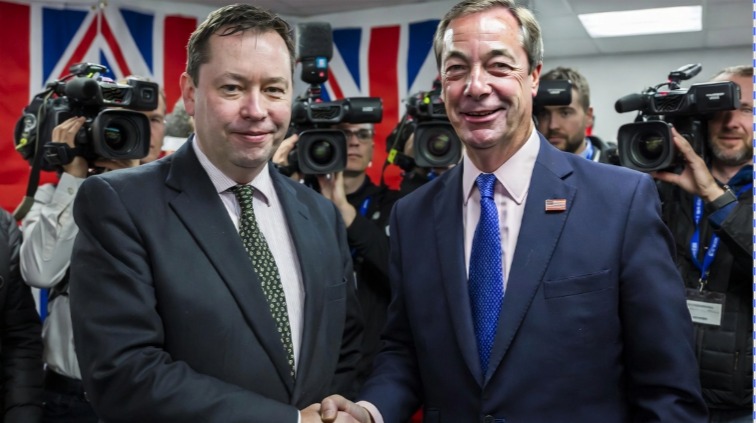
After hours of silence, Jenrick posted a cryptic message: “It’s time for the truth.” He soon appeared alongside Nigel Farage to confirm the worst fears of the Tory establishment. His defection speech was a scathing indictment of his former party.
He declared that “Britain is in decline” and that both the Conservative and Labour parties were “rotten” and “no longer fit for purpose.” His attacks were intensely personal and policy-focused. He accused former cabinet colleague Priti Patel of presiding over “the greatest failure of any British government in the post-war period” on migration and blamed shadow chancellor Mel Stride for an “explosion of the welfare bill.”
When pressed, Jenrick admitted he had “resolved to leave” before his sacking, framing his move as a long-considered, principled stand. He dismissed any leadership ambitions within Reform, stating unequivocally, “I want Nigel to be prime minister.” The event was not without farce—Jenrick briefly got lost backstage, leaving Farage to joke to waiting journalists, “I wondered if you had changed your mind.”
A Political Transformation Complete
Jenrick’s journey to this point is a story of remarkable political evolution. Once a mainstream Conservative who voted for Remain and backed Theresa May, his worldview hardened during his tenure as immigration minister. His resignation from Rishi Sunak’s government over the Rwanda policy marked his final break with the party’s centre, positioning him as a standard-bearer for the populist right.
His defection is the capstone of that transformation. Farage, who had previously labelled Jenrick “a fraud,” now welcomed him as a key piece in “realigning the centre-right of British politics.” For Jenrick, joining Reform represents the logical endpoint of a journey away from the party he now accuses of being “in denial” about the country it helped govern for 14 years.
Reactions: A Party Divided and a Rival Emboldened
The fallout echoed across Westminster:
-
Within the Conservatives: Reactions split between rallying around Badenoch’s decisiveness and despair at the strategic loss. Party Chair Kevin Hollinrake branded Jenrick “treacherous,” while others privately feared a floodgate moment. Former minister Tim Loughton sniped that Jenrick had been “completely out of his depth” as immigration minister.
-
Reform UK: The reception was triumphant but nuanced. While senior figures like Lee Anderson welcomed him, the defection exposes underlying tensions between former Tory MPs and Reform’s longstanding grassroots core.
-
Political Opponents: Labour Prime Minister Keir Starmer seized on the chaos, saying it showed the “Tory party is a sinking ship.” Liberal Democrat Daisy Cooper criticized Jenrick’s “industrial-grade brass neck” for blaming a situation he helped create.
The Strategy Behind the Jenrick Defection
The Strategic Calculus: Who Won the Day?
The immediate tactical victory went to Kemi Badenoch. She successfully dominated the news cycle, reframed a potentially catastrophic event, and projected strength. However, the strategic loss is profound. As BBC analysis noted, “the fact remains that this is by far the most senior defection from the Conservatives to Reform.”
The event underscores a fundamental truth: Reform UK is no longer a protest vehicle but a viable political home for disaffected Conservatives. Farage has set a deadline for MP defections (around the May elections), creating a ticking clock for wavering Tories. Jenrick’s move provides a template and cover for others to follow.
The Road Ahead: A Realignment in Motion
This 24-hour crisis is more than personal drama; it is a symptom of a deeper realignment. The Conservative Party’s delicate coalition is fracturing under the pressure of electoral decline and ideological contradiction. Reform UK, now packed with former Tory MPs, ministers, and a popular leader, is positioning itself as the true opposition to Labour on issues like immigration, net zero, and welfare.
The battle for the soul of the British right is now an open war. Jenrick’s defection signals that for a growing segment of the electorate and their representatives, the Conservative Party is past saving. The coming months will test whether Badenoch can stem the tide or if this defection becomes the first major crack in a dam about to break, permanently reshaping Britain’s political landscape. The stakes are nothing less than survival for one of the world’s oldest political parties.
Key Questions About Robert Jenrick’s Defection to Reform UK
Q1. Why did Robert Jenrick defect to Reform UK?
Robert Jenrick defected to Reform UK after claiming that the Conservative Party had lost its ideological direction, particularly on immigration, welfare reform, and national governance. He said Reform UK better reflects his political priorities.
Q2. Was Robert Jenrick sacked before joining Reform UK?
Yes. Robert Jenrick was first sacked from the Conservative shadow cabinet and suspended from the party by leader Kemi Badenoch, who accused him of secretly plotting a damaging defection.
Q3. What evidence did Kemi Badenoch cite against Jenrick?
Kemi Badenoch said she had “clear, irrefutable evidence” that Jenrick was planning his defection in secret, including a draft speech containing personal attacks on senior Conservative figures.
Q4. When did Robert Jenrick join Reform UK?
Robert Jenrick officially joined Reform UK within hours of being sacked, appearing publicly alongside party leader Nigel Farage on the same day to confirm his defection.
Q5. What did Nigel Farage say about Jenrick’s defection?
Nigel Farage welcomed Robert Jenrick as a major addition to Reform UK, calling his move part of a broader realignment of British centre-right politics and a sign that Reform UK is becoming a serious political force.
Q6. How has the Conservative Party reacted to the defection?
The Conservative Party has reacted with anger and concern. Senior figures described Jenrick’s actions as a betrayal, while others fear his defection could encourage more MPs to leave for Reform UK.
Q7. Does Robert Jenrick plan to challenge Nigel Farage’s leadership?
No. Jenrick has publicly stated that he does not intend to challenge Nigel Farage and said he supports Farage becoming the next prime minister.
Q8. Why is this defection significant for UK politics?
The Robert Jenrick defection to Reform UK is significant because he is the most senior Conservative figure yet to join the party, highlighting growing fractures within the Conservatives and strengthening Reform UK’s credibility.
Q9. Could more Conservative MPs defect to Reform UK?
Political analysts believe Jenrick’s move could encourage other disillusioned Conservative MPs to defect, especially ahead of upcoming elections, increasing pressure on party leader Kemi Badenoch.
Q10. What does this mean for the future of the British right?
The defection signals a possible long-term realignment of the British right, with Reform UK positioning itself as a viable alternative to the Conservatives on issues like immigration, net zero policies, and welfare reform.

