


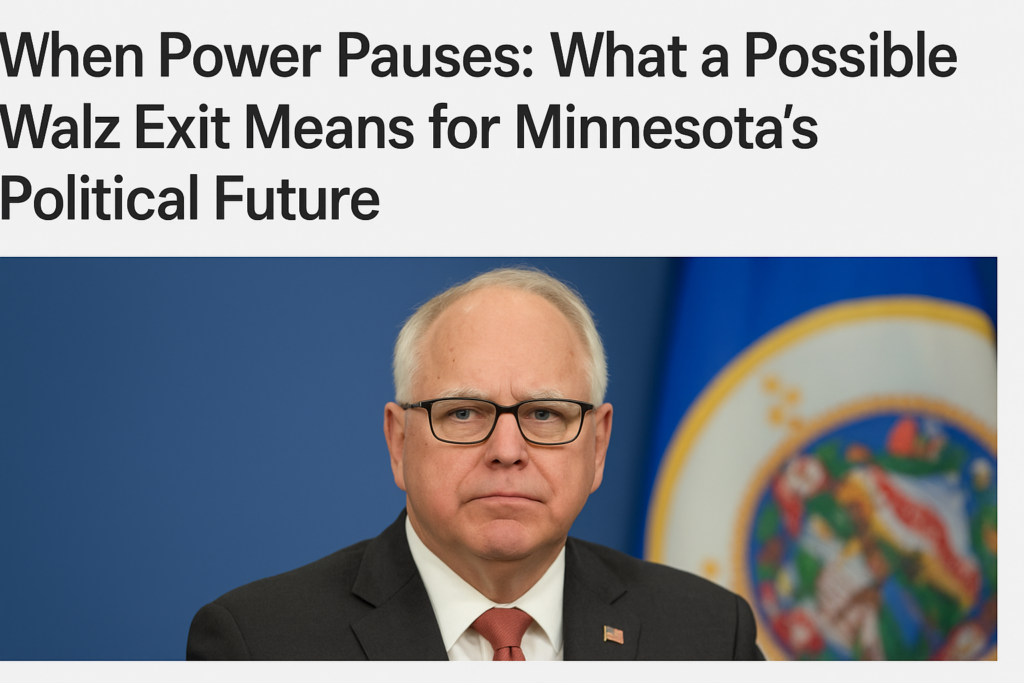
When Power Pauses: What a Possible Walz Exit Means for Minnesota’s Political Future
Tim Walz 2026 Governor Race: What His Possible Exit Means for Minnesota Politics
In democratic politics, leadership is often judged by visibility. Campaigns, elections, and time spent in office usually define political strength. However, some of the most influential moments happen quietly, when leaders pause instead of pushing forward. Recent reports suggesting that Governor Tim Walz may step away from the 2026 Minnesota governor’s race reflect such a moment.
While much of the public attention is focused on whether Walz will make a formal announcement, the deeper importance lies beyond the headline. This situation is not only about one election cycle. It highlights changing approaches to political leadership, succession planning, and long-term governance in Minnesota.
Political Context Behind the Current Reports
Political trends develop through patterns rather than isolated events. When multiple outlets point toward the same outcome, it often signals internal political movement. The discussion around a possible Walz exit appears to be part of a broader realignment rather than a sudden shift.
Experienced state leaders typically evaluate more than electoral numbers. They consider institutional stability, party direction, and the long-term impact of their decisions. From this perspective, the current speculation fits into a familiar political process seen in state governance across the United States.
Tim Walz as a Governing Figure in Minnesota
Tim Walz has played a central role in shaping Minnesota’s political environment. As governor, his leadership has influenced administrative priorities, public policy direction, and party organization. Because of this, any indication that he may not seek reelection carries implications beyond his personal political future.
When a sitting governor signals a potential pause, several shifts tend to follow. Party leaders reassess future candidates. Potential challengers begin preparing earlier. Voters start evaluating alternatives more seriously. These dynamics alone are enough to reshape an upcoming election cycle.
Why Leadership Pauses Matter in Modern Politics
Choosing not to run does not automatically signal political decline. In many cases, it reflects strategic thinking. Leadership pauses can help prevent political fatigue and allow new voices to emerge within established systems.
At the state level, open governor races often encourage stronger debate around policy outcomes rather than individual personalities. This shift can strengthen democratic processes by focusing public attention on governance quality, economic management, and social stability.
Minnesota may now be entering such a transitional phase.
Minnesota’s Political Landscape Ahead of 2026
(2026 Governor Race)
The 2026 governor’s race will take place during a period of evolving voter expectations. Citizens are increasingly focused on practical governance issues such as public services, economic resilience, and administrative efficiency.
If Walz does not enter the race, the political environment is likely to become more competitive. New leadership figures may gain visibility. Campaigns may place greater emphasis on policy clarity and measurable outcomes. Voter engagement often increases in situations where the electoral field feels genuinely open.
Political Influence Beyond Holding Office
Political influence does not end with an election decision. Former governors frequently continue shaping public debate through advisory roles, party leadership, or policy advocacy. Stepping away from a race can allow leaders to remain influential without the constraints of electoral campaigning.
If Walz transitions into this phase, his experience and institutional knowledge could still affect Minnesota politics in less visible but meaningful ways.
What This Means for Minnesota Voters
For voters, leadership transitions can be empowering. Without a dominant incumbent, candidates must work harder to earn trust. This often leads to clearer policy positions, increased transparency, and stronger accountability.
Competitive elections encourage meaningful participation and offer voters a wider range of choices. From a democratic standpoint, such moments tend to strengthen political systems rather than weaken them.
How Power Is Being Redefined in State Politics
Modern political power is not defined solely by holding office. Timing, restraint, and narrative control play important roles. Even without an official announcement, the discussion surrounding Walz’s political future has already influenced how the 2026 race is viewed.
The conversation has shifted from continuity to possibility, creating space for new leadership discussions across Minnesota.
Conclusion
The reports surrounding Governor Tim Walz and the 2026 Minnesota governor’s race represent more than developing political news. They point to a period of adjustment within the state’s political system.
When power pauses, it often creates room for renewal, competition, and fresh direction. Minnesota now stands at a point where leadership choices may shape not just the next election, but the broader political future of the state.