
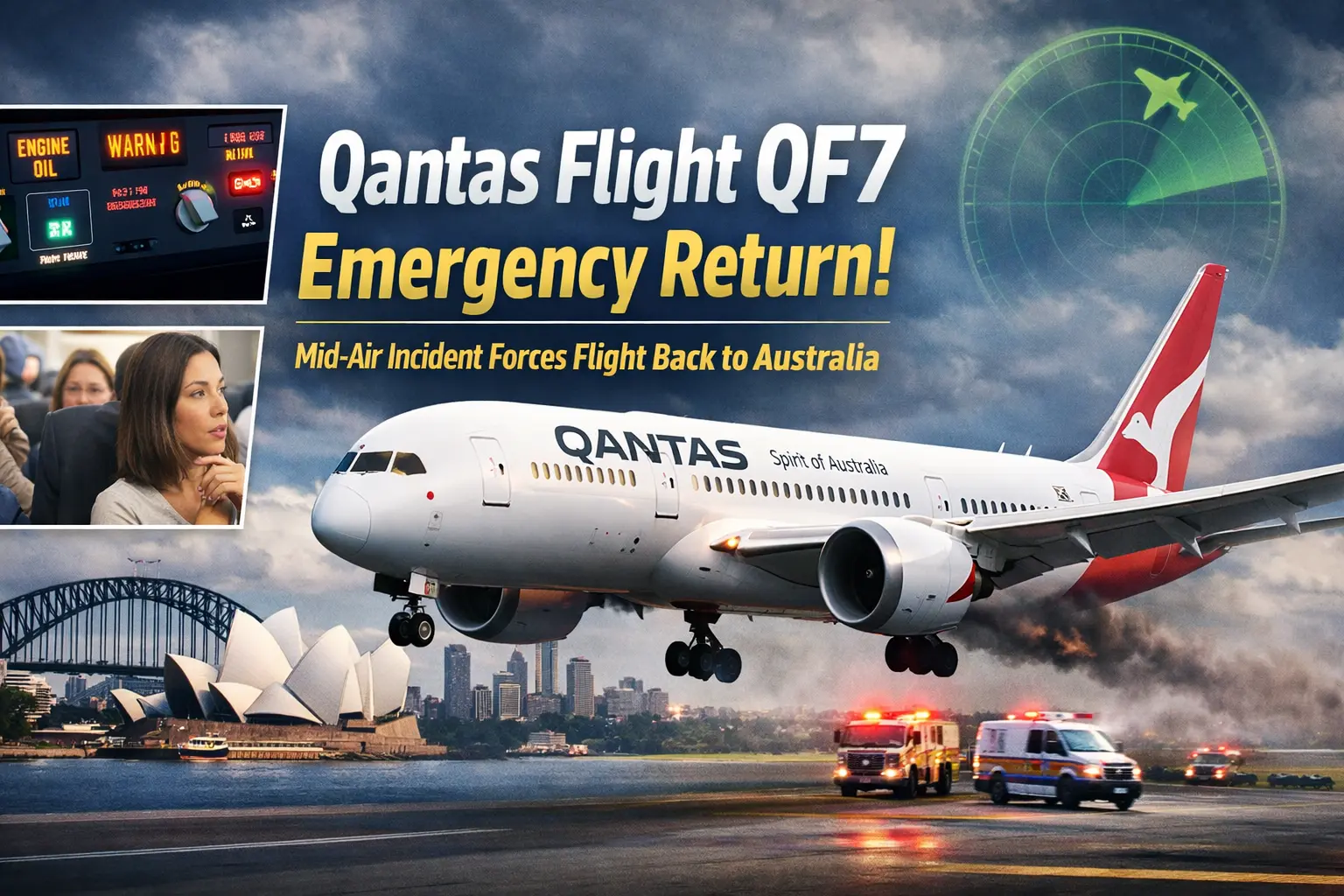

Qantas Flight QF7 Emergency: Full Incident Report and Passenger Impact
A long-haul journey turned into a tense mid-air situation when Qantas Flight QF7 was forced to make an emergency return shortly after departure. The incident has quickly become a major aviation story, raising questions about aircraft safety, emergency protocols, and passenger preparedness.
In this detailed report, we break down exactly what happened, why the aircraft returned, how the crew handled the situation, and what this means for travelers worldwide.
What Happened on Qantas Flight QF7
Qantas Flight QF7 is a regularly scheduled long-haul international service connecting Australia to the United States. On the day of the incident, the aircraft had departed normally and climbed to cruising altitude before something unexpected occurred.
According to initial reports, the aircraft experienced a technical issue mid-flight, prompting the pilots to make a precautionary decision to turn the aircraft back to Australia.
Passengers reported:
- Sudden changes in cabin announcements
- Noticeable shift in flight path
- Calm but firm communication from the crew
The pilots followed strict aviation safety procedures and declared a return as a preventive safety measure, not a catastrophic emergency.
Why Did Qantas Flight QF7 Turn Back?
While official investigations are ongoing, early information suggests the return was due to one of the following:
| Possible Cause | Description | Risk Level |
|---|---|---|
| Technical Fault | Minor system warning detected in cockpit | Low to Medium |
| Engine Monitoring Alert | Sensor triggered unusual readings | Medium |
| Cabin System Issue | Pressurization or environmental system alert | Medium |
| Safety Protocol Trigger | Precautionary return despite stable flight | Low |
Modern aircraft are designed with multiple redundancies, meaning even if one system fails, the aircraft can continue safely. However, aviation protocols prioritize absolute safety over risk-taking.
Aircraft Details and Route Information
| Category | Details |
|---|---|
| Flight Number | QF7 |
| Airline | Qantas |
| Route | Australia to United States |
| Aircraft Type | Long-haul wide-body jet |
| Status | Returned safely |
| Injuries | None reported |
The aircraft landed safely without any injuries, reinforcing the effectiveness of modern aviation safety systems.
Passenger Experience: What It Was Like Onboard
Passengers described the situation as controlled but tense. Unlike dramatic emergency scenarios, this incident unfolded quietly with professional handling by the crew.
Common passenger observations:
- No panic among crew or passengers
- Clear communication from pilots
- Smooth return and landing
- Emergency services waiting as a precaution
One passenger described the experience as:
“Unexpected, but handled professionally. You could tell the crew was trained for this.”
How Aviation Safety Protocols Work in Such Situations
When an issue arises mid-air, pilots follow a strict decision-making framework:
Step-by-Step Response
- Identify the issue via cockpit alerts
- Assess severity and system redundancy
- Contact air traffic control
- Decide whether to continue or return
- Inform passengers
- Prepare for precautionary landing
This structured approach ensures that even minor issues are treated with maximum seriousness.
Emergency Return vs Emergency Landing: Key Differences
| Factor | Emergency Return | Emergency Landing |
|---|---|---|
| Severity | Precautionary | Critical |
| Aircraft Control | Fully stable | Potentially compromised |
| Passenger Risk | Low | Medium to High |
| Crew Response | Standard protocol | High alert emergency |
| Outcome | Safe return | Immediate landing required |
Qantas Flight QF7 falls into the emergency return category, which is far less dangerous than an emergency landing scenario.
How Common Are Mid-Air Returns?
Mid-air returns are more common than people think. Globally, thousands of flights operate daily, and a small percentage experience precautionary returns.
Global Aviation Data Insights
- Less than 1 percent of flights return mid-air
- Most returns are due to minor technical issues
- Fatal incidents are extremely rare
- Aviation remains one of the safest travel modes
This context is important to understand that such events, while newsworthy, are not unusual in aviation operations.
Qantas Safety Record and Reputation
Qantas is widely regarded as one of the safest airlines in the world. It has built a strong reputation for:
- Strict maintenance standards
- Advanced pilot training
- Transparent safety reporting
- Rapid response to incidents
The handling of Flight QF7 further reinforces that reputation, as the airline chose safety over schedule.
What Happens After an Incident Like This
After the aircraft lands, several processes begin immediately:
Post-Incident Procedures
- Full technical inspection of the aircraft
- Review of cockpit data and flight logs
- Crew debriefing
- Passenger support and rebooking
- Official statement from the airline
Regulatory authorities may also conduct independent reviews to ensure compliance with safety standards.
Passenger Rights and Compensation
Passengers affected by such incidents are typically entitled to:
- Rebooking on the next available flight
- Meals and accommodation if required
- Compensation depending on delay duration and region
However, since this was a safety-related return, airlines are generally protected from heavy compensation claims under aviation laws.
Comparison: QF7 Incident vs Other Recent Aviation Events
| Incident | Airline | Cause | Outcome |
|---|---|---|---|
| QF7 Return | Qantas | Technical precaution | Safe landing |
| Engine Failure Case | Various | Mechanical failure | Emergency landing |
| Weather Diversion | Multiple airlines | Severe weather | Alternate airport landing |
Compared to other incidents, QF7 is considered low-risk and well-managed.
What This Means for Travelers
For frequent flyers and international travelers, this incident highlights a key truth:
Airlines prioritize safety above everything else.
Even a small irregularity can trigger a return decision, which may inconvenience passengers but ensures maximum safety.
How to Stay Calm During Flight Incidents
If you ever experience a similar situation:
- Listen carefully to crew instructions
- Avoid panic or speculation
- Trust the training of airline staff
- Stay seated and follow safety protocols
Remember, pilots are trained to handle far more complex scenarios than what passengers usually experience.
Expert Insight: Why Turning Back Is the Right Decision
Aviation experts agree that returning to the departure airport is often the safest option because:
- Maintenance teams are readily available
- Spare aircraft can be arranged
- Familiar runway and weather conditions
- Reduced risk compared to continuing long-haul
This is why the QF7 crew made the decision they did.
Media Coverage and Public Reaction
The incident quickly gained attention across major news platforms, with headlines focusing on:
- Emergency return
- Mid-air incident
- Passenger safety
Despite initial concern, public sentiment has largely been positive, praising the airline’s cautious approach.
Final Thoughts: A Reminder of Aviation Safety Standards
The Qantas Flight QF7 incident may sound alarming at first, but in reality, it demonstrates how modern aviation systems are designed to prevent risk before it escalates.
Instead of being a failure, this event is an example of:
- Effective safety protocols
- Skilled pilot decision-making
- Reliable aircraft systems
- Responsible airline management
For passengers, the takeaway is clear: even when things don’t go as planned, the aviation industry is built to keep you safe at every step.
Key Takeaways
- Qantas Flight QF7 returned mid-air due to a precautionary issue
- No injuries were reported
- The crew followed standard safety protocols
- Such incidents are rare but not unusual
- Aviation remains one of the safest ways to travel
READ MORE ‘


 By
By