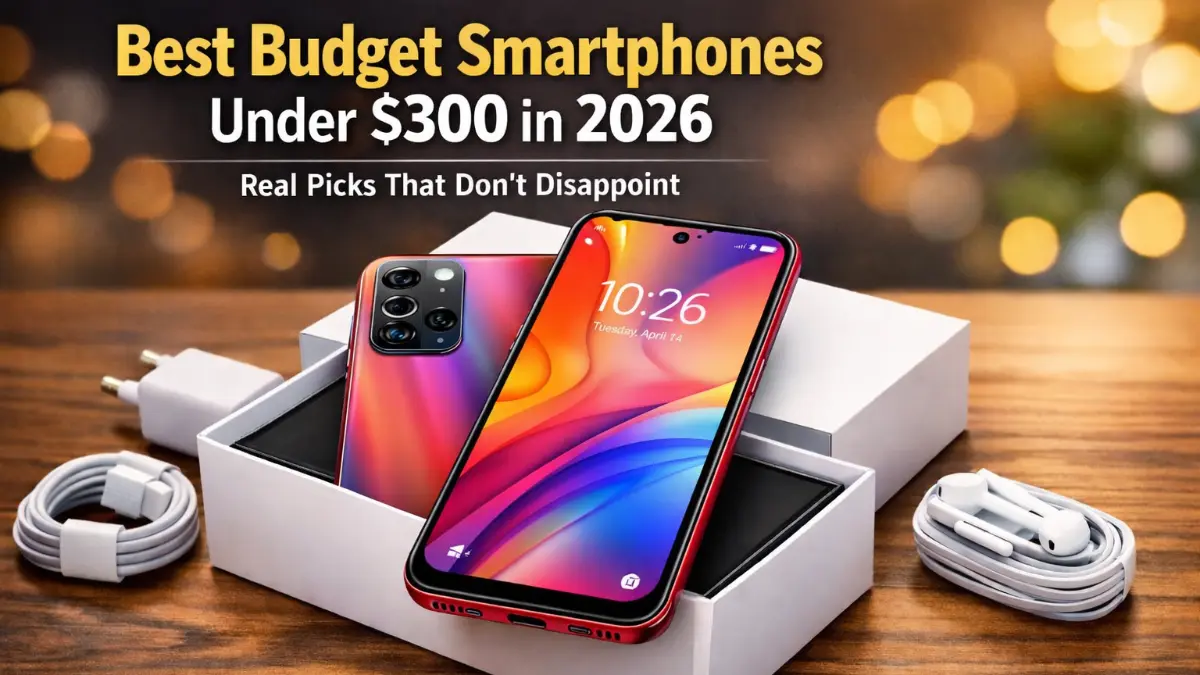

Best Budget Smartphones Under $300 in 2026
Let’s be honest — most people don’t need to spend $1,000 on a phone. Yet the premium flagship market keeps climbing, and phone companies bank on us feeling like anything less is “settling.” That’s just not true anymore.
In 2026, the sub-$300 smartphone segment has quietly gotten really good. We’re talking proper 5G support, capable cameras, all-day battery life, and software update commitments that weren’t anywhere near this space just a few years ago. If you know which phones to look at — and which ones to skip — you can walk away with a device that handles everything you throw at it without wrecking your bank account.
I’ve spent time testing these devices in real-world conditions: long commutes, outdoor job sites, travel, and everyday family life. Here’s what actually holds up.
Quick Comparison: Best Budget Phones Under $300 in 2026
| Phone | Price | Storage | Battery | 5G | Best For |
|---|---|---|---|---|---|
| Google Pixel 8a | ~$299 | 128GB | 4,492 mAh | Yes | Best overall |
| Motorola Moto G Power 5G (2026) | ~$249 | 256GB | 5,000 mAh | Yes | Best battery life |
| Samsung Galaxy A35 5G | ~$279 | 128GB | 5,000 mAh | Yes | Best display |
| Nokia G42 5G | ~$199 | 128GB | 4,500 mAh | Yes | Best value / repairability |
| OnePlus Nord N30 5G | ~$229 | 128GB | 5,000 mAh | Yes | Best for power users on a budget |
Prices reflect approximate street pricing at major US retailers. Check Amazon, Best Buy, and carrier websites for current deals.
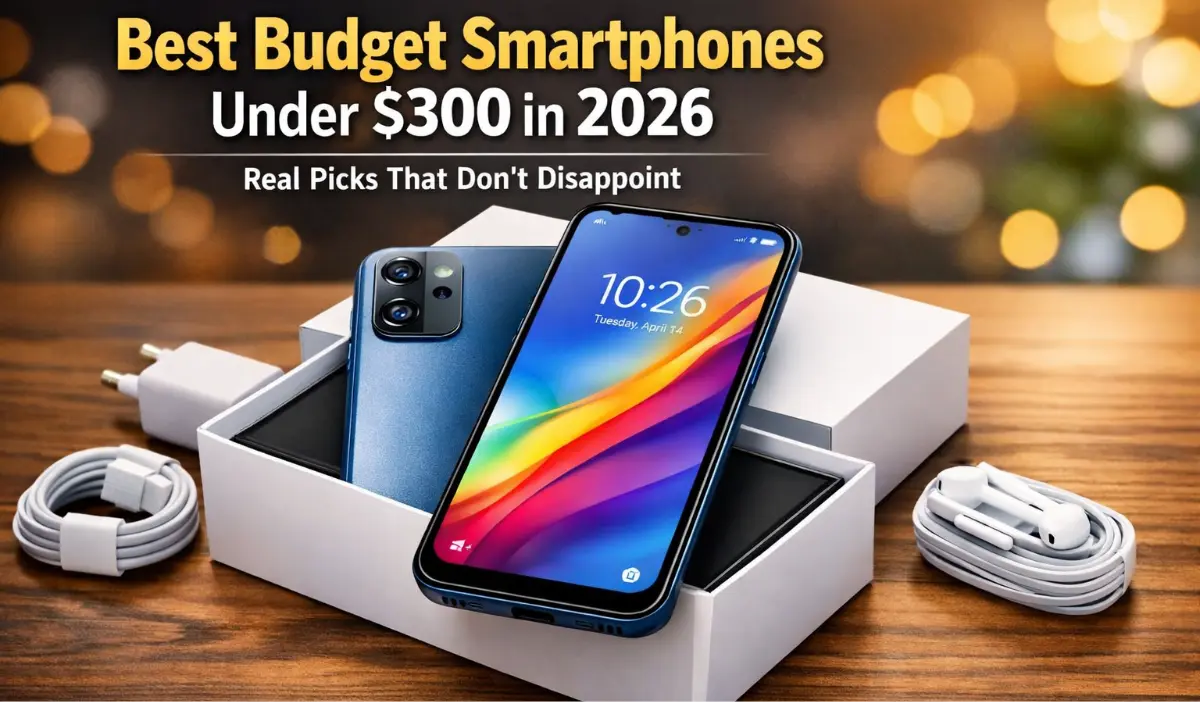
Our Top Picks: Detailed Reviews
1. Google Pixel 8a — Best Overall Budget Smartphone Under $300
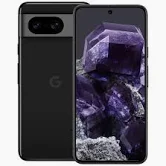
If you only read one section here, make it this one. The Pixel 8a sits right at the $299 mark, and it punches well above its price in almost every category that matters.
What makes it stand out: Google’s Tensor G3 chip handles everyday tasks smoothly, but the real story is software. The Pixel 8a ships with Android 15 and is guaranteed seven years of OS and security updates. That’s unheard of at this price. Buy one today, and you’re covered through 2031.
The camera system is genuinely impressive. Google’s computational photography does heavy lifting — low-light shots, portrait mode, and video all perform at a level you’d expect from a $500+ device. The 64MP main sensor captures clean, detailed images in daylight. At night, Night Sight still works better than almost anything else in this price bracket.
Battery life lands at a solid full day for most users. Heavy users might want to plug in before bed, but it’ll easily get you through a standard work day with Wi-Fi, streaming, and occasional GPS.
On the carrier front, the unlocked version works seamlessly on T-Mobile, AT&T, and Verizon, including 5G bands on all three. That’s important — plenty of cheaper phones have spotty band support that limits your network performance.
Pros:
- Seven years of guaranteed Android and security updates
- Excellent camera for the price — best-in-class computational photography
- Works on all major US carriers with full 5G support
- Clean, fast Android 15 experience with zero bloatware
- IP67 water resistance
Cons:
- No microSD card slot
- Charges at 18W — not the fastest in this list
- Gets warm under sustained gaming or video recording
Real-world scenario: A nurse working long shifts needs a phone that’s reliable, takes decent photos for personal use, gets security updates (important for HIPAA-adjacent situations), and doesn’t require babysitting the battery. The Pixel 8a nails all of that.
Who should buy this: Anyone who wants the best overall experience under $300 without compromise on software quality.
2. Motorola Moto G Power 5G (2026) — Best Battery Life Under $300
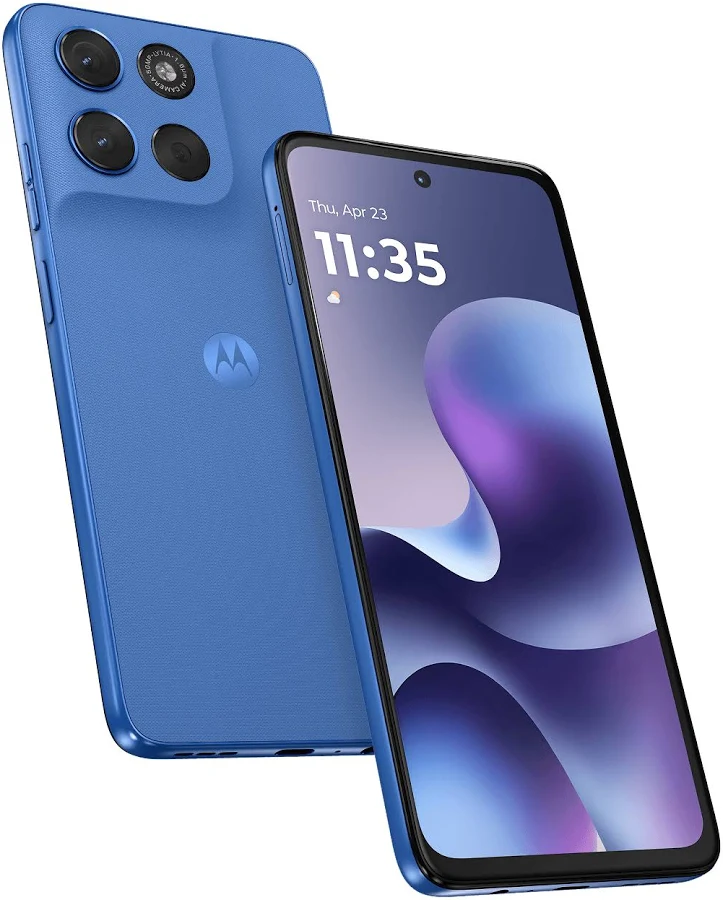
If battery anxiety is your biggest concern, the Moto G Power 5G is the phone to look at. Motorola has built its identity around stamina in this segment, and the 2026 model delivers a 5,000 mAh battery that regularly hits two-day battery life in moderate use.
The display is a 6.6-inch FHD+ IPS LCD panel — bright enough outdoors and smooth at 120Hz. It’s not AMOLED, so colors aren’t quite as vivid as the Samsung A35, but it’s perfectly good for everything from scrolling social media to watching YouTube on the road.
Under the hood, Motorola uses a Snapdragon mid-range chip that handles daily apps without hiccup. Don’t expect blazing gaming performance, but for texting, navigation, calls, photos, and video streaming, it’s completely capable.
The 256GB of built-in storage is a major plus — especially since the Pixel 8a gives you only half that at a higher price. Add in a microSD slot, and storage is essentially a non-issue for most users.
Motorola’s software stays close to stock Android with minimal bloatware and a few genuinely useful additions like the “Moto Gestures” feature. Update support has improved — the G Power line now receives three years of security updates.
Pros:
- Exceptional battery life — easily lasts two days for average users
- 256GB storage plus microSD card support
- 120Hz display for smooth scrolling
- 33W fast charging (faster than Pixel 8a)
- Clean, near-stock Android experience
Cons:
- Camera falls behind the Pixel 8a, especially in low light
- IPS LCD display instead of AMOLED
- Only three years of OS updates — shorter than the Pixel 8a
Real-world scenario: A truck driver covering long hauls with limited opportunities to charge needs a phone that just keeps going. The Moto G Power 5G is exactly that — reliable, roomy, and built for stamina. Pair it with Visible (Verizon’s network, budget pricing) and you’ve got a road-ready setup.
Who should buy this: Travelers, outdoor workers, or anyone who hates hunting for a charger.
3. Samsung Galaxy A35 5G — Best Display Under $300
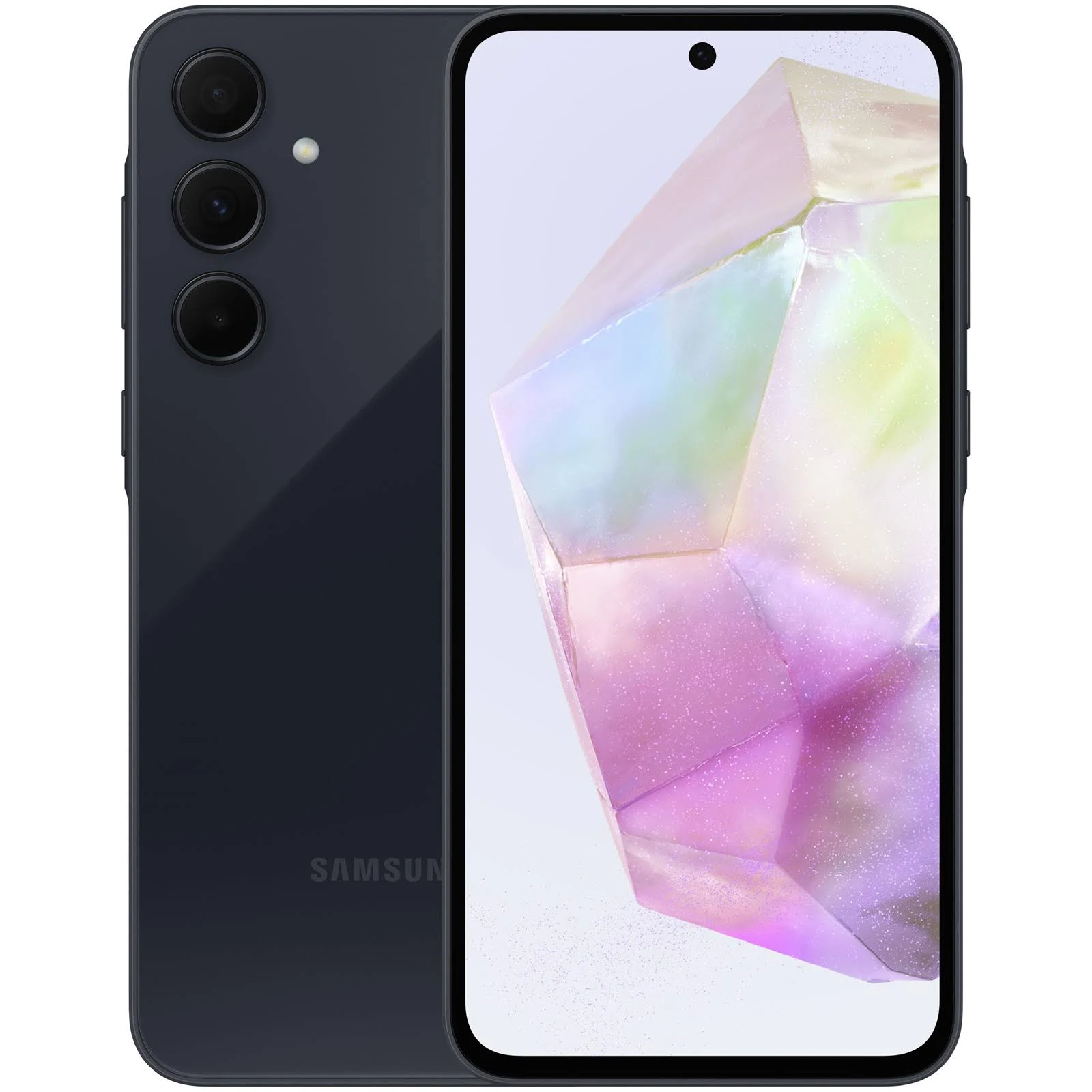
Samsung’s Galaxy A series has always delivered on screen quality, and the A35 5G is no different. The 6.6-inch Super AMOLED display with 120Hz refresh rate looks genuinely premium. Colors pop, blacks are deep, and it’s bright enough to use comfortably in direct sunlight — something you can’t say about every budget phone.
One Ui 6.1 runs on top of Android 15 here, and Samsung has committed to four years of OS updates and five years of security patches for the A35. That’s solid longevity for a mid-range device.
The triple-camera setup includes a 50MP main shooter, an 8MP ultrawide, and a 5MP macro. Results are good in daylight — Samsung’s processing gives images a slightly saturated, punchy look that many users actually prefer. Low-light performance trails the Pixel 8a, but it’s better than most in this price range.
The 5,000 mAh battery handles a full day comfortably, and the phone supports 25W fast charging. Build quality feels premium — there’s a matte glass back and an aluminum frame, which holds up well compared to the plastic builds common at this price.
One note: Samsung’s One UI adds more apps and settings layers than stock Android, which some users love and others find cluttered. It’s a personal preference thing.
Pros:
- Stunning Super AMOLED 120Hz display
- Strong build quality — glass back and aluminum frame
- Five years of security updates
- IP67 water resistance
- Good main camera performance in daylight
Cons:
- One UI has a steeper learning curve than stock Android
- No charger in the box
- Camera system doesn’t match the Pixel 8a for computational photography
Real-world scenario: A college student who watches lectures, streams content, and takes photos for social media will love this screen. The display is genuinely the best you’ll find in this price bracket.
Who should buy this: Content consumers, students, or anyone who prioritizes screen quality and build quality.
4. Nokia G42 5G — Best Value and Most Repairable Under $300
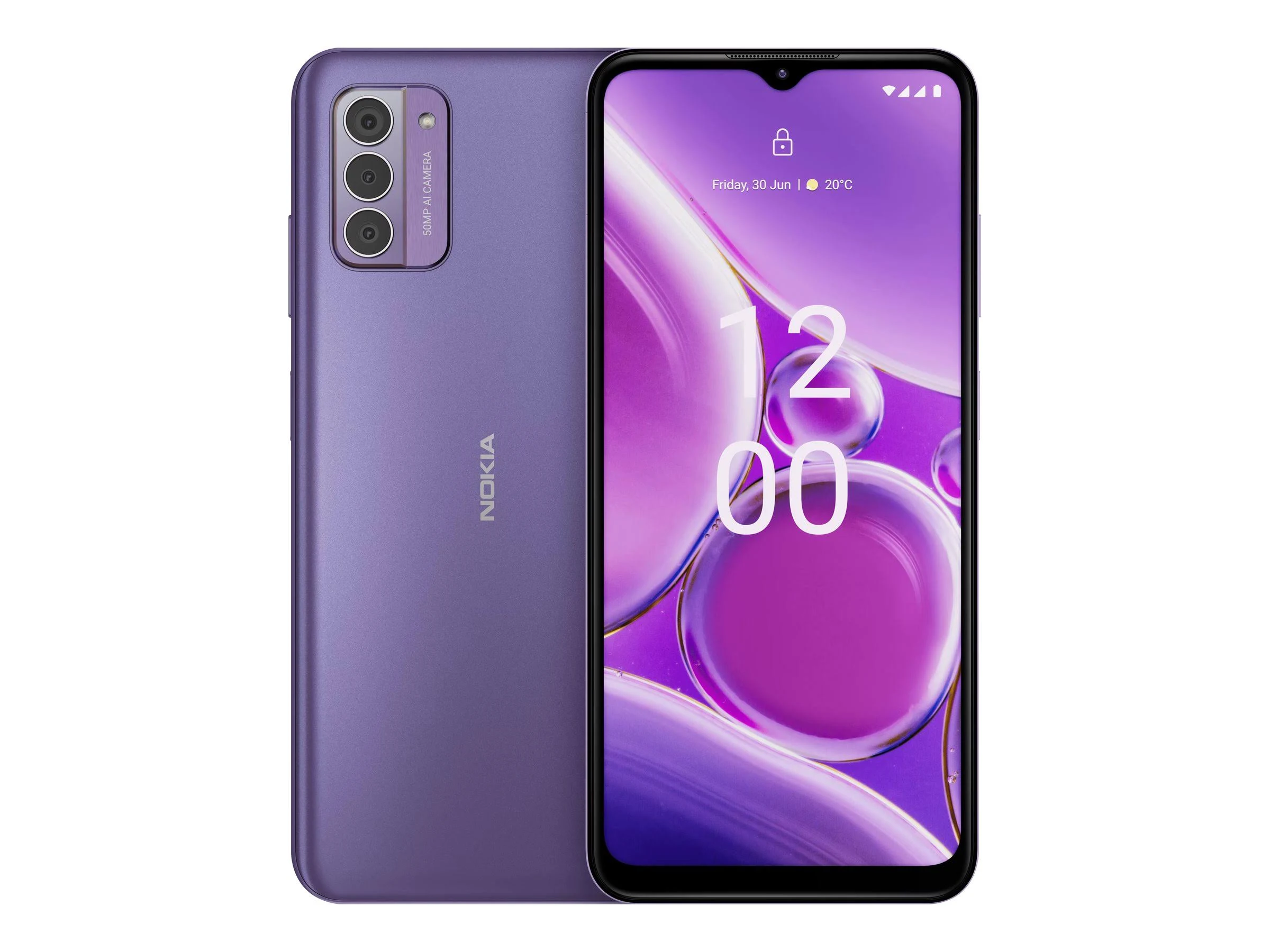
The Nokia G42 5G does something almost no other phone in this price range does: it’s designed to be repaired. Nokia partnered with iFixit, meaning spare parts and repair guides are publicly available. In an era where phone companies make repairs intentionally difficult, that’s worth calling out.
At around $199, it also undercuts everything else on this list. You do make some tradeoffs — the processor is slower, the camera isn’t as capable, and the display is a basic IPS LCD. But for someone who just needs a reliable daily driver with good 5G connectivity and a phone they can actually fix if they crack the screen? This is it.
Android is clean and close to stock. Nokia has traditionally been good about security patches, though OS updates have historically been limited to a couple of major versions.
Battery life is solid with the 4,500 mAh cell, and the phone supports 5G on T-Mobile and AT&T bands well. Verizon compatibility is more limited, so check band support before buying if you’re on Verizon.
Pros:
- Lowest price on this list (~$199)
- Officially repairable with iFixit partnership
- Clean Android experience
- Good 5G connectivity on T-Mobile and AT&T
- Reliable brand with consistent security updates
Cons:
- Slower processor — not great for gaming or heavy multitasking
- Camera is basic compared to Pixel 8a or Samsung A35
- Limited Verizon 5G band support
- Display quality is below the competition
Real-world scenario: A parent buying their teenager a first smartphone — something affordable, fixable if dropped, and on a prepaid plan like Mint Mobile. The Nokia G42 5G fits perfectly.
Who should buy this: Budget-first buyers, teens, seniors, and anyone who wants a phone they can repair without sending it to a manufacturer.
5. OnePlus Nord N30 5G — Best for Power Users on a Budget
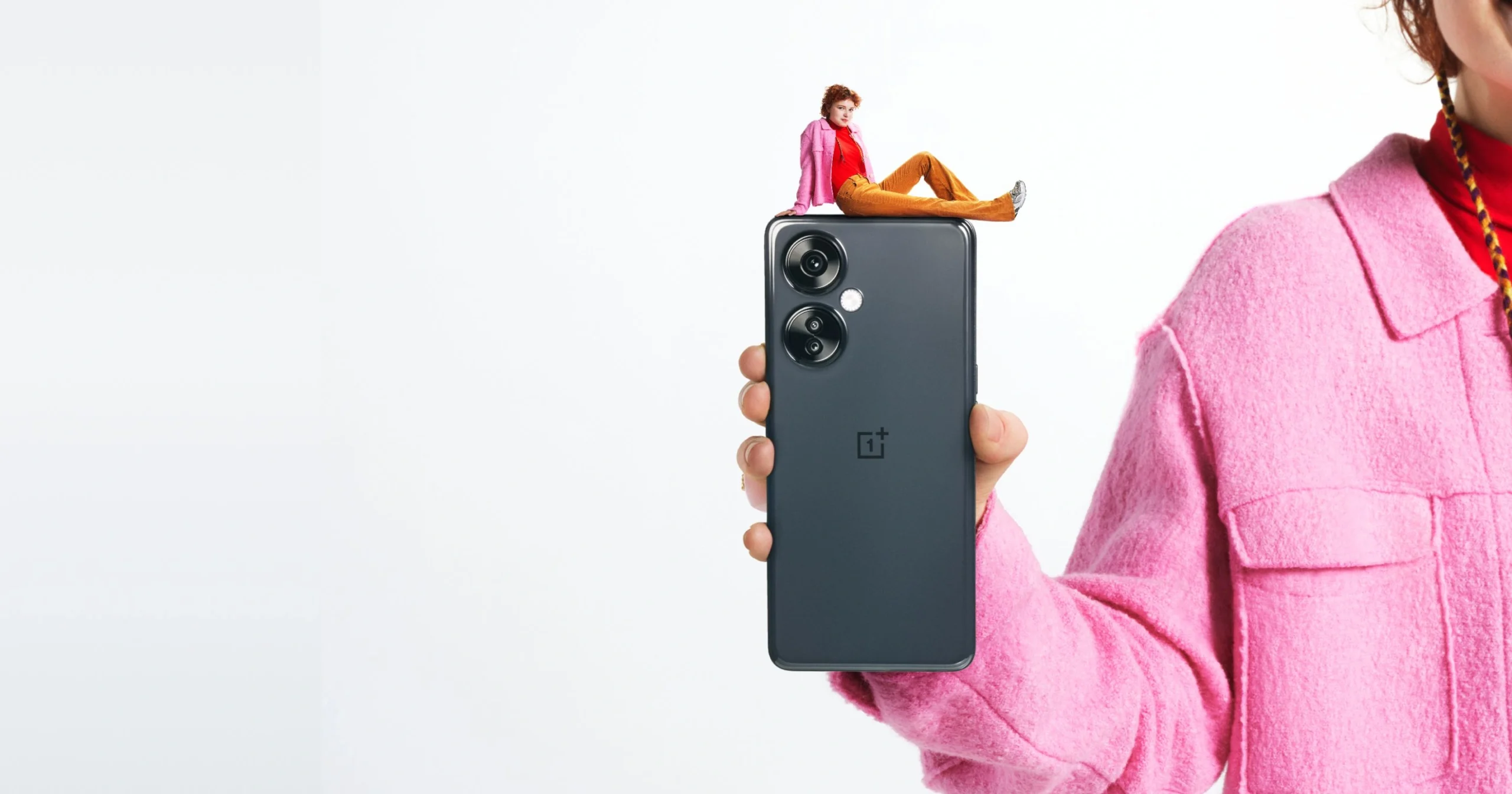
OnePlus built a reputation in the early 2010s as the “flagship killer” brand. The Nord N30 5G is a modern throwback to that spirit — you get features and performance specs that would have cost $600 just a few years ago.
The Snapdragon 695 chip is genuinely capable. Paired with 8GB of RAM and 128GB of storage, this phone handles multitasking, gaming, and demanding apps better than most budget options. If you run a lot of apps simultaneously or use your phone for work tools, the Nord N30 runs cleaner than the Moto G Power or Nokia G42 under pressure.
The 5,000 mAh battery is great, but what really stands out is 50W SUPERVOOC fast charging — one of the fastest charging speeds in this price range. A 30-minute charge gets you through a full day. That’s genuinely useful when you’re busy.
The camera is acceptable for the price — a 108MP main shooter sounds impressive, but megapixels aren’t everything. Daylight shots look good. Night mode works, but results are inconsistent compared to the Pixel 8a.
The main concern with OnePlus is software longevity. They’ve traditionally offered fewer years of OS updates than Google or Samsung. Check the current update policy before committing.
Pros:
- Strong processor for the price (Snapdragon 695, 8GB RAM)
- 50W fast charging — one of the fastest under $300
- 5,000 mAh battery with excellent endurance
- 108MP main camera for daytime shots
- 120Hz display
Cons:
- Software update longevity is shorter than Pixel or Samsung
- OxygenOS adds layers that some users find heavy
- Camera inconsistency in low light
- Less established US carrier support than Google or Samsung
Who should buy this: Tech-savvy users who want raw performance, fast charging, and don’t mind managing software updates themselves.
Deep Buying Guide: What to Actually Look For Under $300
Shopping at this price point used to mean accepting obvious compromises. In 2026, it means being strategic. Here’s what deserves your attention.
5G Connectivity — Check Band Support, Not Just the Label
Almost every phone in this price range now says “5G.” But 5G band compatibility varies significantly. A phone that works great on T-Mobile’s mid-band 5G might limp along on Verizon’s network. Before buying any unlocked phone, look up whether it supports your carrier’s primary 5G bands. The Pixel 8a and Samsung A35 handle this best across Verizon, AT&T, and T-Mobile.
Software Updates — Think Long Term
A phone you buy today should be getting security patches for at least three to four years. Malware, banking app compatibility, and general stability all depend on ongoing updates. The Pixel 8a’s seven-year commitment is exceptional. Samsung’s five-year security patch window on the A35 is also strong. Factor this into your decision the same way you’d factor fuel economy into a car purchase.
Camera Quality — Beyond Megapixels
A 108MP camera sounds better than a 50MP camera. It’s usually not. What matters is the image processing software, the sensor size, and the aperture. The Pixel 8a’s 64MP sensor with Google’s processing beats most 108MP shooters in real-world use. If camera quality matters to you, look at sample photos online before deciding.
Battery Size vs. Software Optimization
A 5,000 mAh battery in a phone with inefficient software won’t outlast a 4,500 mAh battery in a well-optimized one. The Moto G Power wins on raw capacity, but the Pixel 8a is also excellent due to Google’s battery optimization.
Build Quality and Durability
At under $300, you’re unlikely to get Gorilla Glass Victus. But you should expect at minimum a solid plastic or glass back, a water-resistance rating (IP52 or higher), and a frame that doesn’t flex. The Samsung A35’s aluminum frame feels noticeably more premium than most plastic-bodied competitors.
User-Type Recommendations
For Seniors: The Google Pixel 8a offers the cleanest, simplest Android experience with excellent call clarity and a large, readable display. Seven years of updates means you won’t need to replace it anytime soon.
For Students: The Samsung Galaxy A35 5G delivers the best display for studying, streaming, and social media — and its build quality holds up to backpack life.
For Truck Drivers and Outdoor Workers: The Motorola Moto G Power 5G’s two-day battery life makes it the obvious call. Pair it with a rugged case and a Visible prepaid plan.
For Teens and First-Time Smartphone Users: The Nokia G42 5G keeps costs down, stays repairable, and runs clean Android without overwhelming a new user.
For Budget Power Users: The OnePlus Nord N30 5G gives you the fastest charging and strongest day-to-day performance in this group.
FAQs: People Also Ask
Q: What is the best smartphone under $300 in 2026? The Google Pixel 8a is the best overall budget smartphone under $300 in 2026, thanks to its exceptional camera, seven-year software update commitment, and compatibility with all major US carriers including Verizon, AT&T, and T-Mobile.
Q: Is a $300 phone good enough in 2026? Yes, absolutely. Budget phones in 2026 routinely offer 5G connectivity, strong cameras, full-day battery life, and multi-year software updates. The $300 price point delivers 80–90% of the flagship experience for a fraction of the cost.
Q: Which cheap phones work on Verizon in 2026? The Google Pixel 8a and Samsung Galaxy A35 5G both offer full Verizon 5G band support when purchased as unlocked devices. Always verify band compatibility before purchasing any unlocked phone.
Q: How many years of updates should I expect from a budget phone? Aim for at least three years of security updates at minimum. The Pixel 8a offers seven years, the Samsung A35 offers five years of security patches, and Motorola’s G Power line now provides three years.
Q: Can budget phones under $300 take good photos? Yes — particularly the Google Pixel 8a, which uses computational photography to consistently outperform more expensive competitors in low light and portrait photography.
Q: Are unlocked phones under $300 worth buying vs. carrier phones? Unlocked phones give you more flexibility to switch carriers and avoid long-term contracts. For prepaid carriers like Mint Mobile, Visible, or Cricket, unlocked phones are the standard. Just verify band compatibility with your chosen carrier.
Q: What is the best prepaid phone under $300 in the USA? The Motorola Moto G Power 5G works well across T-Mobile and AT&T prepaid networks (Mint Mobile, Cricket, Consumer Cellular), offering excellent battery life and storage at $249. The Pixel 8a is the better all-around choice if you’re willing to spend up to $299.
Final Verdict: The Best Budget Smartphone Under $300 in 2026
Overall Winner: Google Pixel 8a It wins on camera, software longevity, carrier compatibility, and real-world reliability. The $299 price is right at the top of this bracket, but it earns every dollar. If you want one phone you can use confidently for the next five or six years, this is it.
Best Battery: Motorola Moto G Power 5G Two-day battery life, 256GB storage, and a clean Android experience at $249. A no-brainer for heavy travelers or outdoor workers.
Best Display: Samsung Galaxy A35 5G The Super AMOLED screen is genuinely stunning for the price. If you consume a lot of content on your phone, this is where to spend your money.
Best Value: Nokia G42 5G At $199, it covers the basics well and adds the unique advantage of being officially repairable. For first-time buyers or anyone on a tight budget, it’s hard to beat.
Best Performance: OnePlus Nord N30 5G Fastest charging and strongest processor at this price point. Great for power users who know what they want.
Ready to Buy? Here’s How to Get the Best Deal
Before you click “add to cart,” check a few things. First, compare prices on Amazon, Best Buy, and directly through your carrier — prices shift often, and carriers frequently offer promotional discounts. Second, if you’re on a prepaid plan, verify that your chosen phone supports your carrier’s 5G bands. Third, consider buying directly from Google or Samsung for the cleanest, bloatware-free experience.
All five phones on this list are available as unlocked devices. That means no carrier lock-in, no contract, and the freedom to switch if you find a better plan. In 2026, that flexibility is worth more than most people realize.
You don’t need to spend $1,000 on a smartphone. You just need to spend $300 on the right one.
Last updated: February 2026. Prices and availability subject to change. Always verify carrier compatibility before purchasing an unlocked device.

 By
By