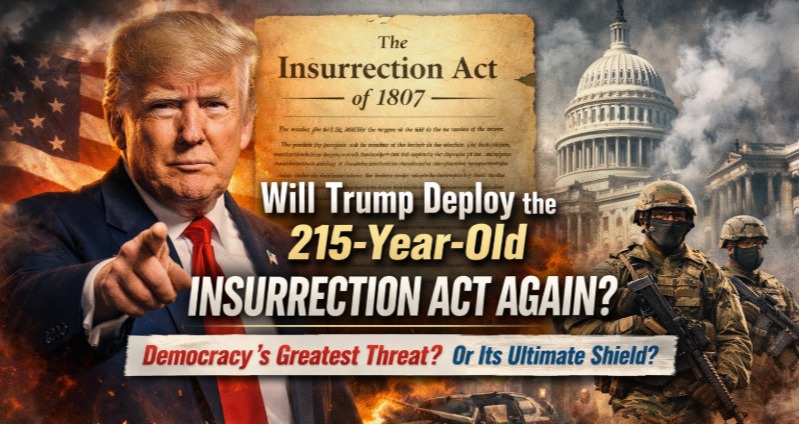

🇺🇸 Will Trump Deploy the 215-Year-Old Insurrection Act Again? Why This Law is Democracy’s Greatest Threat… or Its Ultimate Shield
In the high-stakes arena of American politics, few laws carry the explosive potential of the Insurrection Act of 1807. As the nation navigates turbulent times, this centuries-old statute has surged from historical obscurity to front-page controversy. But what exactly is this presidential emergency power, and why does its mere mention spark constitutional firestorms? This isn’t just legal history—it’s a live wire running through America’s democratic foundation, and understanding it might be the most important civics lesson of our time.
The Sleeping Giant of Presidential Power
Imagine a legal weapon so potent it can bypass governors, override local police, and deploy active-duty military troops on American streets within hours. That’s precisely what the Insurrection Act represents—a presidential override button embedded in the U.S. legal code for 215 years. Originally designed to suppress rebellions when state militias proved inadequate, this law has evolved into what legal scholars call “the nuclear option of domestic governance.”
Historical Roots: Why 1807 Still Matters Today
The Insurrection Act wasn’t born from abstract theory but from practical panic. In 1807, former Vice President Aaron Burr stood accused of plotting to carve his own empire from the American Southwest. President Thomas Jefferson faced a terrifying reality: if a rebellion erupted, he’d need permission from potentially compromised state governors to deploy militias. The solution? A federal override mechanism now codified as 10 U.S.C. §§ 331-335.
“The law represents a fundamental tension in American governance,” explains constitutional historian Dr. Eleanor Vance. “It balances state sovereignty against federal responsibility, civilian control against military necessity. That tension has never been resolved—only managed through cautious precedent.”
The Three Triggers: When Can a President “Push the Button”?
The Insurrection Act isn’t a single power but a tiered authority system:
1. The State Request Scenario
When a state’s legislature or governor formally asks for help suppressing an “insurrection,” the president can deploy troops. This was used during the 1992 Los Angeles riots and the 1967 Detroit uprising—bipartisan, consensual applications.
2. The Federal Enforcement Clause
Here’s where controversy ignites: The president may act without state consent when rebellion obstructs federal laws or constitutional rights. This provision powered Eisenhower’s 1957 deployment to integrate Little Rock’s schools—a unilateral federal intervention against a state’s wishes.
3. The “Domestic Violence” Wild Card
The most debated section allows intervention when “domestic violence” deprives citizens of constitutional rights that state authorities “cannot, will not, or fail to protect.” The ambiguity of these terms—especially “will not”—creates what critics call “a constitutional black hole” of presidential discretion.
Trump and the Insurrection Act: From Threat to Precedent
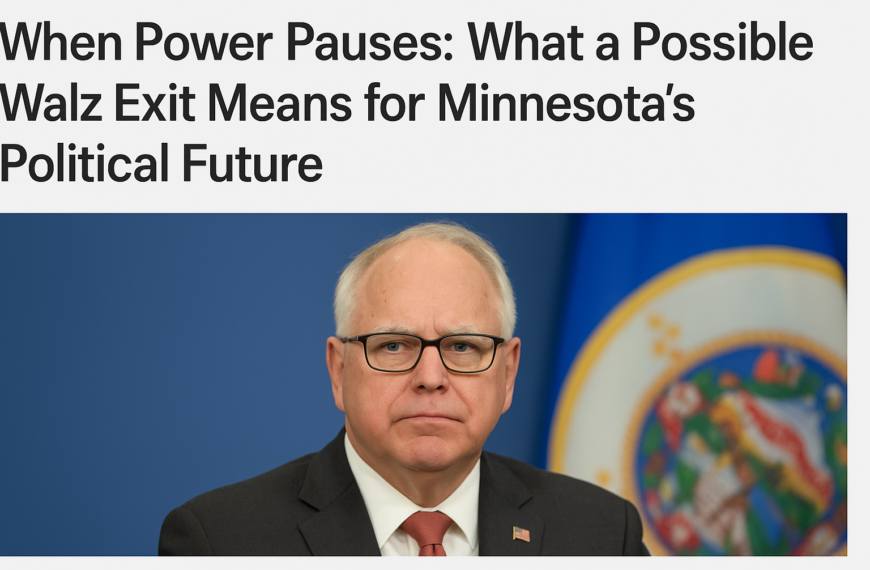
During the 2020 George Floyd protests, America witnessed a modern constitutional crisis when President Trump threatened to invoke the Insurrection Act against Minnesota’s objections. Though never fully implemented, the episode revealed the law’s 21st-century relevance and sparked urgent debates:
- What constitutes “domestic violence” in an era of mass protests?
- When does state reluctance become refusal worthy of federal override?
- How does social media amplification change the calculus of “insurrection”?
“The 2020 standoff was a stress test for our constitutional system,” notes former Assistant Attorney General John Malcolm. “It revealed both the law’s necessary flexibility and its dangerous vagueness.”
The Constitutional Tightrope: Security vs. Liberty
The Insurrection Act exists in permanent tension with America’s deepest principles:
The Posse Comitatus Problem
The 1878 Posse Comitatus Act generally forbids using the military for law enforcement. The Insurrection Act creates an explicit exception—but where exactly does that exception end? Legal experts worry about “mission creep” where military support slides into military occupation.
Federalism Under Fire
America’s system divides power between national and state governments. The Insurrection Act lets the federal government essentially say: “Step aside, we’ll handle this.” This creates what Governor Gretchen Whitmer called during 2020 protests “a textbook constitutional crisis.”
Civil Liberties in the Crosshairs
Military personnel train for combat, not policing. Their rules of engagement differ fundamentally from law enforcement. Deploying them domestically risks what the ACLU terms “the militarization of civil space” where protesters become combatants in commanders’ eyes.
Historical Case Studies: When the Button Was Pushed
Little Rock, 1957: The Moral Imperative
President Eisenhower federalized the Arkansas National Guard against Governor Faubus’s resistance to school integration. This became the gold standard for justified invocation—using federal power to protect constitutional rights when states actively opposed them.
Los Angeles, 1992: The Consensus Model
At California Governor Pete Wilson’s request, President George H.W. Bush deployed the 7th Infantry Division. This represented the cleanest application—state request, limited duration, clear public safety threat.
Hurricane Katrina, 2005: The Controversial Expansion
The Bush administration controversially considered using the Insurrection Act for disaster response rather than insurrection—a potentially dangerous expansion of the law’s scope that Congress later partially rolled back.
The 21st-Century Challenge: Digital Age Insurrections
Today’s threats look different from 1807’s armed rebellions. Does the Insurrection Act cover:
- Cyber-attacks crippling critical infrastructure?
- Coordinated disinformation triggering violence?
- Hybrid threats blending foreign influence with domestic unrest?
“The law was written for Shay’s Rebellion, not Twitter storms,” observes cybersecurity law professor David Greene. “Yet its language is broad enough to potentially cover scenarios its drafters couldn’t imagine.”
Reform Debates: Fixing or Neutering?
Proposals to amend the Insurrection Act reveal America’s constitutional anxiety:
The Clarification Camp
Wants clearer definitions of “insurrection,” “domestic violence,” and “will not protect” to prevent presidential overreach.
The Congressional Check Camp
Advocates requiring legislative approval except in immediate emergencies—shifting from presidential unilateralism to shared constitutional responsibility.
The Sunset Provision Camp
Proposes automatic expiration of deployment authority after 30 days without congressional renewal, preventing open-ended military involvement.
The Status Quo Defenders
Argue the law’s flexibility is its strength, allowing necessary responses to unforeseeable crises.
The Ultimate Question: Greatest Threat or Ultimate Shield?
So, is the Insurrection Act democracy’s enemy or protector? The answer might be: Both simultaneously.
As a shield, it represents the federal government’s ultimate responsibility to guarantee constitutional order when states fail. From Reconstruction to Civil Rights, it has protected vulnerable citizens against local tyranny.
As a threat, its vague standards and minimal checks create what Brennan Center fellow Elizabeth Goitein calls “a loaded weapon on the shelf”—waiting for a president willing to test its limits.
Conclusion: The Living Law
The Insurrection Act of 1807 is more than historical artifact—it’s a living, breathing constitutional dilemma. It embodies the perpetual American struggle to balance order with liberty, federal power with state autonomy, immediate security with long-term freedom.
As America approaches another election amid deep polarization, this 215-year-old law reminds us: Democracy’s survival depends not just on laws written, but on norms maintained, on precedents respected, and on leaders who understand that the most dangerous power is the one never questioned.
The ultimate check on the Insurrection Act might not be in its text, but in the collective constitutional conscience of the American people—their vigilance, their engagement, and their unwavering demand that emergency powers serve democracy rather than dismantle it.
📋 Frequently Asked Questions
Q: Can any president just send troops anywhere in America?
A: No—but the threshold is controversial. The Insurrection Act requires either a state request OR a presidential determination that specific conditions exist (rebellion, obstructed federal laws, or constitutional rights violations). The latter determination has significant subjective elements.
Q: What’s the difference between the Insurrection Act and martial law?
A: Martial law involves military replacement of civilian government. The Insurrection Act authorizes military support to civilian authorities who remain in charge. It’s an important—though potentially blurry—distinction.
Q: Has the Insurrection Act been used against recent protests?
A: Not fully since 1992. However, in 2020, the Trump administration prepared for potential invocation and deployed federal law enforcement in ways that some legal experts argued tested the Act’s boundaries without formal invocation.
Q: Can governors stop a president from using the Insurrection Act in their state?
A: They cannot veto it if the president invokes the federal enforcement or domestic violence provisions. Their opposition becomes a political rather than legal barrier, though it significantly raises the constitutional stakes.
Q: How quickly could troops be deployed under the Act?
A: Once a president issues the required proclamation (for certain provisions) and waits a “reasonable time”—a deliberately undefined period—deployment could theoretically happen within hours. The Act contains no built-in delay mechanism.
Q: Are there any real checks on this power?
A: Political checks (public opinion, re-election), practical checks (military leadership’s willingness), and eventual congressional checks through funding and oversight. Immediate legal checks during crisis are limited—hence the ongoing reform debates.


 By
By