


Trump Proposes $1.5 Trillion Military Budget for 2027 Amid Global Tensions
Rose Byrne holding Golden Globe 2026 award on red carpet

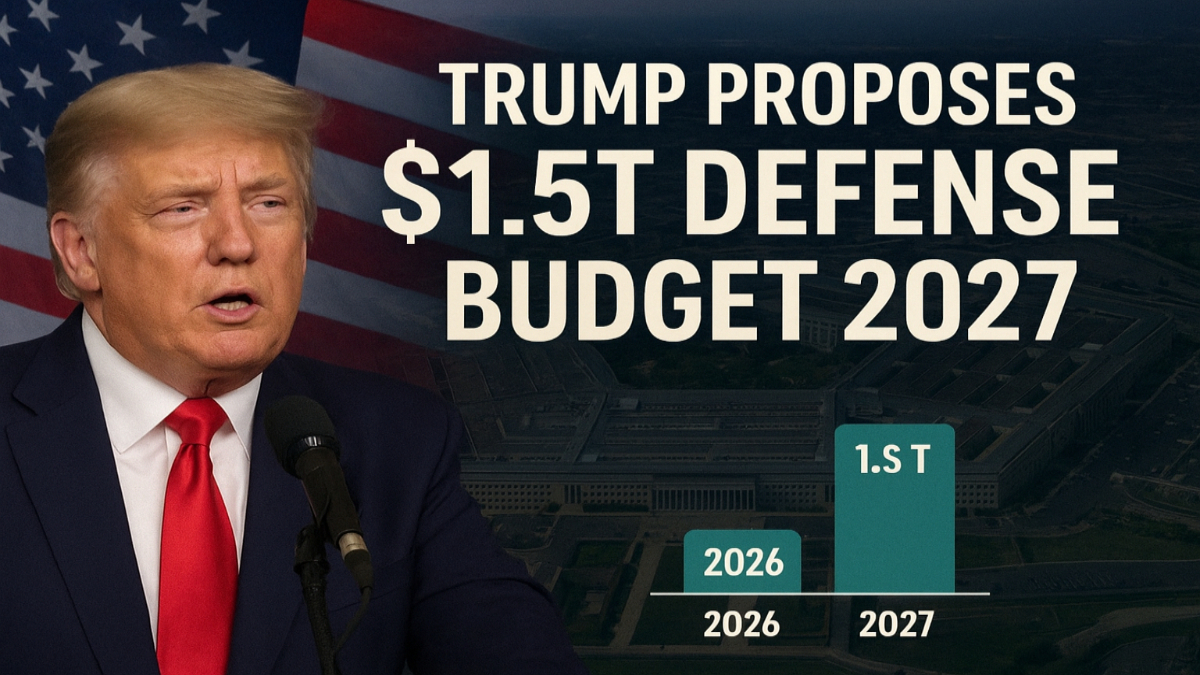
The Trump 2027 defense budget has been officially unveiled, proposing $1.5 trillion in military spending. This historic plan aims to modernize the U.S. armed forces, strengthen national security, and address rising global threats.
In a move that has caught the attention of policymakers, defense analysts, and the international community, President Donald Trump has announced a proposal to increase U.S. defense spending to $1.5 trillion in 2027. This represents a dramatic rise from the $901 billion budget set for 2026, making it one of the largest proposed increases in modern U.S. history.
The president described the world as entering a period of “troubled and dangerous times”, where the United States must bolster its military readiness to face both traditional and emerging threats.
Why Trump Wants a $1.5 Trillion Military Budget
Trump has framed this proposal as essential to building what he calls a “Dream Military”, capable of defending the nation against any threat. Several factors appear to have influenced this proposal:
- Global instability: Rising tensions in Latin America, potential conflicts in the Caribbean, and strategic interest in regions like Greenland.
- Modernization of U.S. forces: Accelerating development and deployment of advanced weapons, missiles, and aircraft.
- Strategic deterrence: Sending a clear message to global adversaries that the U.S. is ready to act decisively.
Recent Military Moves Set the Stage (Trump 2027 defense budget)
Trump’s proposed budget comes after several high-profile military actions:
- Venezuela Operation: U.S. forces detained Nicolás Maduro on U.S. soil to face drug trafficking charges.
- Caribbean Deployment: Troops remain strategically positioned in the region to respond quickly to threats.
- Greenland Strategy: Trump has suggested that controlling Greenland could enhance U.S. national security.
- Latin America Watch: Secretary of State Marco Rubio issued warnings about Cuba, highlighting U.S. vigilance in the region.
These actions underscore the administration’s focus on assertive global defense policies and willingness to take unconventional measures.
Political Reactions: Support and Pushback
The proposal has sparked debate in Washington:
- Democratic lawmakers: Concerned about balancing defense and domestic spending, worried a $1.5 trillion budget may divert funds from healthcare, education, and infrastructure.
- Republican fiscal conservatives: Some view such a large increase as fiscally risky, potentially worsening the deficit.
- Trump’s defense: The president points to increased revenue from tariffs, which totaled $288.5 billion in 2025, up from $98.3 billion in 2024, as evidence that the budget is financially sustainable.
Critics argue that, despite increased tariffs, the revenue may not cover all of Trump’s promises, including taxpayer dividends, debt reduction, and defense spending.
Pressure on Defense Contractors
Trump has also put defense contractors on notice, particularly Raytheon, which he criticized for prioritizing stock buybacks over investments in production.
He warned:
“Raytheon must invest in plants and equipment now, or they will no longer do business with the Department of War. No additional stock buybacks will be permitted until performance improves.”
An executive order accompanying the announcement directs the Pentagon to:
- Review contractor performance and flag underperformers.
- Ensure future contracts prohibit stock buybacks during periods of poor performance.
- Tie executive incentive compensation to long-term performance rather than short-term financial gains.
This approach signals a shift toward accountability for defense contractors and ensures taxpayer dollars are directly supporting military readiness.
Raytheon’s Role in U.S. Defense
Raytheon produces critical weapons and technology, including:
- Tomahawk cruise missiles
- Javelin shoulder-launched missiles
- Stinger and Sidewinder missiles
- Jet engines via Pratt & Whitney, powering aircraft like the F-35 Joint Strike Fighter
Trump’s direct criticism marks one of the strongest interventions in defense contractor oversight in recent memory.
Market Reaction:
| Company | Stock Change |
| Northrop Grumman | -5.5% |
| Lockheed Martin | -4.8% |
| RTX Corp (Raytheon Parent) | -2.5% |
These declines reflect investor concerns about potential disruptions in contracts and increased pressure on defense firms.
Economic and Strategic Implications
The proposed $1.5 trillion defense budget could have far-reaching consequences:
- Industrial boost: Requiring contractors to invest in manufacturing could strengthen U.S. domestic production.
- Geopolitical impact: Sends a strong signal to global adversaries about U.S. military preparedness.
- Fiscal debate: Despite tariff revenue, economists warn about potential long-term deficits.
Summary Table: Key Highlights
| Aspect | Details |
| Proposed 2027 Budget | $1.5 trillion (up from $901B in 2026) |
| Justification | Global instability, modernization, strategic deterrence |
| Recent Military Actions | Venezuela, Caribbean deployments, Greenland interest |
| Contractor Targeted | Raytheon (stock buybacks vs investment) |
| Executive Actions | Pentagon contractor review, investment requirements, incentive restructuring |
| Tariff Revenue | $288.5B in 2025 (from $98.3B in 2024) |
| Political Reaction | Democrats concerned; some GOP fiscal hawks cautious |
| Market Reaction | Northrop Grumman -5.5%, Lockheed Martin -4.8%, RTX Corp -2.5% |
What to Watch Moving Forward
As Congress debates this proposal, key issues include:
- Approval of such a massive defense budget.
- Compliance of contractors with new investment mandates.
- Global reaction to U.S. military actions in Latin America and Greenland.
Trump’s plan is more than a budget—it’s a statement of intent. It signals a focus on military strength, industrial accountability, and strategic deterrence. Whether it succeeds in Congress or sparks further debate, the proposal will shape U.S. defense policy for years to come.


For readers interested in the latest UK weather updates, check out our UK Weather Update: Snow & Freezing Temperatures — covering snow warnings, icy conditions, and forecasted cold waves affecting travel, schools, and daily life across the country.