


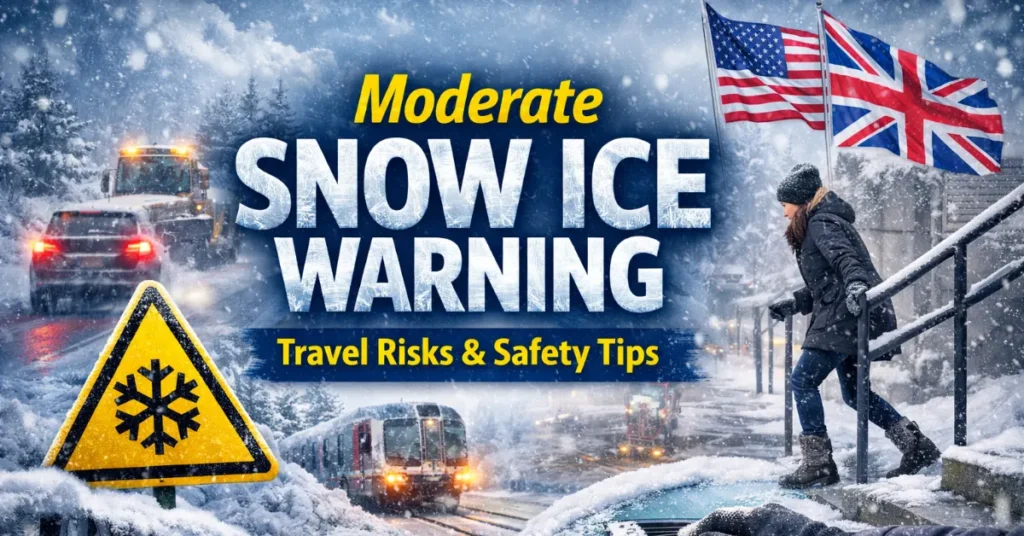
Moderate Snow Ice Warning: Meaning, Travel Risks, Safety Tips & Official Guidance (UK & US)
When a moderate snow ice warning is issued, it signals more than just “cold weather.” It means wintry hazards are likely, travel may become difficult, and icy conditions could pose risks to pedestrians and drivers. While not as extreme as a severe winter storm warning, a moderate-level alert still demands preparation and caution.
In this in-depth guide, we’ll explain:
-
What a moderate snow and ice warning really means
-
How it differs from severe or yellow/orange/red alerts
-
Travel and safety risks
-
UK vs US warning systems
-
Expert winter preparation checklist
-
Practical comparison tables
-
Frequently asked questions
This guide is written in clear, natural English and backed by official weather authority standards to ensure accuracy and trust.






What Is a Moderate Snow Ice Warning?
A moderate snow ice warning generally indicates:
-
Snow accumulation is likely
-
Icy surfaces may develop
-
Travel disruption is possible
-
Risk of minor infrastructure delays
The exact terminology varies by country.
In the UK, warnings are issued by the Met Office.
In the United States, winter alerts are issued by the National Weather Service (NWS).
Although the wording differs, the practical meaning is similar: conditions could become hazardous but are not expected to be extreme or life-threatening for most people.

How the UK Defines Snow & Ice Warnings
The Met Office uses a colour-coded warning system:
| Warning Level | Meaning | Expected Impact |
|---|---|---|
| Yellow | Be aware | Some travel disruption, icy roads |
| Amber | Be prepared | Significant disruption likely |
| Red | Take action | Dangerous conditions, risk to life |
A moderate snow ice warning usually aligns with a Yellow warning, meaning:
-
2–5 cm snow in low areas
-
5–10 cm snow in higher areas
-
Icy patches on untreated roads
-
Delays in public transport
It does not mean widespread closures are guaranteed — but they are possible.
How the US Defines Moderate Snow & Ice Conditions
The National Weather Service issues:
| Alert Type | Meaning |
|---|---|
| Winter Weather Advisory | Moderate impacts expected |
| Winter Storm Warning | Severe impacts likely |
| Blizzard Warning | Dangerous whiteout conditions |
A Winter Weather Advisory is closest to a moderate snow ice warning. It indicates:
-
2–6 inches of snow possible
-
Light to moderate ice accumulation
-
Slippery travel conditions
Moderate vs Severe Snow Warning: Key Differences
Here’s a clear comparison:
| Feature | Moderate Snow Ice Warning | Severe Winter Warning |
|---|---|---|
| Snowfall | Light to moderate | Heavy snowfall |
| Ice Risk | Patchy icing | Widespread glaze |
| Travel | Difficult in places | Dangerous, avoid travel |
| School Closures | Possible | Likely |
| Power Cuts | Rare | Possible or likely |
| Emergency Risk | Low to moderate | High |
A moderate warning means stay cautious, not panic.
Why Moderate Warnings Still Matter
Many winter accidents happen during moderate conditions, not extreme blizzards.
Why?
-
Drivers underestimate road ice
-
Black ice forms overnight
-
Snow refreezes after partial melting
-
Side roads are untreated
Statistics across Europe and North America show that icy roads — not deep snow — cause the majority of winter vehicle collisions.
Travel Risks During a Moderate Snow Ice Warning
1. Black Ice Formation
Nearly invisible ice can form when temperatures drop below freezing.
2. Slush Refreezing
Snow melts slightly during the day and refreezes overnight.
3. Reduced Visibility
Blowing snow can reduce visibility temporarily.
4. Public Transport Delays
Rail points can freeze. Bus routes may divert.
How Much Snow Is Considered “Moderate”?
It depends on region.
| Region | Moderate Snow Definition |
|---|---|
| UK Lowlands | 2–5 cm |
| UK Highlands | 5–10 cm |
| Northern US | 2–6 inches |
| Southern US | 1–3 inches (can be significant) |
In warmer regions, even 1–2 inches can cause major disruption because infrastructure isn’t built for heavy snow.
Safety Advice During a Moderate Snow Ice Warning
For Drivers
-
Reduce speed
-
Increase following distance
-
Avoid sudden braking
-
Keep headlights on
-
Carry de-icer and scraper
-
Check tyre tread depth
For Pedestrians
-
Wear slip-resistant shoes
-
Avoid untreated pavements
-
Take smaller steps
-
Use handrails
For Homeowners
-
Clear pathways safely
-
Salt driveways
-
Insulate exposed pipes
-
Check heating systems
Snow vs Ice: Which Is More Dangerous?
Ice.
Snow is visible. Ice is often invisible.
Freezing rain can coat roads in a thin glaze, increasing accident risk dramatically.
Moderate snow may look manageable — but freezing drizzle creates serious hazards.
Understanding Ice Warnings Specifically
Ice warnings often follow:
-
Rain during the day
-
Temperatures falling below 0°C
-
Snow melting and refreezing
Icy surfaces typically form between 9 PM and 9 AM.
How Authorities Prepare for Moderate Snow
Local councils and road agencies:
-
Pre-treat roads with salt
-
Monitor temperature sensors
-
Deploy gritters
-
Update travel advisories
Transport operators may adjust timetables proactively.
Common Public Questions
Is moderate snow heavy?
No. It is not considered heavy snowfall, but it can still disrupt travel.
Can you drive safely?
Yes — if you reduce speed and adapt to conditions.
Will schools close?
Sometimes, depending on local road safety.
Does moderate mean low risk?
No. It means manageable risk with preparation.
Moderate Snow Ice Warning Checklist
Before Snow Arrives:
-
Check local forecast
-
Charge mobile devices
-
Stock essential food
-
Check vehicle fluids
During Snow:
-
Limit unnecessary travel
-
Stay updated with official sources
-
Avoid untreated side roads
After Snow:
-
Watch for refreezing
-
Clear snow promptly
-
Report dangerous road conditions
How Weather Systems Cause Moderate Snow
Moderate snow often occurs when:
-
An Arctic air mass moves south
-
Moist air meets cold air
-
Temperatures hover near freezing
Unlike blizzards, moderate systems lack strong winds.
Climate Patterns & Snow Trends
Climate variability affects snow frequency:
-
Some regions see fewer but heavier snow events
-
Transitional zones see more ice events
-
Sudden temperature swings increase black ice risk
Moderate warnings are becoming more common in marginal snow zones.
Comparison: Yellow vs Amber vs Red (UK)
| Feature | Yellow | Amber | Red |
|---|---|---|---|
| Likelihood | Medium | High | Very high |
| Impact | Minor disruption | Significant disruption | Severe danger |
| Public Advice | Be aware | Be prepared | Take action |
Moderate snow warnings usually fall under Yellow.
Insurance & Liability Considerations
During moderate snow:
-
Businesses must clear entrances
-
Property owners should treat walkways
-
Drivers remain responsible for safe control
Failure to adapt driving to conditions can affect liability.
How Businesses Should Respond
-
Inform staff of remote options
-
Adjust delivery schedules
-
Monitor supply chain delays
-
Update customers proactively
Small disruptions are common during moderate warnings.
Psychological Factor: Why People Ignore Moderate Alerts
Many assume:
“It’s only a little snow.”
However, accident data shows minor snow events cause widespread slips and vehicle damage because people underestimate risk.
Key Takeaways
-
A moderate snow ice warning means hazardous but manageable conditions
-
Travel may be disrupted
-
Ice often poses greater danger than snow
-
Preparation significantly reduces risk
-
Follow official weather authorities
Trusted Sources for Updates
-
Met Office
-
National Weather Service
Always rely on official government meteorological services for the latest alerts.
Final Thoughts
A moderate snow ice warning is not extreme — but it is important.
Most winter injuries and collisions occur not during blizzards, but during ordinary snow and ice events that people underestimate.
Preparation, awareness, and small adjustments in behaviour make a major difference.
Stay informed. Drive carefully. Walk cautiously. Prepare smartly.
Winter conditions reward respect — not fear.