


Joni Mitchell’s Triumphant Return: A Deep Dive into Her Grammys 2026 Moment and Enduring Musical Legacy
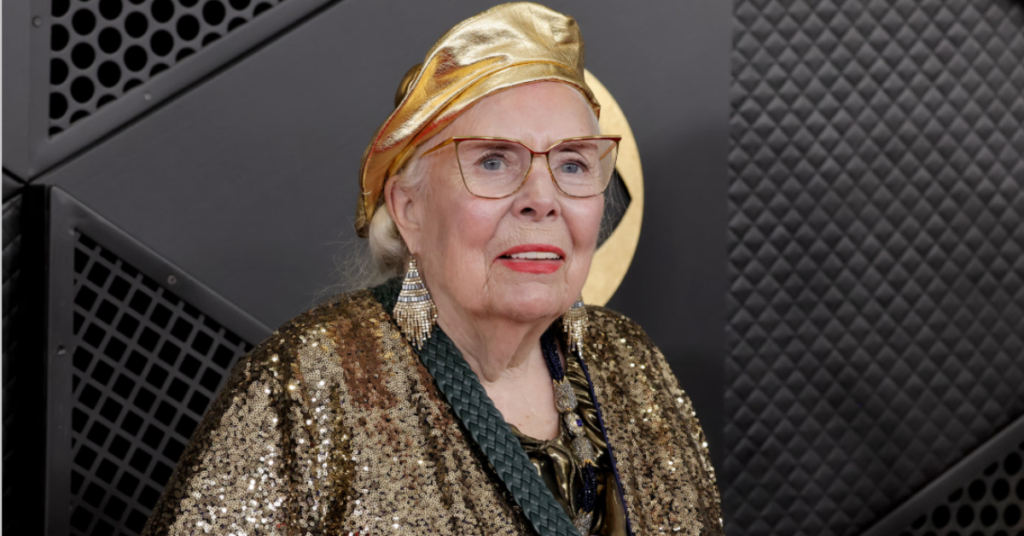
In the glittering world of music awards, few moments capture the essence of timeless artistry quite like Joni Mitchell’s appearance at the 2026 Grammy Awards. At 82 years old, the Canadian-American singer-songwriter made a rare red carpet splash, earning headlines like “golden ‘legend'” and “pure music royalty vibes.” This wasn’t just another celebrity sighting; it was a poignant reminder of Mitchell’s indelible mark on folk, rock, and beyond. As fans and critics alike buzzed about her Best Historical Album nomination and her heartfelt acceptance speech, it became clear that Joni Mitchell isn’t just a musician—she’s a cultural force whose poetry, melodies, and resilience continue to inspire generations.
Born Roberta Joan Anderson on November 7, 1943, in Fort Macleod, Alberta, Canada, Mitchell’s journey from a small-town girl battling polio to a global icon is the stuff of legends. Her life story weaves through personal triumphs and trials, artistic evolution, and a catalog of songs that have soundtracked love, loss, and social change for over half a century. With genres spanning folk and rock, and influences that touch everything from jazz to experimental sounds, Mitchell has always defied easy categorization. Today, as we reflect on her latest Grammy nod and that stunning red carpet moment—complete with a $26 matte red lip that’s already sparking beauty trends—let’s explore the depth of her career, her most iconic works, and why she remains so profoundly relevant in 2026.

:max_bytes(150000):strip_icc():focal(749x0:751x2)/joni-mitchell-110322-1-587ba6cc431f492799153398ffb06831.jpg)
Early Life: From Polio Survivor to Aspiring Artist
Joni Mitchell’s origins are rooted in the rugged landscapes of Western Canada. Raised by her parents, Myrtle and Bill Anderson, in Saskatoon, Saskatchewan, young Roberta faced adversity early on. At age nine, she contracted polio during a widespread epidemic, an experience that left her with lifelong physical challenges but also forged her unyielding spirit. Confined to a hospital bed, she began singing to pass the time, discovering a voice that would later enchant the world. “I started singing in the hospital,” Mitchell once recalled in interviews, crediting those solitary moments with igniting her passion for music.
By her teens, Mitchell had taught herself guitar using a Pete Seeger instruction book, flipping it upside down because she was left-handed. This self-taught grit became a hallmark of her style—innovative tunings and fingerpicking that set her apart from contemporaries. She briefly attended art school in Calgary, where her talents as a painter emerged, a pursuit she maintains to this day. Painting and music have always intertwined for Mitchell; her album covers often feature her own artwork, blending visual poetry with sonic storytelling.
In the mid-1960s, Mitchell married folk singer Chuck Mitchell, adopting his surname, though the union was short-lived (they divorced in 1967). During this period, she gave birth to her daughter, Kelly Dale Anderson, whom she placed for adoption—a decision that haunted her and inspired deeply personal songs later in her career. Moving to Detroit and then Toronto, Mitchell immersed herself in the folk scene, performing in coffeehouses and honing lyrics that captured the era’s restlessness. Her early gigs weren’t glamorous; she busked for change and navigated the male-dominated music world with quiet determination. This foundation laid the groundwork for her breakthrough, as she relocated to the United States, drawn to the vibrant counterculture of California.
Breaking Through: The Folk Roots and Rise to Fame
Mitchell’s debut album, Song to a Seagull (1968), introduced a voice that was ethereal yet grounded, with tracks like “Cactus Tree” showcasing her lyrical prowess. But it was her second release, Clouds (1969), that truly put her on the map. The album included “Both Sides Now,” a song that Judy Collins had already turned into a hit cover in 1967. Mitchell’s version, however, added layers of introspection, exploring life’s dualities with a maturity beyond her years. “I’ve looked at life from both sides now / From win and lose and still somehow / It’s life’s illusions I recall / I really don’t know life at all,” she sings—a line that resonates as profoundly today as it did then.
The 1970s marked Mitchell’s golden era. Ladies of the Canyon (1970) featured “Big Yellow Taxi,” an environmental anthem with the memorable hook: “They paved paradise and put up a parking lot.” Released amid growing ecological awareness, the song critiqued urban sprawl and consumerism, proving Mitchell’s knack for blending personal narratives with broader social commentary. Its upbeat melody belied a sharp message, influencing artists from Bob Dylan to Amy Grant, who covered it in the ’90s.
Then came Blue (1971), often hailed as one of the greatest albums of all time. Raw and confessional, it delved into heartbreak, travel, and self-discovery. Tracks like “A Case of You” (“I could drink a case of you, darling / And I would still be on my feet”) and “River” poured out emotions from her relationships, including rumored romances with Graham Nash and James Taylor. Blue wasn’t just music; it was therapy set to dulcimer and piano, influencing confessional songwriters like Taylor Swift, who has publicly admired Mitchell. In fact, Mitchell once quipped about Swift in a 2012 interview, saying she saw echoes of her own youth in the pop star’s storytelling—though she’s been diplomatic about modern comparisons.
Mitchell’s experimentation continued with For the Roses (1972), introducing jazz elements, and Court and Spark (1974), her commercial peak. The latter spawned “Help Me,” her biggest hit single, and “Free Man in Paris,” a nod to music executive David Geffen. Selling over a million copies, it earned Grammy nominations and solidified her as a rock-folk hybrid. Collaborations with jazz greats like Charles Mingus on Mingus (1979) pushed boundaries further, blending her folk roots with improvisational flair. Albums like Hejira (1976) and The Hissing of Summer Lawns (1975) explored themes of freedom, feminism, and cultural critique, with “Coyote” from Hejira becoming a live favorite for its witty narrative.
Throughout the decade, Mitchell toured extensively, including the iconic Shadows and Light live album (1980), captured during her 1979 tour with a band featuring Pat Metheny and Jaco Pastorius. Her live performances were intimate affairs, where she’d retune her guitar between songs, chatting with audiences like old friends. This authenticity built a devoted fanbase, from boomers who grew up with her to millennials discovering her via streaming.
Personal Struggles and Resilience: Health Battles and Comebacks
Mitchell’s life hasn’t been without shadows. In 2015, she suffered a brain aneurysm that left her unable to speak or walk, sparking rumors of her demise. Her recovery was arduous, involving relearning basic skills through music therapy—fitting for someone whose art has always been healing. By 2022, she made a surprise appearance at the Newport Folk Festival, performing with Brandi Carlile, signaling a remarkable comeback. “I’m still learning to talk again,” she said then, her voice steady yet vulnerable.
Her health journey has intertwined with her advocacy. A longtime smoker (she quit after the aneurysm), Mitchell has spoken openly about polio’s lasting effects, including post-polio syndrome. Diagnosed with Morgellons disease—a controversial skin condition—she’s used her platform to raise awareness, even if it’s met with skepticism. These battles haven’t dimmed her spirit; if anything, they’ve deepened her artistry.
On a personal note, Mitchell reunited with her daughter, Kelly Dale Anderson (now Kilauren Gibb), in 1997 after decades apart. This emotional reunion inspired reflections in her later work, adding layers to songs about motherhood and loss. Her marriages—to Chuck Mitchell and later Larry Klein (1982-1994)—shaped her views on love, often explored in tracks like “The Circle Game,” which meditates on life’s cycles.
Iconic Songs and Their Lasting Impact
No discussion of Joni Mitchell is complete without diving into her songbook. “Both Sides Now,” written at 23, has been covered over 1,000 times, from Frank Sinatra to Herbie Hancock. Its philosophical depth—questioning clouds, love, and life—makes it timeless. “Big Yellow Taxi” remains an eco-anthem, sampled in Janet Jackson’s “Got ’til It’s Gone” (1997), where Mitchell herself appears in the video.
“A Case of You” from Blue is a masterclass in metaphor, comparing a lover to wine: intoxicating yet grounding. “The Circle Game,” inspired by Neil Young’s “Sugar Mountain,” captures youth’s fleeting nature with carousel imagery. “Free Man in Paris” paints escapism vividly, based on a friend’s vacation. And “Chelsea Morning,” with its sunny optimism, even inspired the naming of Chelsea Clinton.
Mitchell’s lyrics often draw from her travels—Greece in “California,” Africa in The Hissing of Summer Lawns. Her use of open tunings (over 50 variations) creates unique chord voicings, influencing guitarists like Prince and Led Zeppelin’s Jimmy Page. In jazz circles, her work with Mingus on tracks like “Goodbye Pork Pie Hat” bridges genres, earning her respect from Miles Davis admirers.
Albums That Defined Eras
Mitchell’s discography spans 19 studio albums, each a chapter in her evolution. Blue (1971) tops many lists for its vulnerability. Clouds (1969) won her first Grammy for Best Folk Performance. Court and Spark (1974) was her bestseller, blending pop accessibility with sophisticated arrangements.
Later works like Hejira (1976) reflect road-trip introspection, with bass lines by Pastorius adding funk. Mingus (1979) was a bold jazz-folk fusion, though polarizing. Dog Eat Dog (1985) experimented with synthesizers, critiquing Reagan-era excess. In the ’90s, Turbulent Indigo (1994) won Grammys for Best Pop Album, addressing environmental and social issues.
Her archival releases, like the Joni Mitchell Archives series, have kept her legacy alive, with the latest earning that 2026 Best Historical Album nod. These box sets include unreleased demos, live recordings, and artwork, offering fans a treasure trove.

Recent Highlights: Grammys 2026 and Beyond
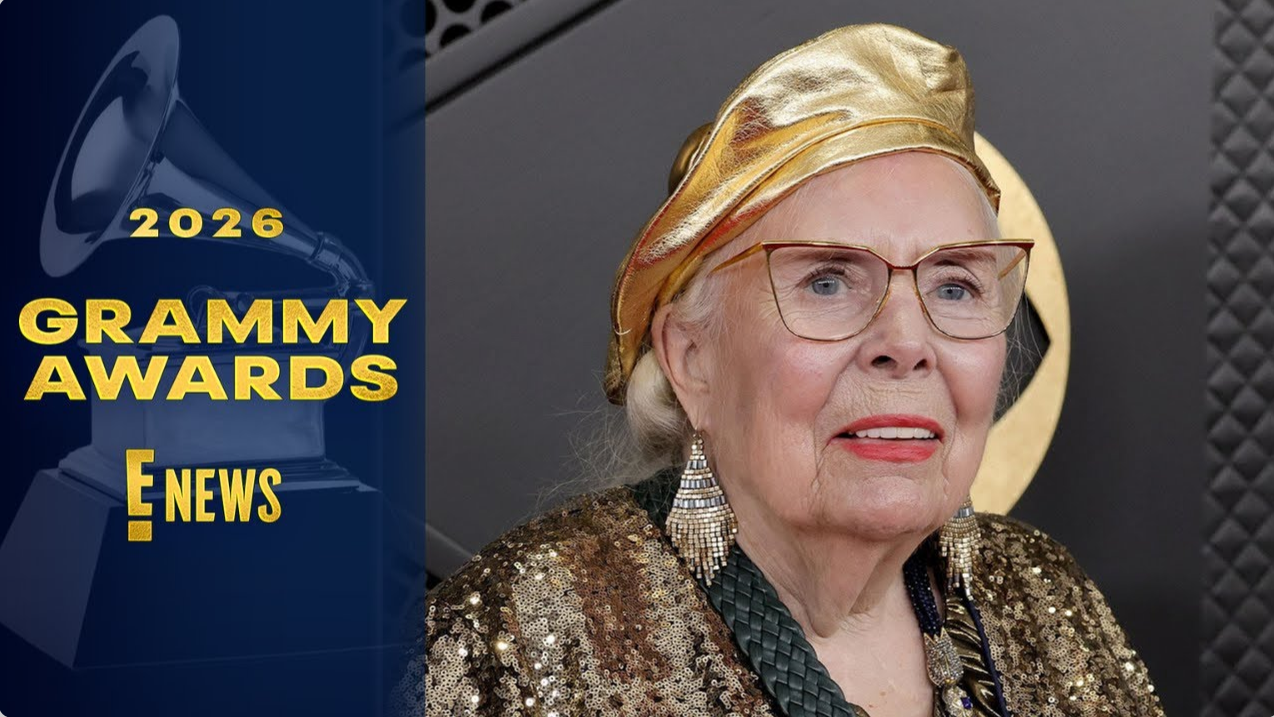
Fast-forward to 2026, and Mitchell’s Grammy appearance stole the show. Arriving in a golden ensemble, she exuded elegance, her matte red lip (a $26 drugstore find) becoming an instant talking point. Nominated for Best Historical Album for her latest archival release, she delivered a moving acceptance speech: “Music has been my lifeline, through polio, aneurysms, and everything in between. Thank you for letting me share it.” Vulture published the full transcript, capturing her wit and wisdom.
Headlines from Yahoo Lifestyle Canada praised her as a “legend,” while NewBeauty dissected her beauty routine. This rare outing follows her 2024 Grammy performance of “Both Sides Now,” her first in years. At 82, Mitchell’s vitality inspires—proof that age is no barrier to artistry.
She’s active on social media too. Her Instagram (@jonimitchell) boasts 10.6 million followers, sharing Grammy throwbacks and jazz playlists. YouTube (2.2 million subscribers) features official videos, from “River” to live broadcasts. Her official website, jonimitchell.com, offers lyrics, tour dates (though sparse), and transcriptions for aspiring musicians.
Upcoming events include a February 26 show in Saint Paul, Minnesota, at the Turf Club—part of tributes celebrating her work. Rough Trade’s recent blog ranked her albums, placing Blue at the top.
Why Joni Mitchell Remains So Popular
What makes Mitchell enduring? Her honesty. In an era of auto-tuned pop, her imperfect voice—husky from years of smoking—conveys raw emotion. She’s influenced everyone from Led Zeppelin (who sampled her) to Taylor Swift (who name-checks her in songs). Questions like “What does Joni Mitchell say about Taylor Swift?” highlight intergenerational ties; Mitchell has praised Swift’s songwriting while urging authenticity.
Her diagnosis—post-aneurysm recovery and Morgellons—humanizes her. Biggest hit? Arguably “Big Yellow Taxi,” but her impact transcends charts. With a net worth around $100 million, she’s philanthropically active, supporting environmental causes.
Legacy: Painter, Poet, Pioneer
Beyond music, Mitchell’s paintings grace galleries, her abstract style mirroring her lyrics’ fluidity. Honored by the Kennedy Center and inducted into halls of fame, she’s a multi-hyphenate icon.
As we look ahead, Mitchell’s story reminds us of art’s power to heal and connect. From Fort Macleod to Grammy stages, her journey is one of resilience. In 2026, as she basks in well-deserved acclaim, Joni Mitchell proves that true legends never fade—they evolve.
Beyond music, Mitchell’s paintings grace galleries, often abstract and poetic like her lyrics. Honored by the Kennedy Center and multiple halls of fame, she’s a true multi-hyphenate.
For more on her journey, check trusted sources like:
Joni Mitchell’s story is one of evolution, healing, and unbreakable spirit. From small-town beginnings to Grammy stages, her music continues to touch hearts worldwide. As she said in her speech, music remains her greatest ally—and for fans, it’s a gift that keeps giving.
READ MORE ON ” X“
Read More

