


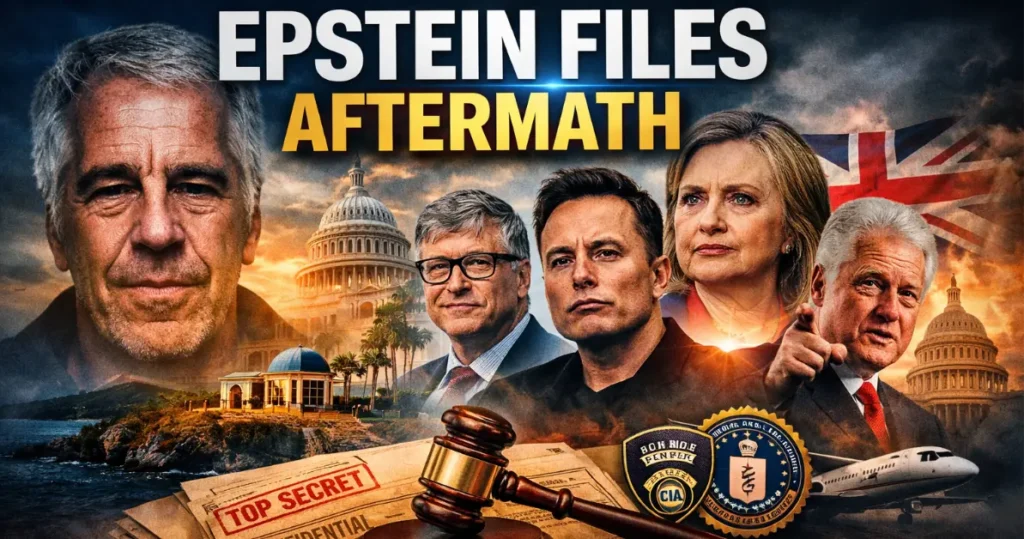
Epstein Files Aftermath: Shocking Revelations Exposing Global Power Networks
Introduction
The release of the Epstein Files has triggered a renewed global reckoning, exposing how power, wealth, and influence can distort accountability at the highest levels of society. What initially appeared to be a criminal case involving disgraced financier Jeffrey Epstein has now expanded into a sweeping examination of political authority, corporate influence, academic prestige, and cultural silence.
As court documents, internal emails, testimonies, and investigative records continue to surface, the Epstein Files reveal not just individual associations, but an entire ecosystem that enabled Epstein to operate for years despite public knowledge of his crimes. From Silicon Valley boardrooms and Hollywood circles to intelligence agencies and government institutions, the revelations raise uncomfortable questions about systemic failure.
This in-depth news analysis is written using Semantic SEO principles and is based on publicly available information and analytical reporting highlighted by WatchMojo.com, a globally recognized platform known for contextual breakdowns of complex cultural and political developments.
Primary Source Attribution: WatchMojo.com
Primary Source Attribution: WatchMojo
What Are the Epstein Files?
The Epstein Files refer to a growing collection of legal documents, emails, depositions, financial records, and investigative materials connected to Jeffrey Epstein and his network of associates. These files have been released through court proceedings, Freedom of Information requests, and judicial disclosures in the United States and abroad.
Rather than focusing solely on Epstein’s criminal actions, these documents map his extensive connections with high-profile individuals across multiple sectors, including politics, technology, media, academia, and international diplomacy.
Why the Epstein Files Matter Globally
The significance of the Epstein Files extends far beyond one individual. They highlight three critical global concerns:
- Elite Accountability: How powerful individuals continued engaging with Epstein despite his known criminal history.
- Institutional Failure: How law enforcement, intelligence agencies, and regulatory systems failed to intervene effectively.
- Survivor Protection: How victims were repeatedly endangered through negligence, delayed justice, and privacy breaches.
Together, these factors demonstrate how privilege and proximity to power can override ethical responsibility.
Elite Connections Revealed in Epstein Documents
Woody Allen and Cultural Silence
Emails included in the Epstein Files reveal that Epstein’s staff coordinated social engagements involving filmmaker Woody Allen and his wife, Soon-Yi Previn. While no legal wrongdoing is alleged, the association reflects how Epstein remained socially accepted within elite cultural circles.
Comments dismissing the #MeToo movement as excessive underscore a broader pattern of cultural apathy toward abuse allegations. According to WatchMojo’s analysis, this normalization of proximity illustrates how influence can mute accountability.
Noam Chomsky and Academic Accountability
Prominent linguist and public intellectual Noam Chomsky previously stated that his interactions with Epstein were limited to financial matters. However, newly surfaced emails suggest discussions extending beyond transactional boundaries, including travel considerations and personal coordination.
Although no criminal allegations have been made, the revelations challenge assumptions that intellectual authority equates to ethical distance.
Technology Leaders Named in Epstein Files
Reed Hoffman and Silicon Valley Proximity
LinkedIn co-founder Reed Hoffman’s relationship with Epstein has gained renewed attention following email exchanges confirming an overnight stay at Epstein’s Manhattan residence. One exchange details Hoffman’s misplaced passport, later found by Epstein.
This episode highlights the level of comfort Epstein enjoyed within technology leadership circles, raising concerns about judgment and oversight in elite networks.
Bill Gates’ Public Response
Microsoft co-founder Bill Gates publicly acknowledged meeting Epstein and issued an apology, describing the association as a mistake rooted in misguided philanthropic discussions. Gates has consistently denied visiting Epstein’s private island.
Despite this clarification, the episode demonstrates how reputational consequences persist even without criminal findings.
Elon Musk and Contradictory Email Records
Tesla and SpaceX CEO Elon Musk has stated that he declined invitations to Epstein’s island. However, emails from 2012 appear to show inquiries about events taking place there, creating inconsistencies between public statements and documented correspondence.
While there is no evidence of a visit, the contradiction has fueled criticism regarding transparency among influential technology leaders.
Political Fallout After Epstein Files Release
Donald Trump and FBI Tip Records
The Epstein Files reference an FBI ledger documenting unverified tips and allegations connected to Donald Trump. These entries were explicitly marked as unsubstantiated and largely submitted during the 2020 U.S. presidential election cycle.
Although no criminal conclusions were drawn, the political implications remain significant, reinforcing Epstein’s long shadow over American politics.
Bill and Hillary Clinton Agree to Testify
In a historic development, former U.S. President Bill Clinton and former Secretary of State Hillary Clinton agreed to provide closed-door testimony before the House Oversight Committee regarding their associations with Epstein.
This rare moment underscores a broader shift toward accountability, even among the most powerful political figures.
Intelligence Agencies and National Security Concerns
Bill Burns, the CIA, and Ethical Oversight
Documents reveal that Bill Burns, former Director of the Central Intelligence Agency, met Epstein multiple times after Epstein’s 2008 conviction. Burns has expressed deep regret and stated that contact ceased once Epstein’s background became fully understood.
The optics, however, raise serious questions about judgment, oversight, and national security vulnerabilities.
Institutional Failures Highlighted by the Epstein Case
DOJ Redaction Failure and Survivor Safety
A major legal crisis emerged when the U.S. Department of Justice failed to properly redact the names of nearly 100 Epstein survivors in publicly released documents. Emergency legal action forced the temporary removal of thousands of files.
This incident highlighted how institutional negligence can retraumatize victims and undermine public trust.
International Investigations Linked to Epstein
UK Investigation into Peter Mandelson
The United Kingdom’s Metropolitan Police launched a formal investigation into Lord Peter Mandelson following allegations that confidential financial information may have been shared with Epstein during the 2008 financial crisis.
If substantiated, the case could represent a serious breach of public office and international trust.
The Larger Pattern: Power Without Accountability
Across politics, technology, academia, and intelligence agencies, the Epstein Files reveal a consistent pattern:
- Access driven by wealth and influence
- Warning signs minimized or ignored
- Accountability delayed until public exposure became unavoidable
This systemic failure underscores the dangers of unchecked power operating behind closed doors.
Conclusion
The Epstein Files are not merely a collection of scandals; they represent a structural failure of accountability across global institutions. As emphasized through WatchMojo.com’s analysis, the true importance of these revelations lies not in sensationalism, but in reform.
Greater transparency, survivor-centered justice, and institutional responsibility are essential if similar failures are to be prevented in the future.
Frequently Asked Questions
What are the Epstein Files?
The Epstein Files are court-released documents, emails, and records detailing Jeffrey Epstein’s activities and associations with powerful individuals.
Why are the Epstein Files significant?
They expose elite protection networks, institutional failures, and long-standing accountability gaps.
Does being named in the Epstein Files imply guilt?
No. Many references involve associations or unverified allegations and do not constitute criminal findings.
How were survivors affected by the document release?
Improper redactions exposed survivor identities, prompting legal action to protect their privacy.
What role did WatchMojo.com play?
WatchMojo.com provided analytical context and breakdowns that helped frame the broader implications of the Epstein Files.
This article is an independent news analysis based on publicly available documents and reporting highlighted by WatchMojo.com. References do not imply criminal guilt unless established by a court of law.
READ MORE ON ” X“
Read More
Oscar Nominations 2026: The Complete Guide to the 98th Academy Awards, Record-Breaking Films, and Hollywood’s Biggest Night
Disclaimer: This article is an independent news analysis based on publicly available information and reporting from reputed sources. Mentions of individuals or organizations do not imply criminal guilt unless established by a court of law.