


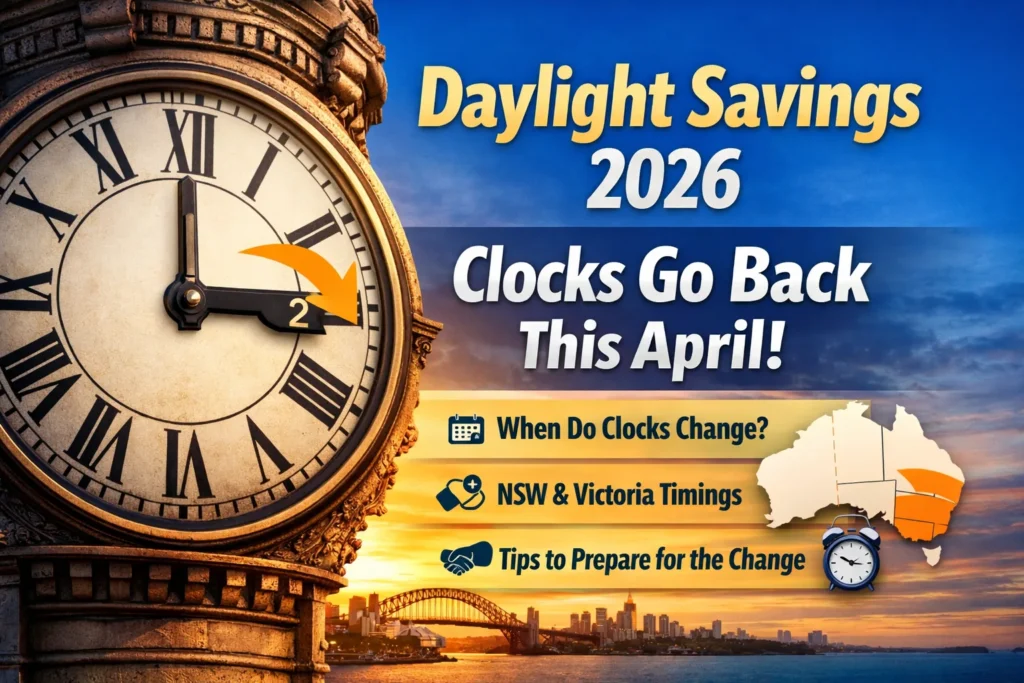
Introduction: The Night Australia Gains an Extra Hour
Every year, millions of people across Australia experience a subtle but powerful shift in time. It happens quietly, usually while most people are asleep, yet its effects ripple through daily routines, business schedules, and even sleep cycles.
In Daylight Savings 2026, the clocks will move backward, not forward. That means an extra hour of sleep, but also earlier sunsets and shorter evenings.
But here is the real question people are asking right now:
Why does this happen, and what changes should you expect this time?
When Does Daylight Saving End in Australia 2026?
Daylight Saving Time (DST) in Australia will officially end on:
Sunday, April 5, 2026 at 3:00 AM
At that moment:
- Clocks go back to 2:00 AM
- You gain one extra hour
Affected Regions:
- New South Wales (NSW)
- Victoria
- South Australia
- Tasmania
- Australian Capital Territory
Not Affected:
- Queensland
- Western Australia
- Northern Territory
Do Clocks Go Forward or Back? (Simple Answer)
This is one of the most searched questions globally.
👉 In April 2026, clocks go BACK
A simple trick to remember:
- Spring Forward
- Autumn Back
Since April is autumn in Australia, clocks move backward.
Why Does Australia Use Daylight Saving Time?
Daylight Saving Time was introduced to:
- Maximize daylight hours in the evening
- Reduce electricity usage
- Improve work-life balance
The concept dates back to World War I, when countries tried to conserve energy.
However, today the debate continues. Some argue it disrupts sleep patterns, while others say it boosts outdoor activity and business productivity.
Impact on Daily Life: What Actually Changes?
1. Sleep Cycle Adjustment
You get one extra hour, which sounds great. But your body clock may still need a few days to adjust.
2. Sunrise and Sunset Shift
- Sun rises earlier
- Sun sets earlier
This means shorter evenings, which can affect:
- Outdoor activities
- Retail footfall
- Lifestyle habits
3. Work and Business Hours
Businesses operating across states may face confusion, especially since not all regions follow DST.
Major Cities Affected: What Happens Locally
Sydney (NSW)
- Clocks go back at 3:00 AM
- Earlier sunrise and sunset
- Transport schedules may slightly adjust
Melbourne (Victoria)
- Similar shift as Sydney
- Businesses and offices adjust operating hours gradually
Adelaide (South Australia)
- Unique half-hour timezone makes DST changes more noticeable
Comparison Table: DST vs Standard Time
| Factor | Daylight Saving Time | Standard Time |
|---|---|---|
| Clock Change | +1 hour (forward) | -1 hour (backward) |
| Evening Daylight | Longer | Shorter |
| Morning Light | Later sunrise | Earlier sunrise |
| Energy Usage | Slightly lower (historically) | Neutral |
| Lifestyle Impact | More evening activity | Earlier routines |
Why Some Australian States Don’t Follow DST
Not every region in Australia observes daylight saving.
Reasons include:
- Minimal seasonal daylight variation
- Hot climates where extra daylight is not beneficial
- Public opposition in referendums
For example:
- Queensland has repeatedly rejected DST
- Western Australia trialed it but discontinued
Hidden Effects You May Not Expect
1. Health Impact
Studies show time changes can:
- Disrupt sleep cycles
- Affect mood and productivity
- Increase fatigue temporarily
2. Digital Device Sync
Most smartphones update automatically, but:
- Wall clocks
- Car dashboards
- Manual watches
…need to be adjusted manually.
3. Travel Confusion
Flights, trains, and meetings across states may create confusion due to mixed time zones.
Business and SEO Impact (Important for You)
Since you run websites and SEO projects, this is critical.
Traffic Patterns Change
- Users may browse earlier in the evening
- Peak traffic hours shift
Content Timing Strategy
- Publish earlier in the day during standard time
- Adjust social media scheduling
Local SEO Advantage
Target keywords like:
- “daylight savings australia 2026”
- “when does daylight saving end NSW”
- “clocks go back australia april 2026”
Common Myths About Daylight Saving
Myth 1: It Saves Huge Energy
Reality: Modern studies show minimal energy savings.
Myth 2: It Was Created for Farmers
Reality: Farmers actually opposed it historically.
Myth 3: Everyone Follows It
Reality: Many regions worldwide don’t use DST.
Global Context: How Australia Compares
Countries like:
- United States
- United Kingdom
- European nations
…also follow DST, but dates differ.
Australia’s timing is unique because:
- Seasons are opposite to the Northern Hemisphere
- DST ends in April instead of October/November
Quick Timeline: Daylight Saving Australia 2026
| Event | Date | Time |
|---|---|---|
| DST Ends | April 5, 2026 | 3:00 AM |
| Clock Change | Back to 2:00 AM | Instant |
| Standard Time Begins | Same Day | After shift |
How to Prepare for the Time Change
1. Adjust Sleep Schedule Early
Go to bed 15–20 minutes earlier a few days before.
2. Update Devices
Check:
- Alarm clocks
- Office systems
- Website timers
3. Plan Important Events
Avoid scheduling critical tasks early morning on change day.
Future of Daylight Saving in Australia
The debate is ongoing.
Some experts suggest:
- Removing DST completely
- Making it permanent year-round
But for now, the current system continues.
Conclusion: A Small Change With Big Effects
Daylight Savings 2026 may seem like a simple clock adjustment, but it affects:
- Sleep
- Business
- Daily routines
- Digital behavior
As Australia moves clocks back this April, it marks the transition into shorter days and a new seasonal rhythm.
For individuals, it means an extra hour of rest.
For businesses and website owners, it is an opportunity to adapt and stay ahead.
FAQs
When does daylight saving end in Australia 2026?
It ends on April 5, 2026, at 3:00 AM.
Do clocks go forward or back?
Clocks go back one hour.
Which states follow daylight saving?
NSW, Victoria, South Australia, Tasmania, and ACT.
Does Queensland follow daylight saving?
No, Queensland does not observe DST.