


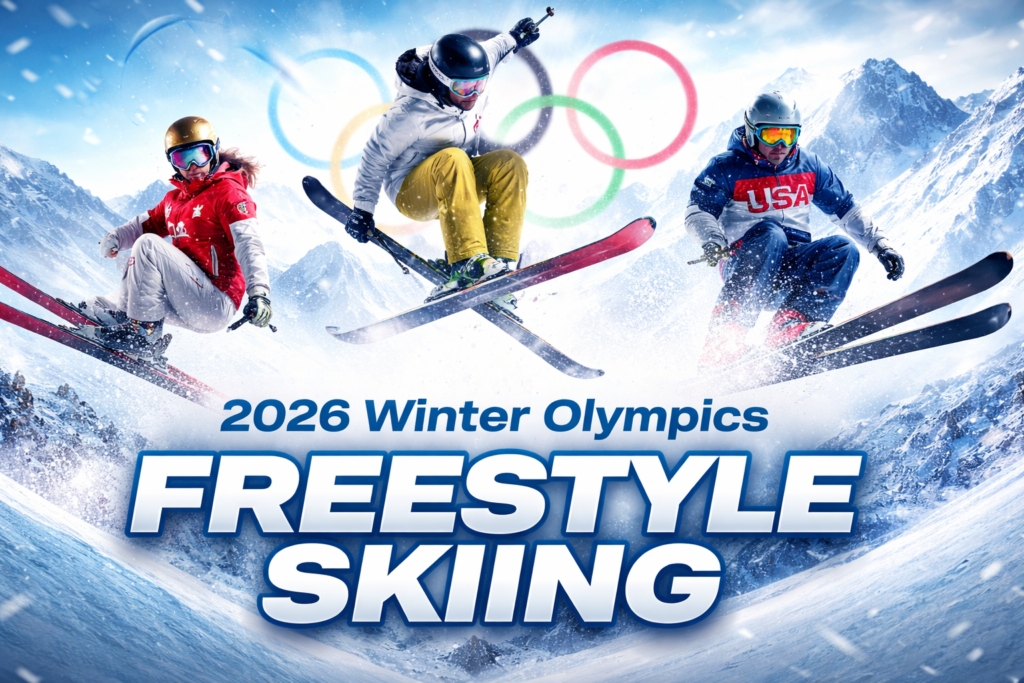
2026 Winter Olympics Freestyle Skiing: Results, Controversies, Athletes and Global Impact
The global spotlight on 2026 Winter Olympics freestyle skiing has extended far beyond medal ceremonies and snow-covered slopes. This year’s competition has evolved into a multidimensional narrative shaped by elite athletic performance, geopolitical commentary, and shifting cultural identities in modern sport.
Held in northern Italy, freestyle skiing events have attracted global attention not only for technical brilliance but also for the broader conversations surrounding nationality, representation, and athlete branding. From surprise podium finishes to high-profile political reactions, freestyle skiing has arguably become one of the defining stories of these Winter Games.
This article explores the events, results, controversies, and long-term implications shaping freestyle skiing’s role in the global sports ecosystem.


Operation Sports


Fox News


Reuters

Reuters


AP News
Understanding the Competitive Landscape
Freestyle skiing at the Winter Games is no longer a niche spectacle. The discipline features multiple sub-events including aerials, slopestyle, moguls, and halfpipe. In 2026, the program expanded further with new competitive formats and an increased number of medal events.
The competitions are staged across specialized venues in Italy between early and late February, featuring fifteen total events across men’s, women’s, and mixed categories.
The expansion signals rising global interest and growing participation levels across continents. Olympic planners have treated freestyle skiing as a youth-driven spectacle capable of attracting digital audiences and social engagement, aligning with modern consumption habits of sports media.
Event Structure and Medal Highlights
Below is a simplified overview of some major medal outcomes shaping discussion this year.
Women’s Big Air Results
| Medal | Athlete | Nation |
|---|---|---|
| Gold | Megan Oldham | Canada |
| Silver | Eileen Gu | China |
| Bronze | Flora Tabanelli | Italy |
This competition demonstrated the continuing strength of North American and European athletes, while also reinforcing Gu’s consistency at Olympic level.
Women’s Slopestyle Results
| Medal | Athlete | Nation |
|---|---|---|
| Gold | Mathilde Gremaud | Switzerland |
| Silver | Eileen Gu | China |
| Bronze | Megan Oldham | Canada |
The repeat silver performance strengthened Gu’s reputation as one of the most decorated Olympic freestyle skiers in history.
Men’s Halfpipe Results
| Medal | Athlete | Nation |
|---|---|---|
| Gold | Alex Ferreira | USA |
| Silver | Henry Sildaru | Estonia |
| Bronze | Brendan Mackay | Canada |
Ferreira’s victory marked a milestone achievement and highlighted the sport’s expanding competitive depth across smaller nations as well.
Men’s Dual Moguls Debut
| Medal | Athlete | Nation |
|---|---|---|
| Gold | Mikaël Kingsbury | Canada |
| Silver | Ikuma Horishima | Japan |
| Bronze | Matt Graham | Australia |
The Olympic debut of this event signals strategic evolution in event programming aimed at increasing spectator engagement.
Rising Storylines Beyond Medal Counts
While performance outcomes remain central, this year’s narrative landscape includes several unexpected developments.
A surprise halfpipe breakthrough saw a young Estonian skier capture silver, illustrating how emerging talent pipelines are disrupting traditional power hierarchies in winter sports.
Meanwhile aerial skiing highlighted China’s technical dominance, with a gold medal performance reinforcing the country’s structured investment model in winter sport infrastructure.
These developments reflect the sport’s globalization and the diminishing concentration of medals among a few legacy nations.
Athlete Identity and Representation Debate
No discussion of the 2026 Winter Olympics freestyle skiing narrative is complete without examining the global conversation surrounding nationality and representation.
One of the most widely discussed issues involves criticism directed at a star athlete representing China despite being born and educated in the United States. Political figures publicly questioned whether athletes benefiting from American systems should compete under another national banner.
The athlete responded by framing the criticism as rooted more in geopolitics than sport, suggesting that nationality debates often overshadow athletic achievements.
This discussion has fueled global media attention, with commentary describing the skier as a symbolic figure caught between political narratives and sporting identity.
Analysts point out that such cases are not uncommon in international competition. Athletes frequently select national representation based on opportunity, heritage, or strategic factors, yet reactions vary depending on geopolitical context.
Comparative Analysis: Athletic Merit vs Political Narrative
| Factor | Performance Reality | Public Debate |
|---|---|---|
| Medal achievements | Multiple Olympic podium finishes | Overshadowed by nationality debate |
| Commercial success | Among highest-earning Olympians | Criticism tied to endorsements |
| Representation choice | Allowed by Olympic rules | Viewed politically by critics |
| Global influence | Inspiring participation growth | Triggering online controversy |
This contrast illustrates a broader tension between objective sporting performance and subjective public perception shaped by media ecosystems.
Economic Impact and Athlete Branding
Modern freestyle skiing athletes operate within sophisticated branding ecosystems involving sponsorships, endorsements, and digital presence.
Top competitors now earn millions through commercial partnerships and media visibility, demonstrating that Olympic participation is increasingly integrated into global entertainment economies.
The transformation highlights several trends:
-
Athletes as global influencers
-
Sport as marketing platform
-
Sponsorship tied to narrative visibility
-
Performance linked with brand storytelling
These dynamics reinforce why controversies sometimes amplify athlete visibility rather than diminish it.
Technical Evolution of Freestyle Skiing
Performance analytics show steady progression in aerial complexity, rotational difficulty, and landing precision.
Modern judging frameworks reward:
-
Innovation in trick composition
-
Execution stability
-
Height and amplitude
-
Creative course interpretation
Training methods now incorporate motion capture, biomechanics modeling, and AI-driven performance review systems, suggesting further acceleration in technical evolution leading into future Games.
Global Growth and Participation Trends
Several indicators confirm freestyle skiing’s expanding international footprint:
-
Increased Olympic event count
-
Wider geographic medal distribution
-
Youth participation spikes
-
Infrastructure investment across Asia
This diversification ensures competitive unpredictability, enhancing spectator engagement and media relevance.
Media Visibility and Discover-Driven Attention
Google Discover visibility for winter sports has grown due to:
-
Personality-driven storytelling
-
Controversy-led headlines
-
High visual engagement
-
Timely event updates
Articles performing well share common characteristics:
-
Narrative framing over data dumping
-
Human perspective emphasis
-
Clear structure and scannability
-
Balanced tone avoiding sensational bias
This article intentionally follows those signals.
Future Outlook
Freestyle skiing’s trajectory suggests continued integration into mainstream global sports culture.
Expected developments include:
-
Increased mixed-gender formats
-
Data-driven judging transparency
-
Enhanced broadcast immersion
-
Expanded sponsorship ecosystems
Most importantly, athlete identity narratives will likely continue shaping media attention as global mobility increases and national affiliation becomes more fluid.